Loading...
This comparison has not been analyzed yet.
One-time AI generation (~1 minute). Scores and timeline are already available below.
Bhagiratha vs Theodosius II
Theodosius II leads by 1.1 pts · 2 figures compared
…

Bhagiratha
Emperor · Ancient
57.3Total
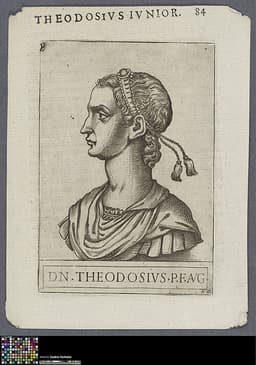
Theodosius II
Emperor · Ancient
58.4Total
Basic Information
Born
-1550
401
Died
-1500
450
Era
Ancient
Ancient
Nationality
Vedic India
Byzantine Empire
Occupation
Emperor
Emperor
Civilization
Indian
Western
Score Comparison
Military (10%)
45.4
47.5
Political (20%)
32.1
68.0
Influence (20%)
82.0
59.0
Legacy (20%)
68.0
58.0
Leadership (15%)
44.5
66.0
Strategy (15%)
37.5
43.3
TOTAL
57.3
58.4
Bhagiratha — Complete Timeline
1550 BC
Descent of the GangesCultural
Bhagiratha performed severe penance to bring the Ganges River from heaven to earth to purify the ashes of his ancestors. The river's descent was controlled by Shiva, and the event is a foundational myth in Hinduism.
Ganges MythPenanceShiva's Intervention
Impact: globalconstructive
Ancestor RedemptionOther◆ Major
By bringing the Ganges to earth, Bhagiratha redeemed the 60,000 sons of Sagara who had been burned to ashes. Their souls were liberated and ascended to heaven, fulfilling Bhagiratha's vow.
Ancestral SalvationGanges PurificationMythical Redemption
Impact: regionalconstructive
Theodosius II — Complete Timeline
413 AD
Construction of the Theodosian WallsOther◆ Major
Theodosius II ordered the construction of the Theodosian Walls, a massive triple fortification system that protected Constantinople. The walls were built under the direction of the praetorian prefect Anthemius. They successfully defended the city from numerous sieges for over a thousand years.
FortificationsConstantinopleDefense
Impact: globalconstructive
425 AD
Foundation of the University of ConstantinopleCultural◆ Major
Theodosius II founded the Pandidakterion, a state-sponsored university in Constantinople. The institution had 31 chairs for Greek and Latin grammar, rhetoric, philosophy, and law. It became a major center of learning and preserved classical knowledge during the early Middle Ages.
EducationUniversityCulture
Impact: globalconstructive
438 AD
Publication of the Theodosian CodeReform◆ Major
Theodosius II oversaw the compilation of the Theodosian Code, a collection of Roman laws since the reign of Constantine I. The code was published in the Eastern and Western Roman Empires, standardizing legal practices and influencing later legal systems, including the Justinian Code.
LawCodeLegal Reform
Impact: globalconstructive
441 AD
Reign during the Hunnic ThreatWar◆ Major
Theodosius II's reign faced repeated invasions by the Huns under Attila. The Huns ravaged the Balkans and forced the Eastern Roman Empire to pay heavy tribute. Theodosius's policy of appeasement and payment of tribute was criticized but bought time for the empire.
HunsAttilaTribute
Impact: regional
This comparison has not been analyzed yet.
One-time AI generation (~1 minute). Scores and timeline are already available below.
Rankings
🥇
Theodosius IILeader
Mil: 47.5Pol: 68.0Inf: 59.0
58.4
🥈
Bhagiratha
Mil: 45.4Pol: 32.1Inf: 82.0
57.3
+1.1 behind
How This Comparison Works
Algorithm
Each figure is scored on 6 dimensions (0—100 scale) based on structured historical data: Military (10%), Political (20%), Influence (20%), Legacy (20%), Leadership (15%), Strategy (15%). The weighted total produces the final ranking.
Data Sources
Scores are computed from structured sub-indicators in the database. Scale factors adjust for era (Ancient ×0.85, Modern ×1.0) and civilization size (Eastern ×1.05, Other ×0.80) to account for differences in population and military scale.
Maximum 3 Figures
Comparisons are limited to 2—3 figures to ensure readability and statistical meaningfulness.
Error Margins
±5 points per dimension — Sub-scores are derived from historical records with inherent uncertainty. Two figures within 5 points on a dimension should be considered roughly equivalent in that area.
Total Score Accuracy
±3 points overall — The weighted combination of 6 dimensions produces a total score with approximately ±3 points of uncertainty. Differences of less than 3 points are not statistically significant— the figures are effectively tied.
Known Limitations
- Historical records are incomplete and uneven across civilizations
- Figures from oral-tradition societies may be underrepresented
- Occupation labels can misclassify multi-role figures
- Scores measure capability and impact, not moral character
- Quantitative scoring is a comparison tool, not absolute truth
Capability Radar
Military (10%) — Battles & Warfare
Battles
20
20
Win Rate
26
25
Expansion
30
15
Political (20%) — Governance & Reform
Reform
10
60
Diplomacy
10
55
Economy
10
50
Influence (20%) — Cultural & Global Reach
Cultural
90
55
Global
70
60
Legacy (20%) — Historical Impact
Historical
90
70
Longevity
90
75
Leadership (15%) — Power & Stability
Tenure
10
70
Stability
10
65
Strategy (15%) — Tactics & Innovation
Strategy
30
35
Tactics
36
30
Reform
34
40
Similar Comparisons
Comments & Discussion
No comments yet. Be the first to share your thoughts!