Loading...
Bertrand du Guesclin vs Tran Hung Dao
Tran Hung Dao leads by 4.2 pts · 2 figures compared
…
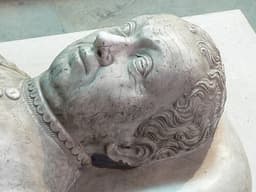
Bertrand du Guesclin
General · Medieval
60.0Total

Tran Hung Dao
General · Medieval
64.2Total
Basic Information
Born
1320
1228
Died
1380
1300
Era
Medieval
Medieval
Nationality
France
Vietnam
Occupation
General
General
Civilization
Western
Eastern
Score Comparison
Military (10%)
67.3
74.0
Political (20%)
54.7
68.0
Influence (20%)
56.4
72.0
Legacy (20%)
48.3
40.0
Leadership (15%)
80.0
70.0
Strategy (15%)
69.1
80.9
TOTAL
60.0
64.2
Bertrand du Guesclin — Complete Timeline
1364 AD
Battle of CocherelWar◆ Major
Bertrand du Guesclin led French forces to victory at the Battle of Cocherel against the forces of Charles II of Navarre. The victory secured the French throne for Charles V and established du Guesclin as a leading commander.
Hundred Years' WarBattle
Impact: regional
Battle of AurayWar◆ Major
Du Guesclin was defeated and captured at the Battle of Auray while fighting for the French in the Breton War of Succession. The defeat was a setback for French ambitions in Brittany.
Hundred Years' WarBattleDefeat
Impact: regionaltragic
1370 AD
Campaign in AquitaineWar◆ Major
Du Guesclin led a successful campaign in Aquitaine, using Fabian tactics to avoid pitched battles and recapture castles and towns from the English. His strategy weakened English control in the region.
Hundred Years' WarCampaign
Impact: regional
Appointment as Constable of FrancePolitical Action◆ Major
King Charles V appointed Bertrand du Guesclin as Constable of France, the highest military office. Du Guesclin was tasked with leading the French campaign to recover territory from the English.
FranceAppointment
Impact: nationalconstructive
1380 AD
Death at the Siege of Châteauneuf-de-RandonWar◆ Major
Bertrand du Guesclin died during the siege of Ch
Hundred Years' WarSiegeDeath
Impact: nationaltragic
Tran Hung Dao — Complete Timeline
1258 AD
First Mongol Invasion of VietnamWar◆ Major
Tran Hung Dao commanded Vietnamese forces to repel the first Mongol invasion under Uriyangkhadai. The Mongols captured Thang Long but were forced to retreat due to supply issues and guerrilla tactics. The victory established Tran Hung Dao's reputation as a military leader.
Mongol InvasionDefenseTran Dynasty
Impact: regionalconstructive
1284 AD
Writing of the Hich Tuong Si (Call to Arms)Cultural◆ Major
Tran Hung Dao wrote the Hich Tuong Si, a famous military treatise and call to arms, to motivate his troops before the second Mongol invasion. The text emphasized patriotism and the importance of defending the homeland. It became a classic of Vietnamese literature.
Military TreatiseLiteraturePatriotism
Impact: nationalconstructive
1285 AD
Second Mongol Invasion of VietnamWar
Tran Hung Dao led Vietnamese forces against a larger Mongol invasion led by Kublai Khan's son, Toghon. After initial setbacks, he regrouped and launched a counteroffensive that drove the Mongols out of Vietnam. The victory was achieved through strategic retreats and ambushes.
Mongol InvasionCounteroffensiveMilitary Strategy
Impact: regionalconstructive
1288 AD
Battle of Bach Dang RiverWar
Tran Hung Dao achieved his greatest victory at the Battle of Bach Dang River, where he destroyed the Mongol invasion fleet. He used iron-tipped stakes hidden in the riverbed to impale enemy ships at high tide. The defeat ended Mongol attempts to conquer Vietnam.
Naval BattleMongol DefeatVietnamese Independence
Impact: regionalconstructive
Expert Analysis
Origins
Bertrand du Guesclin was born around 1320 in Broons, Brittany, into a minor noble family. His early life was marked by a lack of formal education and a focus on physical prowess. He gained attention as a skilled but undisciplined fighter in local conflicts. In contrast, Tran Hung Dao was born in 1228 in Nam Dinh, Vietnam, into the royal Tran dynasty. He was educated in Confucian classics and military strategy, preparing him for leadership from a young age. His uncle, Tran Thu Do, was a powerful regent who shaped his early career.
Rise to Power
Du Guesclin rose to prominence during the Breton War of Succession (1341-1364). His victory at the Battle of Cocherel in 1364 against the forces of Charles II of Navarre secured his reputation. However, he was defeated and captured at the Battle of Auray later that year. After ransom, he entered the service of King Charles V, who appointed him Constable of France in 1370, the highest military office. Tran Hung Dao's rise came through defending Vietnam against Mongol invasions. He first commanded forces during the first Mongol invasion in 1258, repelling Uriyangkhadai's army. His greatest challenge came during the second invasion (1284-1285) led by Kublai Khan's son Toghon. After initial setbacks, he regrouped and launched a counteroffensive that forced the Mongols to retreat.
Leadership & Governance
Du Guesclin's leadership style was pragmatic and focused on avoiding pitched battles. He employed Fabian tactics, recapturing castles and towns in Aquitaine through sieges and skirmishes rather than open confrontation. He was known for his personal bravery but also for his discipline of troops, forbidding pillaging to win local support. Tran Hung Dao, by contrast, emphasized strategic planning and psychological warfare. He wrote the Hich Tuong Si (Call to Arms) to motivate his troops, blending Confucian ethics with military necessity. He used guerrilla tactics and relied on terrain, setting iron-tipped stakes in the Bach Dang River to destroy Mongol ships.
Triumph & Tragedy
Du Guesclin's greatest triumph was his campaign in Aquitaine (1370-1374), where he recovered much territory from the English without a major battle. His greatest tragedy was his defeat at Auray (1364), where he was captured. He died during the Siege of Châteauneuf-de-Randon in 1380, a loss for France. Tran Hung Dao's triumph was the Battle of Bach Dang River (1288), where he annihilated the Mongol fleet, ending the third invasion. His tragedy was the initial fall of Thang Long in 1285, which forced a strategic retreat. He also faced internal political challenges, as his cousin Tran Quoc Tuan initially opposed him.
Character & Destiny
Du Guesclin was stubborn and courageous, often leading from the front. His character earned him the loyalty of troops but also led to his capture at Auray. He was a skilled diplomat, negotiating ransoms and alliances. Tran Hung Dao was methodical and visionary, known for his careful planning and ability to inspire. His decision to withdraw and use scorched-earth tactics against the Mongols showed strategic patience. Historical assessments rank du Guesclin with a military score of 67.3 and leadership of 80.0, while Tran Hung Dao scores 74.0 in military and 80.9 in strategy.
Legacy
Du Guesclin is remembered as a national hero in France, a symbol of the recovery during the Hundred Years' War. His Fabian tactics influenced later French commanders. His legacy score is 48.3, reflecting limited global recognition. Tran Hung Dao is revered in Vietnam as a national saint, with temples dedicated to him. His military treatise Hich Tuong Si is studied in Vietnamese military academies. His legacy score is 40.0, but his impact on Vietnamese history is profound. He scored 72.0 in influence, higher than du Guesclin's 56.4.
Conclusion
Tran Hung Dao had a greater overall impact, with a total score of 64.2 compared to du Guesclin's 60.0. His victories against the Mongol Empire, the largest land empire of the time, demonstrate superior strategic ability. Du Guesclin's accomplishments were significant for France but were part of a larger conflict where other factors played roles. Tran Hung Dao's defense of Vietnam preserved its independence and shaped national identity. Thus, Tran Hung Dao stands as the more effective commander.
Rankings
🥇
Tran Hung DaoLeader
Mil: 74.0Pol: 68.0Inf: 72.0
64.2
🥈
Bertrand du Guesclin
Mil: 67.3Pol: 54.7Inf: 56.4
60.0
+4.2 behind
How This Comparison Works
Algorithm
Each figure is scored on 6 dimensions (0—100 scale) based on structured historical data: Military (10%), Political (20%), Influence (20%), Legacy (20%), Leadership (15%), Strategy (15%). The weighted total produces the final ranking.
Data Sources
Scores are computed from structured sub-indicators in the database. Scale factors adjust for era (Ancient ×0.85, Modern ×1.0) and civilization size (Eastern ×1.05, Other ×0.80) to account for differences in population and military scale.
Maximum 3 Figures
Comparisons are limited to 2—3 figures to ensure readability and statistical meaningfulness.
Error Margins
±5 points per dimension — Sub-scores are derived from historical records with inherent uncertainty. Two figures within 5 points on a dimension should be considered roughly equivalent in that area.
Total Score Accuracy
±3 points overall — The weighted combination of 6 dimensions produces a total score with approximately ±3 points of uncertainty. Differences of less than 3 points are not statistically significant— the figures are effectively tied.
Known Limitations
- Historical records are incomplete and uneven across civilizations
- Figures from oral-tradition societies may be underrepresented
- Occupation labels can misclassify multi-role figures
- Scores measure capability and impact, not moral character
- Quantitative scoring is a comparison tool, not absolute truth
Capability Radar
Military (10%) — Battles & Warfare
Battles
65
85
Win Rate
60
90
Expansion
60
40
Political (20%) — Governance & Reform
Reform
45
60
Diplomacy
70
80
Economy
40
55
Influence (20%) — Cultural & Global Reach
Cultural
55
85
Global
45
70
Legacy (20%) — Historical Impact
Historical
60
90
Longevity
50
85
Leadership (15%) — Power & Stability
Tenure
60
65
Stability
55
70
Strategy (15%) — Tactics & Innovation
Strategy
75
88
Tactics
70
92
Reform
55
75
Similar Comparisons
Comments & Discussion
No comments yet. Be the first to share your thoughts!