Loading...
This comparison has not been analyzed yet.
One-time AI generation (~1 minute). Scores and timeline are already available below.
Beopheung of Silla vs Senusret I
Senusret I leads by 0.9 pts · 2 figures compared
…
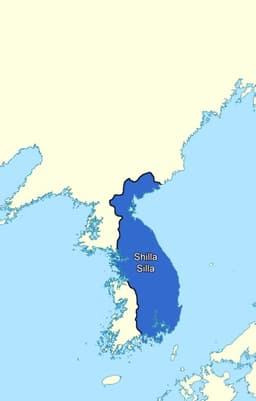
Beopheung of Silla
Emperor · Ancient
54.3Total

Senusret I
Emperor · Ancient
55.2Total
Basic Information
Born
487
-1940
Died
514
-1895
Era
Ancient
Ancient
Nationality
Korea
Middle Kingdom Egypt
Occupation
Emperor
Emperor
Civilization
Eastern
Middle Eastern
Score Comparison
Military (10%)
25.9
52.5
Political (20%)
68.0
45.0
Influence (20%)
54.9
54.9
Legacy (20%)
52.0
45.8
Leadership (15%)
74.0
80.0
Strategy (15%)
36.8
60.0
TOTAL
54.3
55.2
Senusret I — Complete Timeline
1940 BC
Co-regency with Amenemhat IPolitical Action◆ Major
Senusret I was appointed co-regent by his father Amenemhat I, a practice that became common in the 12th Dynasty. This ensured a smooth succession and provided the young prince with administrative and military experience before assuming sole rule.
SuccessionCo-regency12th Dynasty
Impact: nationalconstructive
1920 BC
Nubian Conquest CampaignsWar◆ Major
Senusret I led multiple military campaigns into Nubia, extending Egyptian control southward to the Second Cataract. He established forts and garrisons, securing access to gold mines and trade routes, and incorporating the region into the Egyptian empire.
NubiaMilitary CampaignImperial Expansion
Impact: regional
1915 BC
Establishment of the Fortress of BuhenWar
Senusret I ordered the construction of the fortress at Buhen, a massive mudbrick stronghold on the Nile in Nubia. It served as a military and administrative center, controlling river traffic and protecting Egyptian interests in the newly conquered territory.
FortificationNubiaMilitary
Impact: regional
1910 BC
Construction of the White Chapel at KarnakCultural◆ Major
Senusret I built the White Chapel at Karnak, a small but exquisitely decorated barque shrine made of alabaster. Its reliefs depict the pharaoh with various gods and record the names of Egyptian nomes, serving as a key source for understanding the geography and religion of the Middle Kingdom.
ArchitectureKarnakReligious Monument
Impact: nationalconstructive
This comparison has not been analyzed yet.
One-time AI generation (~1 minute). Scores and timeline are already available below.
Rankings
🥇
Senusret ILeader
Mil: 52.5Pol: 45.0Inf: 54.9
55.2
🥈
Beopheung of Silla
Mil: 25.9Pol: 68.0Inf: 54.9
54.3
+0.9 behind
How This Comparison Works
Algorithm
Each figure is scored on 6 dimensions (0—100 scale) based on structured historical data: Military (10%), Political (20%), Influence (20%), Legacy (20%), Leadership (15%), Strategy (15%). The weighted total produces the final ranking.
Data Sources
Scores are computed from structured sub-indicators in the database. Scale factors adjust for era (Ancient ×0.85, Modern ×1.0) and civilization size (Eastern ×1.05, Other ×0.80) to account for differences in population and military scale.
Maximum 3 Figures
Comparisons are limited to 2—3 figures to ensure readability and statistical meaningfulness.
Error Margins
±5 points per dimension — Sub-scores are derived from historical records with inherent uncertainty. Two figures within 5 points on a dimension should be considered roughly equivalent in that area.
Total Score Accuracy
±3 points overall — The weighted combination of 6 dimensions produces a total score with approximately ±3 points of uncertainty. Differences of less than 3 points are not statistically significant— the figures are effectively tied.
Known Limitations
- Historical records are incomplete and uneven across civilizations
- Figures from oral-tradition societies may be underrepresented
- Occupation labels can misclassify multi-role figures
- Scores measure capability and impact, not moral character
- Quantitative scoring is a comparison tool, not absolute truth
Capability Radar
Military (10%) — Battles & Warfare
Battles
10
45
Win Rate
10
50
Expansion
10
60
Political (20%) — Governance & Reform
Reform
70
60
Diplomacy
50
65
Economy
40
70
Influence (20%) — Cultural & Global Reach
Cultural
60
55
Global
30
35
Legacy (20%) — Historical Impact
Historical
60
50
Longevity
60
45
Leadership (15%) — Power & Stability
Tenure
60
75
Stability
50
80
Strategy (15%) — Tactics & Innovation
Strategy
10
55
Tactics
10
40
Reform
10
30
Similar Comparisons
Comments & Discussion
No comments yet. Be the first to share your thoughts!