Loading...
Beopheung of Silla vs Septimius Severus
Septimius Severus leads by 13.5 pts · 2 figures compared
…
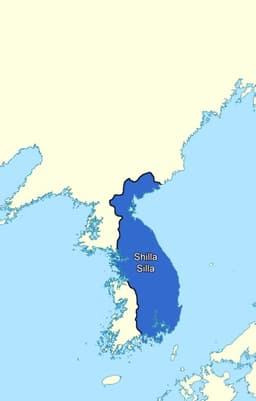
Beopheung of Silla
Emperor · Ancient
54.3Total
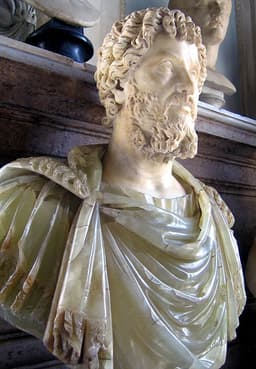
Septimius Severus
Emperor · Ancient
67.8Total
Basic Information
Born
487
145
Died
514
211
Era
Ancient
Ancient
Nationality
Korea
Roman Empire
Occupation
Emperor
Emperor
Civilization
Eastern
Western
Score Comparison
Military (10%)
25.9
85.0
Political (20%)
68.0
70.0
Influence (20%)
54.9
68.0
Legacy (20%)
52.0
55.0
Leadership (15%)
74.0
72.0
Strategy (15%)
36.8
72.0
TOTAL
54.3
67.8
Septimius Severus — Complete Timeline
193 AD
Reforms of the Praetorian GuardReform◆ Major
Septimius Severus disbanded the existing Praetorian Guard, which had assassinated his predecessor Pertinax, and replaced it with loyal soldiers from his own Danubian legions. This reform militarized the guard and increased imperial control.
Praetorian GuardReformMilitary
Impact: nationalconstructive
Foundation of the Severan DynastyPolitical Action
Septimius Severus, proclaimed emperor by his troops in Pannonia, marched on Rome and secured recognition from the Senate. He defeated rivals Didius Julianus, Pescennius Niger, and Clodius Albinus, establishing the Severan dynasty that ruled until 235.
DynastyCivil WarAccession
Impact: global
196 AD
Siege of ByzantiumWar
Septimius Severus besieged and captured Byzantium after a three-year siege, as the city had supported his rival Pescennius Niger. Severus destroyed the city's walls and reduced its status, but later rebuilt it, foreshadowing its future importance.
SiegeByzantiumCivil War
Impact: regionaldestructive
197 AD
Battle of LugdunumWar
Septimius Severus defeated his rival Clodius Albinus at Lugdunum (modern Lyon) in a massive battle. This victory secured Severus's control over the entire Roman Empire and eliminated the last major challenger to his rule.
Civil WarBattleVictory
Impact: global
208 AD
Campaigns in Britain and Construction of Hadrian's WallWar◆ Major
Septimius Severus led a major campaign into Caledonia (Scotland) to subdue rebellious tribes. He repaired and strengthened Hadrian's Wall, and died at York in 211. The campaign achieved limited success and was costly in lives.
BritainCampaignFrontier
Impact: regional
Expert Analysis
Origins
Beopheung of Silla (r. 514–540 CE) was born into the royal Kim clan of the Silla kingdom, one of the Three Kingdoms of Korea. His birth year is uncertain, but he was the son of King Jijeung. Beopheung inherited a kingdom that was consolidating its power through legal and administrative reforms. His early education likely included Confucian classics and indigenous Korean traditions. The Silla court was dominated by a powerful aristocracy (the jingol), which often resisted centralization.
Septimius Severus (145–211 CE) was born in Leptis Magna, a Roman colony in modern Libya. He came from a wealthy equestrian family of Punic and Berber ancestry. Severus studied rhetoric and law in Rome, and entered the senatorial career under Emperor Marcus Aurelius. His early career included military tribunates, civil posts, and governorship of Gallia Lugdunensis. His African origins shaped his identity, but he fully adopted Roman aristocratic culture.
Rise to Power
Beopheung ascended to the Silla throne in 514 CE upon the death of his father. His reign focused on strengthening royal authority against the aristocracy. A key turning point was his adoption of Buddhism as state religion in 527 CE. This move was preceded by the martyrdom of the court official Ichadon, who was executed in 527 CE to create a 'miracle' that convinced the aristocracy of Buddhism's power. Beopheung then issued an edict making Buddhism the official faith, and built Heungnyunsa Temple in Gyeongju (the first Buddhist monastery in Silla). He also promulgated a comprehensive legal code, centralizing administrative and penal laws, which reduced aristocratic power.
Septimius Severus rose to power through military force during the Year of the Five Emperors (193 CE). After the murder of Emperor Pertinax, Severus was proclaimed emperor by his legions in Pannonia on April 9, 193 CE. He marched on Rome, securing recognition from the Senate. He then defeated his rival Didius Julianus, who had bought the throne. Severus next turned east, defeating Pescennius Niger at the Battle of Issus (194 CE) and besieging Byzantium for three years. His final rival, Clodius Albinus, was crushed at the Battle of Lugdunum on February 19, 197 CE, securing Severus's control over the entire empire.
Leadership & Governance
Beopheung's leadership was characterized by strategic religious reform to consolidate power. By adopting Buddhism, he introduced a universalist ideology that transcended clan loyalties, centralizing authority. His legal code standardized punishments and administrative procedures, reducing the arbitrary power of nobles. However, his reforms faced strong opposition; he suppressed aristocratic resistance through purges. Beopheung's rule was more ideological than military, scoring 25.9 in military compared to 68.0 in political.
Septimius Severus ruled as a military autocrat. He transformed the Roman government into a military monarchy, relying on the army for legitimacy. He increased the number of legions, raised soldiers' pay, and allowed them to marry during service. He reformed the Praetorian Guard, replacing it with loyal soldiers from his own Danubian legions. He also conducted campaigns in Britain (208–211 CE), strengthening Hadrian's Wall and attempting to conquer Caledonia. Severus's leadership score of 72.0 reflects his effective control, while his political score of 70.0 shows his ability to manage the Senate and bureaucracy.
Triumph & Tragedy
Beopheung's greatest triumph was the establishment of Buddhism as the state religion, which would shape Korean culture for centuries. The construction of Heungnyunsa Temple and the legal code were also lasting achievements. However, his greatest failure was the suppression of aristocratic opposition through violent purges, which created lasting resentment. His reign saw internal stability but limited territorial expansion; Silla remained one of three competing kingdoms. Beopheung's total score of 54.3 reflects his moderate impact.
Septimius Severus's triumphs include defeating all rivals and founding the Severan dynasty, which ruled until 235 CE. His military reforms strengthened the empire's defenses, and his campaigns in Britain temporarily subdued the north. His tragedy was his harshness: he destroyed Byzantium, sacked Ctesiphon, and executed many opponents. His reliance on the army weakened the Senate and sowed seeds of future instability. He died at York in 211 CE, leaving a succession crisis between his sons Caracalla and Geta. Severus's military score of 85.0 and total of 67.8 indicate his greater power.
Character & Destiny
Beopheung was a reformer who used religion as a tool for political centralization. His willingness to execute Ichadon to achieve his goal shows pragmatism. He was cautious but determined, gradually implementing changes. His destiny was to lay the foundation for Silla's eventual unification of Korea under his successors. Historians see him as a pivotal figure in Korean Buddhism.
Septimius Severus was ruthless and ambitious. He famously advised his sons: 'Be harmonious, enrich the soldiers, and scorn all other men.' His character was shaped by his military background and African heritage, which made him an outsider in Roman politics. His destiny was to die on campaign in Britain, his dream of conquering Caledonia unfulfilled. He left a legacy of militarized monarchy that contributed to the Crisis of the Third Century.
Legacy
Beopheung's legacy is profound in Korean history. Buddhism became the dominant religion and cultural force, influencing art, philosophy, and governance. His legal code influenced later Silla laws. His total score of 54.3 reflects his enduring but regional impact. Silla eventually unified Korea in 668 CE, building on his centralization.
Septimius Severus's legacy is mixed. He stabilized the empire after civil war and reformed the army, but his militarization weakened civilian institutions. The Severan dynasty ended in 235 CE with the assassination of Severus Alexander, leading to fifty years of chaos. His African origin did not change Roman perceptions of ethnicity. Severus's total score of 67.8 shows his greater immediate impact on a larger stage.
Conclusion
Septimius Severus had a greater impact than Beopheung of Silla. His influence spanned the entire Roman Empire, affecting millions across Europe, Africa, and Asia. His military reforms and dynastic foundation shaped Roman history for decades. Beopheung's influence, while significant, was confined to the Korean peninsula and took centuries to fully materialize. The score gap of 13.5 points reflects this: Severus's military and political power were on a vastly larger scale. While Beopheung's religious reform was culturally transformative, Severus's actions directly altered the course of the Roman Empire, a global superpower. Thus, Septimius Severus emerges as the more impactful leader.
Rankings
🥇
Septimius SeverusLeader
Mil: 85.0Pol: 70.0Inf: 68.0
67.8
🥈
Beopheung of Silla
Mil: 25.9Pol: 68.0Inf: 54.9
54.3
+13.5 behind
How This Comparison Works
Algorithm
Each figure is scored on 6 dimensions (0—100 scale) based on structured historical data: Military (10%), Political (20%), Influence (20%), Legacy (20%), Leadership (15%), Strategy (15%). The weighted total produces the final ranking.
Data Sources
Scores are computed from structured sub-indicators in the database. Scale factors adjust for era (Ancient ×0.85, Modern ×1.0) and civilization size (Eastern ×1.05, Other ×0.80) to account for differences in population and military scale.
Maximum 3 Figures
Comparisons are limited to 2—3 figures to ensure readability and statistical meaningfulness.
Error Margins
±5 points per dimension — Sub-scores are derived from historical records with inherent uncertainty. Two figures within 5 points on a dimension should be considered roughly equivalent in that area.
Total Score Accuracy
±3 points overall — The weighted combination of 6 dimensions produces a total score with approximately ±3 points of uncertainty. Differences of less than 3 points are not statistically significant— the figures are effectively tied.
Known Limitations
- Historical records are incomplete and uneven across civilizations
- Figures from oral-tradition societies may be underrepresented
- Occupation labels can misclassify multi-role figures
- Scores measure capability and impact, not moral character
- Quantitative scoring is a comparison tool, not absolute truth
Capability Radar
Military (10%) — Battles & Warfare
Battles
10
85
Win Rate
10
80
Expansion
10
80
Political (20%) — Governance & Reform
Reform
70
85
Diplomacy
50
70
Economy
40
75
Influence (20%) — Cultural & Global Reach
Cultural
60
60
Global
30
65
Legacy (20%) — Historical Impact
Historical
60
70
Longevity
60
60
Leadership (15%) — Power & Stability
Tenure
60
80
Stability
50
65
Strategy (15%) — Tactics & Innovation
Strategy
10
85
Tactics
10
75
Reform
10
90
Similar Comparisons
Comments & Discussion
No comments yet. Be the first to share your thoughts!