Loading...
This comparison has not been analyzed yet.
One-time AI generation (~1 minute). Scores and timeline are already available below.
Benedicto Kiwanuka vs Hugo Chavez
Hugo Chavez leads by 5.3 pts · 2 figures compared
…

Benedicto Kiwanuka
Politician · Modern
45.6Total
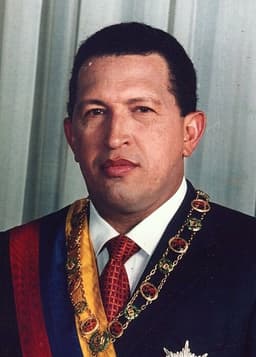
Hugo Chavez
Politician · Modern
50.9Total
Basic Information
Born
1922
1954
Died
—
—
Era
Modern
Modern
Nationality
Uganda
Venezuela
Occupation
Politician
Politician
Civilization
Other
Western
Score Comparison
Military (10%)
50.0
10.0
Political (20%)
40.8
62.7
Influence (20%)
49.4
56.7
Legacy (20%)
41.7
49.2
Leadership (15%)
48.4
68.0
Strategy (15%)
44.0
38.3
TOTAL
45.6
50.9
Benedicto Kiwanuka — Complete Timeline
1961 AD
Appointed as first Chief Minister of UgandaPolitical Action◆ Major
Benedicto Kiwanuka was appointed as Uganda's first Chief Minister after his Democratic Party won the pre-independence elections. He led the internal self-government before independence, but his tenure was short-lived as the Uganda People's Congress took power after independence.
Chief MinisterIndependenceUganda
Impact: nationalconstructive
1971 AD
Served as Chief Justice of UgandaPolitical Action
Kiwanuka was appointed Chief Justice of Uganda by President Milton Obote. After Idi Amin's coup, he was initially retained but later targeted for his independence and refusal to legitimize Amin's arbitrary decrees, leading to his execution.
Chief JusticeJudiciaryUganda
Impact: nationalconstructive
1972 AD
Arrested and killed by Idi Amin's regimePolitical Action◆ Major
Kiwanuka was arrested by Idi Amin's soldiers and taken to Makindye Prison, where he was tortured and killed. As a former prime minister and prominent opposition figure, his murder was part of Amin's purge of political rivals and educated elites.
MurderIdi AminPolitical Repression
Impact: nationaltragic
Hugo Chavez — Complete Timeline
1992 AD
Failed 1992 coup attemptPolitical Action◆ Major
Chávez, then a lieutenant colonel, led a failed military coup against President Carlos Andrés Pérez. The coup was crushed, and Chávez was imprisoned. His televised speech accepting responsibility made him a national figure and martyr for the poor.
CoupImprisonmentPolitical Rise
Impact: national
1998 AD
Election as President of VenezuelaPolitical Action
Chávez won the presidential election with 56% of the vote, running on a platform of anti-corruption and social justice. His victory marked the beginning of the Bolivarian Revolution, a leftist movement aimed at transforming Venezuela's political and economic system.
ElectionBolivarian RevolutionPopulism
Impact: nationalconstructive
2001 AD
Nationalization of oil industryReform◆ Major
Chávez enacted a new Hydrocarbons Law that increased state control over the oil industry, raising royalties and taxes on foreign companies. He also reasserted control over PDVSA, the state oil company, using oil revenues to fund social programs.
NationalizationOilEconomic Policy
Impact: nationalconstructive
2002 AD
2002 coup attempt and return to powerPolitical Action◆ Major
Chávez was briefly overthrown in a coup led by business and military sectors, but was restored to power after 47 hours due to mass protests and loyalist military units. The coup attempt deepened political polarization in Venezuela.
CoupPolitical CrisisReturn
Impact: national
2004 AD
Creation of the Bolivarian Alliance for the Americas (ALBA)Political Action◆ Major
Chávez founded ALBA as an alternative to the Free Trade Area of the Americas, promoting regional integration based on solidarity, barter, and social welfare. The alliance included Cuba, Bolivia, and other leftist governments in Latin America.
Regional IntegrationSocialismAnti-imperialism
Impact: regionalconstructive
This comparison has not been analyzed yet.
One-time AI generation (~1 minute). Scores and timeline are already available below.
Rankings
🥇
Hugo ChavezLeader
Mil: 10.0Pol: 62.7Inf: 56.7
50.9
🥈
Benedicto Kiwanuka
Mil: 50.0Pol: 40.8Inf: 49.4
45.6
+5.3 behind
How This Comparison Works
Algorithm
Each figure is scored on 6 dimensions (0—100 scale) based on structured historical data: Military (10%), Political (20%), Influence (20%), Legacy (20%), Leadership (15%), Strategy (15%). The weighted total produces the final ranking.
Data Sources
Scores are computed from structured sub-indicators in the database. Scale factors adjust for era (Ancient ×0.85, Modern ×1.0) and civilization size (Eastern ×1.05, Other ×0.80) to account for differences in population and military scale.
Maximum 3 Figures
Comparisons are limited to 2—3 figures to ensure readability and statistical meaningfulness.
Error Margins
±5 points per dimension — Sub-scores are derived from historical records with inherent uncertainty. Two figures within 5 points on a dimension should be considered roughly equivalent in that area.
Total Score Accuracy
±3 points overall — The weighted combination of 6 dimensions produces a total score with approximately ±3 points of uncertainty. Differences of less than 3 points are not statistically significant— the figures are effectively tied.
Known Limitations
- Historical records are incomplete and uneven across civilizations
- Figures from oral-tradition societies may be underrepresented
- Occupation labels can misclassify multi-role figures
- Scores measure capability and impact, not moral character
- Quantitative scoring is a comparison tool, not absolute truth
Capability Radar
Military (10%) — Battles & Warfare
Battles
21
0
Win Rate
27
0
Expansion
29
0
Political (20%) — Governance & Reform
Reform
40
70
Diplomacy
35
60
Economy
20
40
Influence (20%) — Cultural & Global Reach
Cultural
20
60
Global
15
55
Legacy (20%) — Historical Impact
Historical
30
55
Longevity
20
40
Leadership (15%) — Power & Stability
Tenure
30
75
Stability
10
30
Strategy (15%) — Tactics & Innovation
Strategy
28
0
Tactics
35
0
Reform
35
10
Similar Comparisons
Comments & Discussion
No comments yet. Be the first to share your thoughts!