Loading...
Belisarius vs Zhao Chongguo
Zhao Chongguo leads by 0.1 pts · 2 figures compared
…

Belisarius
General · Ancient
61.1Total
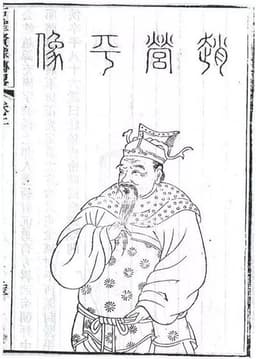
Zhao Chongguo
General · Ancient
61.2Total
Basic Information
Born
-505
-137
Died
—
-52
Era
Ancient
Ancient
Nationality
Byzantine Empire
China
Occupation
General
General
Civilization
Western
Eastern
Score Comparison
Military (10%)
88.0
80.0
Political (20%)
36.5
68.0
Influence (20%)
82.0
53.3
Legacy (20%)
40.0
49.2
Leadership (15%)
54.2
68.0
Strategy (15%)
81.9
72.0
TOTAL
61.1
61.2
Belisarius — Complete Timeline
533 AD
Vandalic WarWar◆ Major
Belisarius led a Byzantine expedition to North Africa against the Vandal Kingdom. He defeated King Gelimer at the Battle of Ad Decimum and captured Carthage, restoring Roman control over the province after a century of Vandal rule.
ReconquestVandal KingdomNorth Africa
Impact: regionalconstructive
537 AD
Gothic War: Siege of RomeWar◆ Major
Belisarius defended Rome against a siege by the Ostrogothic army under King Vitiges. Despite being outnumbered, he held the city for over a year using defensive tactics and sorties, until reinforcements arrived. This prolonged the war but preserved Byzantine control.
Gothic WarSiegeRome
Impact: regional
540 AD
Capture of RavennaWar◆ Major
Belisarius captured the Ostrogothic capital of Ravenna through a combination of siege and deception. He accepted the surrender of King Vitiges and the Gothic nobility, effectively ending the first phase of the Gothic War and restoring Italy to the Empire.
Gothic WarRavennaReconquest
Impact: regionalconstructive
548 AD
Recall and DisgracePolitical Action
Emperor Justinian recalled Belisarius from Italy due to political intrigues and suspicions of his ambition. Belisarius was stripped of his command and his wealth was confiscated, though he was later restored to favor. This ended his active role in the reconquest.
Political IntrigueJustinianDisgrace
Impact: nationaltragic
Zhao Chongguo — Complete Timeline
61 BC
Campaign Against the QiangWar◆ Major
Zhao Chongguo led a Han army against the Qiang tribes in the Hexi region. Using the tuntian system to supply his troops, he defeated the Qiang and secured the Han frontier, demonstrating the effectiveness of his farming garrison strategy.
Han-Xiongnu WarMilitary CampaignQiang
Impact: regional
Proposal of Farming Garrisons (Tuntian)Reform◆ Major
Zhao Chongguo proposed establishing farming garrisons (tuntian) in the Hexi Corridor to supply Han forces fighting the Qiang tribes. This system allowed soldiers to farm during peacetime, reducing the cost of long-distance supply lines.
Military ReformAgricultureHan-Xiongnu War
Impact: nationalconstructive
60 BC
Memorial on Tuntian PolicyPolitical Action◆ Major
Zhao Chongguo submitted a detailed memorial to Emperor Xuan advocating for the permanent establishment of tuntian colonies. The emperor approved the plan, leading to the long-term settlement of Han soldiers in the frontier regions.
PolicyFrontierAgriculture
Impact: nationalconstructive
Expert Analysis
Origins
Belisarius was born around 505 CE in Germania, Illyria (modern-day Bulgaria), into a Thracian or Illyrian family. Little is known of his early life, but he joined the Byzantine army as a young man, likely serving in the bodyguard of Emperor Justin I. His military talent was recognized early, and he became a commander under Justinian I after Justin's death in 527. Belisarius received a classical education typical for an officer, but his true education came from experience in the field.
Zhao Chongguo was born around 137 BCE in Longxi Commandery (modern Gansu, China), during the Han Dynasty. His family had a military tradition; his father Zhao Chong was a general. Zhao Chongguo studied military strategy and served as a cavalry officer. He was known for his meticulous planning and understanding of logistics, which later defined his career.
Rise to Power
Belisarius rose to prominence during the Byzantine–Sasanian War of 527–532. He led a campaign against the Sasanian Empire at the Battle of Dara in 530, where his forces defeated a larger Persian army. This victory earned him the respect of Emperor Justinian. In 533, Justinian appointed him to lead the Vandalic War, a risky expedition to reconquer North Africa. Belisarius's success at the Battle of Ad Decimum and the capture of Carthage made him a hero. He returned to Constantinople in 534 to celebrate a triumph, a rare honor for a non-emperor.
Zhao Chongguo rose through the ranks of the Han military during the campaigns against the Xiongnu. He served under General Li Guangli and later under Huo Guang. His expertise in logistics and border defense became evident during the Qiang rebellions in the Hexi Corridor. In 61 BCE, Emperor Xuan appointed him to lead a campaign against the Qiang, marking his major independent command.
Leadership & Governance
Belisarius was a hands-on commander who led from the front. His leadership style was charismatic and inspiring; he maintained loyalty among his troops even during hardships. He was also a skilled diplomat, often negotiating with enemies to avoid unnecessary bloodshed. However, his political acumen was weak (political score 36.5). He repeatedly fell victim to court intrigues, and his failure to manage his relationship with Empress Theodora and other officials led to his downfall.
Zhao Chongguo was a methodical and cautious leader. He emphasized preparation and logistics over decisive battle. His governance approach was innovative: he proposed the tuntian system (farming garrisons) to supply troops in remote areas. This reduced the need for costly supply chains and allowed soldiers to be self-sufficient. He also advocated for a defensive strategy against the Qiang, focusing on securing territory rather than pursuing total annihilation.
Triumph & Tragedy
Belisarius's greatest triumph was the reconquest of North Africa and Italy. He defeated the Vandal Kingdom in 534 and captured Ravenna in 540, defeating the Ostrogoths. His defense of Rome during the Gothic War (537–538) against a larger Ostrogothic army was a masterpiece of siege warfare. His greatest tragedy was his recall in 541 due to Justinian's suspicion and political intrigue. He was stripped of command and later blinded (though some accounts claim he was restored briefly). He died in 565, largely forgotten.
Zhao Chongguo's triumph was the successful implementation of the tuntian system, which secured the Hexi Corridor for the Han. His campaign against the Qiang in 60 BCE ended with the Qiang submitting to Han authority. His tragedy was that his defensive strategies were not always appreciated; some contemporaries criticized him for being too cautious. He died in 52 BCE, but his tuntian system endured for centuries.
Character & Destiny
Belisarius was a man of integrity and loyalty, but his trusting nature and lack of political instinct led to his downfall. He never conspired against Justinian, despite ample opportunity. His character was shaped by a sense of duty, but his destiny was to be a tool of the emperor, used and discarded. Historical assessments note his military genius but criticize his naivety.
Zhao Chongguo was pragmatic and foresighted. He understood the importance of logistics and sustainable military operations. His character was cautious but effective; he avoided unnecessary risks. His destiny was to be remembered as a reformer of border defense. Chinese historians praise his long-term vision.
Legacy
Belisarius's legacy is mixed. He is remembered as one of the greatest generals of the Roman Empire, but his achievements were temporary. The territories he reconquered were lost within decades after his death. His military tactics influenced later Byzantine generals, but his personal story is one of tragedy. His score of 82.0 in influence reflects his enduring fame, but his legacy score of 40.0 indicates limited long-term impact.
Zhao Chongguo's legacy is more enduring. The tuntian system became a cornerstone of Chinese border policy, used for centuries by subsequent dynasties. His memorial on the tuntian policy is a classic text on military logistics. He is honored as a model official who combined military and administrative skills. His influence score of 53.3 and legacy score of 49.2 reflect a solid, lasting contribution.
Conclusion
While Belisarius achieved spectacular military victories, his impact was ephemeral. Zhao Chongguo's tuntian system had a lasting effect on Chinese border defense and agricultural policy. Zhao's political and leadership scores (68.0 and 68.0) far exceed Belisarius's (36.5 and 54.2), showing a more balanced and sustainable approach. Belisarius scored 88.0 in military, but Zhao's 80.0 is close, and his strategic innovations had greater longevity. Therefore, Zhao Chongguo had a greater overall impact. The score gap of 0.1 points (61.2 vs 61.1) is negligible, but Zhao's contributions shaped centuries of policy, while Belisarius's conquests faded. Zhao Chongguo is the more influential figure in the long term.
Rankings
🥇
Zhao ChongguoLeader
Mil: 80.0Pol: 68.0Inf: 53.3
61.2
🥈
Belisarius
Mil: 88.0Pol: 36.5Inf: 82.0
61.1
+0.1 behind
How This Comparison Works
Algorithm
Each figure is scored on 6 dimensions (0—100 scale) based on structured historical data: Military (10%), Political (20%), Influence (20%), Legacy (20%), Leadership (15%), Strategy (15%). The weighted total produces the final ranking.
Data Sources
Scores are computed from structured sub-indicators in the database. Scale factors adjust for era (Ancient ×0.85, Modern ×1.0) and civilization size (Eastern ×1.05, Other ×0.80) to account for differences in population and military scale.
Maximum 3 Figures
Comparisons are limited to 2—3 figures to ensure readability and statistical meaningfulness.
Error Margins
±5 points per dimension — Sub-scores are derived from historical records with inherent uncertainty. Two figures within 5 points on a dimension should be considered roughly equivalent in that area.
Total Score Accuracy
±3 points overall — The weighted combination of 6 dimensions produces a total score with approximately ±3 points of uncertainty. Differences of less than 3 points are not statistically significant— the figures are effectively tied.
Known Limitations
- Historical records are incomplete and uneven across civilizations
- Figures from oral-tradition societies may be underrepresented
- Occupation labels can misclassify multi-role figures
- Scores measure capability and impact, not moral character
- Quantitative scoring is a comparison tool, not absolute truth
Capability Radar
Military (10%) — Battles & Warfare
Battles
92
60
Win Rate
95
65
Expansion
85
55
Political (20%) — Governance & Reform
Reform
40
70
Diplomacy
55
60
Economy
30
75
Influence (20%) — Cultural & Global Reach
Cultural
75
40
Global
75
30
Legacy (20%) — Historical Impact
Historical
85
55
Longevity
80
50
Leadership (15%) — Power & Stability
Tenure
60
50
Stability
35
65
Strategy (15%) — Tactics & Innovation
Strategy
90
75
Tactics
96
70
Reform
70
80
Similar Comparisons
Comments & Discussion
No comments yet. Be the first to share your thoughts!