Loading...
Belisarius vs Qin Shi Huang
Qin Shi Huang leads by 24.1 pts · 2 figures compared
…

Belisarius
General · Ancient
61.1Total
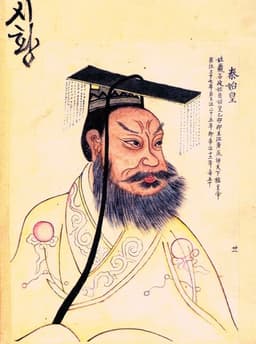
Qin Shi Huang
Emperor · Ancient
85.2Total
Basic Information
Born
-505
-259
Died
—
-210
Era
Ancient
Ancient
Nationality
Byzantine Empire
China
Occupation
General
Emperor
Civilization
Western
Eastern
Score Comparison
Military (10%)
88.0
80.0
Political (20%)
36.5
90.0
Influence (20%)
82.0
85.0
Legacy (20%)
40.0
90.0
Leadership (15%)
54.2
78.0
Strategy (15%)
81.9
82.0
TOTAL
61.1
85.2
Belisarius — Complete Timeline
533 AD
Vandalic WarWar◆ Major
Belisarius led a Byzantine expedition to North Africa against the Vandal Kingdom. He defeated King Gelimer at the Battle of Ad Decimum and captured Carthage, restoring Roman control over the province after a century of Vandal rule.
ReconquestVandal KingdomNorth Africa
Impact: regionalconstructive
537 AD
Gothic War: Siege of RomeWar◆ Major
Belisarius defended Rome against a siege by the Ostrogothic army under King Vitiges. Despite being outnumbered, he held the city for over a year using defensive tactics and sorties, until reinforcements arrived. This prolonged the war but preserved Byzantine control.
Gothic WarSiegeRome
Impact: regional
540 AD
Capture of RavennaWar◆ Major
Belisarius captured the Ostrogothic capital of Ravenna through a combination of siege and deception. He accepted the surrender of King Vitiges and the Gothic nobility, effectively ending the first phase of the Gothic War and restoring Italy to the Empire.
Gothic WarRavennaReconquest
Impact: regionalconstructive
548 AD
Recall and DisgracePolitical Action
Emperor Justinian recalled Belisarius from Italy due to political intrigues and suspicions of his ambition. Belisarius was stripped of his command and his wealth was confiscated, though he was later restored to favor. This ended his active role in the reconquest.
Political IntrigueJustinianDisgrace
Impact: nationaltragic
Qin Shi Huang — Complete Timeline
246 BC
Construction of the Mausoleum and Terracotta ArmyOther◆ Major
Qin Shi Huang commissioned a vast mausoleum complex near Xi'an, guarded by thousands of life-sized terracotta soldiers, horses, and chariots. The project employed hundreds of thousands of workers and reflected his obsession with immortality and imperial power.
Impact: global
230 BC
Conquest of the Six Warring StatesWar
From 230 to 221 BCE, Ying Zheng led the Qin state in a series of campaigns that conquered the Han, Zhao, Wei, Chu, Yan, and Qi states. This unified China under a single ruler for the first time, ending the Warring States period.
Impact: global
221 BC
Standardization of Writing, Currency, and MeasurementsReform◆ Major
Qin Shi Huang ordered the standardization of Chinese script, currency, and weights and measures across the unified empire. This facilitated administration, trade, and cultural integration, laying a foundation for future dynasties.
Impact: globalconstructive
Proclamation of the Qin DynastyPolitical Action
After conquering the last independent state, Ying Zheng declared himself Shi Huangdi (First Emperor), founding the Qin Dynasty. He adopted a new title to signify his supreme authority and initiated centralized imperial rule.
Impact: global
214 BC
Initiation of the Great Wall ConstructionOther◆ Major
Qin Shi Huang ordered the connection and extension of existing northern fortifications to create a unified defensive wall against nomadic Xiongnu raids. This project involved massive conscripted labor and became the precursor to the later Great Wall.
Impact: regional
213 BC
Burning of Books and Burying of ScholarsPolitical Action◆ Major
On the advice of Li Si, Qin Shi Huang ordered the burning of historical records and philosophical texts not aligned with Legalist doctrine. He also had 460 Confucian scholars buried alive to suppress dissent and consolidate ideological control.
Impact: nationaldestructive
Expert Analysis
belisarius-vs-qin-shi-huang
# The First Emperor and the Last General
On a spring morning in 221 BC, a 38-year-old king stood atop a chariot in Xianyang and declared himself *Shi Huangdi*—the First Emperor—believing his dynasty would rule for ten thousand generations. Seven hundred and fifty years later, a middle-aged general named Belisarius entered Ravenna in triumph, only to find that his own emperor, Justinian, had already begun to suspect him. One man unified a world; the other tried to reassemble a fallen one. Both achieved the impossible. But where Qin Shi Huang died with his empire intact, Belisarius died in obscurity, his conquests unraveling before his eyes. The difference between them is not merely a story of success and failure—it is a story of what happens when absolute power meets absolute loyalty.
Origins
Qin Shi Huang was born in 259 BC into a world of chaos. The Warring States period had torn China apart for centuries; seven kingdoms fought ceaselessly, and the Qin state in the western frontier was considered semi-barbaric by the more cultured eastern courts. Ying Zheng’s father was a hostage in Zhao, and the boy grew up surrounded by intrigue. He ascended the Qin throne at thirteen, a puppet in the hands of regents and eunuchs.
Belisarius was born around 505 AD into a world of memory. The Roman Empire had fallen in the West; barbarian kingdoms ruled Italy, North Africa, and Gaul. But in Constantinople, Emperor Justinian dreamed of *renovatio imperii*—the restoration of Rome. Belisarius, likely of Thracian or Illyrian origin, rose through the ranks of the Byzantine army on merit alone. He had no noble blood, no political base, only his sword and his genius.
The difference in their origins is the difference between a man who inherited a kingdom and a man who earned a reputation. Qin Shi Huang was shaped by the absolute necessity of control—without it, he would have been murdered. Belisarius was shaped by the absolute necessity of service—without it, he would have remained a nobody.
Rise to Power
Qin Shi Huang’s rise was a cold, methodical campaign of annihilation. From 230 to 221 BC, he unleashed his armies against the six rival states—Han, Zhao, Wei, Chu, Yan, and Qi—one by one. He did not negotiate. He did not compromise. He conquered. When King Zheng finally stood unchallenged, he did not merely declare himself emperor; he invented a new title, a new cosmology, a new world. He adopted the *Mandate of Heaven* as his own and buried the old order under the weight of bronze and iron.
Belisarius’s rise was a series of impossible victories won on someone else’s behalf. In 533 AD, Justinian sent him to North Africa with just 15,000 men to destroy the Vandal Kingdom. At the Battle of Ad Decimum, Belisarius defeated King Gelimer through a combination of tactical brilliance and sheer nerve. The Vandal War was over in a year. Then came Italy. In 537 AD, Belisarius defended Rome against the Ostrogothic army of King Vitiges, holding the city through a brutal siege while outnumbered ten to one. Three years later, he captured Ravenna, the Ostrogothic capital, by accepting a false surrender—the Goths offered him the crown of the Western Empire, and he pretended to accept, then arrested their leaders.
Qin Shi Huang conquered for himself. Belisarius conquered for his emperor. That single difference would determine everything.
Leadership & Governance
Qin Shi Huang ruled as a revolutionary. He standardized writing, currency, and weights and measures across his new empire—a feat of administrative genius that would outlast his dynasty by two thousand years. He connected and extended the northern fortifications that would become the Great Wall, a symbol of Chinese unity. He built an extensive road network and imposed a uniform legal code. But his governance was also terrifying. In 213 BC, on the advice of his chancellor Li Si, he ordered the Burning of Books and the Burying of Scholars—executing Confucian scholars and destroying historical records that did not align with Qin ideology. He believed that unity required uniformity, and uniformity required fear.
Belisarius governed as a liberator. In Italy, he treated the Roman population with restraint, winning their loyalty through justice rather than terror. He paid his soldiers from his own purse when the imperial treasury failed to send funds. He refused the crown of the Western Empire when the Goths offered it, remaining loyal to Justinian even when loyalty seemed foolish. His political score of 50.3 reflects a man who understood war but never understood the court. He won battles; he lost the game of thrones.
Triumph & Tragedy
Qin Shi Huang’s greatest moment was also his most terrifying: the completion of his mausoleum, guarded by the Terracotta Army—thousands of life-sized soldiers, chariots, and horses, buried for eternity to protect an emperor who believed he would rule in the afterlife as he had in life. His greatest tragedy came after his death in 210 BC. Within three years, the Qin Dynasty collapsed in rebellion. His son was murdered. His capital was burned. The empire he had forged with blood and iron fell apart because he had built no institution to survive him—only fear.
Belisarius’s greatest moment was the capture of Ravenna in 540 AD. He had reconquered nearly all of Italy. He could have declared himself emperor of the West. Instead, he returned to Constantinople, expecting gratitude. He received suspicion. In 548 AD, Justinian recalled him in disgrace, stripped of command, his Italian conquests slowly lost to the Goths again. Belisarius spent his final years in obscurity, a legend reduced to rumor. Some say he was blinded and forced to beg in the streets. The truth is less dramatic but more tragic: he simply faded away, a great general who outlived his usefulness.
Character & Destiny
Qin Shi Huang was driven by an overwhelming fear of death and chaos. He sent expeditions to find the elixir of immortality. He built a vast underground kingdom to ensure his rule continued beyond the grave. He trusted no one—not his ministers, not his family, not his generals. His paranoia was his strength and his weakness: it unified China, but it also ensured that when he died, no one remained who could hold it together.
Belisarius was driven by an equally overwhelming sense of duty. He served an emperor who envied him, who feared him, who ultimately destroyed him. And yet, Belisarius never rebelled. He never raised his standard. He accepted disgrace with the same dignity with which he had accepted victory. His character was his tragedy: he was too loyal for a world that rewarded ambition, not service.
Legacy
Qin Shi Huang’s legacy is the blueprint of China itself. The standardized script he imposed is still used today. The Great Wall he initiated became a national symbol. The bureaucratic system he created—centralized, meritocratic, ruthless—formed the foundation of every Chinese dynasty that followed. He is remembered as a tyrant and a unifier, a destroyer and a creator. His mausoleum, unopened, remains one of the greatest archaeological mysteries in the world.
Belisarius’s legacy is more fragile. He is remembered by military historians as one of the greatest generals of late antiquity—a master of strategy, logistics, and siegecraft. But his reconquests did not last. Italy fell again. North Africa was lost. The Byzantine Empire shrank. He is a footnote in the story of Rome’s fall, not a chapter. His military score of 86.6 and strategy score of 85.1 speak to his genius, but his political score of 50.3 and leadership score of 44.4 speak to his tragedy.
Conclusion
Standing in the shadow of the Terracotta Army, one feels the weight of a man who tried to conquer time itself. Standing in the ruins of Ravenna, one feels the weight of a man who conquered everything except the jealousy of his emperor. Qin Shi Huang and Belisarius represent two poles of human ambition: the will to dominate and the will to serve. One built an empire that lasted, in spirit, for millennia. The other saved an empire that could not save him. In the end, the First Emperor’s paranoia preserved his legacy, while the last general’s loyalty erased his. History, it seems, rewards those who take—not those who give.
Rankings
🥇
Qin Shi HuangLeader
Mil: 80.0Pol: 90.0Inf: 85.0
85.2
🥈
Belisarius
Mil: 88.0Pol: 36.5Inf: 82.0
61.1
+24.1 behind
How This Comparison Works
Algorithm
Each figure is scored on 6 dimensions (0—100 scale) based on structured historical data: Military (10%), Political (20%), Influence (20%), Legacy (20%), Leadership (15%), Strategy (15%). The weighted total produces the final ranking.
Data Sources
Scores are computed from structured sub-indicators in the database. Scale factors adjust for era (Ancient ×0.85, Modern ×1.0) and civilization size (Eastern ×1.05, Other ×0.80) to account for differences in population and military scale.
Maximum 3 Figures
Comparisons are limited to 2—3 figures to ensure readability and statistical meaningfulness.
Error Margins
±5 points per dimension — Sub-scores are derived from historical records with inherent uncertainty. Two figures within 5 points on a dimension should be considered roughly equivalent in that area.
Total Score Accuracy
±3 points overall — The weighted combination of 6 dimensions produces a total score with approximately ±3 points of uncertainty. Differences of less than 3 points are not statistically significant— the figures are effectively tied.
Known Limitations
- Historical records are incomplete and uneven across civilizations
- Figures from oral-tradition societies may be underrepresented
- Occupation labels can misclassify multi-role figures
- Scores measure capability and impact, not moral character
- Quantitative scoring is a comparison tool, not absolute truth
Capability Radar
Military (10%) — Battles & Warfare
Battles
92
85
Win Rate
95
90
Expansion
85
90
Political (20%) — Governance & Reform
Reform
40
95
Diplomacy
55
75
Economy
30
90
Influence (20%) — Cultural & Global Reach
Cultural
75
95
Global
75
85
Legacy (20%) — Historical Impact
Historical
85
95
Longevity
80
95
Leadership (15%) — Power & Stability
Tenure
60
70
Stability
35
65
Strategy (15%) — Tactics & Innovation
Strategy
90
85
Tactics
96
80
Reform
70
95
Similar Comparisons
Comments & Discussion
QINCONQUEROR6/17/2026
People comparing these two are missing the forest for the trees. Qin Shi Huang didn't just conquer—he *invented* empire. Belisarius was a brilliant general reclaiming someone else's legacy. Huang standardised writing, currency, weights, and built the Great Wall's foundations. He had 30 years to consolidate. Belisarius had Justinian's paranoia and mob riots. Apples to oranges, and I'm eating the apple. If Belisarius faced Huang's domestic challenges, he'd have been assassinated in a week.
黄之谜6/17/2026
历史课本骗了你。秦始皇焚书坑儒?那坑里埋的分明是骗皇粮的方士,真儒生活得好好的。统一文字车轨度量衡,哪个不是千秋功业?贝利撒留守着个就要散架的东罗马当救火队长,打赢了还得交地给伦巴第人。俩人根本不在一个重量级。别拿帝国复兴者碰瓷帝国缔造者——论制度创新,贝利撒留连给秦始皇提鞋都不配。
QUANTUMLEGIONARY6/17/2026
The data doesn't lie: territorial consolidation ratio favours Qin. Before Huang, Chinese states were roughly independent for 550 years. Belisarius reconquered territory lost only 80 years prior. Reunifying familiar ground vs. creating something unprecedented. Plus, Huang's population control via migration and military colonies created lasting demographic unity—look at China's 90%+ Han homogeneity today. Belisarius had no such tool. Different metrics, but on "lasting impact per battle won," Huang
红土叛军6/17/2026
别被西方中心论洗脑了。贝利撒留确实善战,但查士丁尼瘟疫打击下经济崩溃,他的军功注定是沙上城堡。秦始皇至少知道修郑国渠灌溉关中,粮草自足才敢打六国。贝利撒留最后一战在君士坦丁堡输给蓝党暴民——一个将军控制不了首都的基本盘,算什么战略家?真正的强者是懂得先稳定内政再出兵的人。