Loading...
This comparison has not been analyzed yet.
One-time AI generation (~1 minute). Scores and timeline are already available below.
Belisario Betancur vs Eugenia Charles
Eugenia Charles leads by 0.8 pts · 2 figures compared
…

Belisario Betancur
Politician · Modern
54.9Total
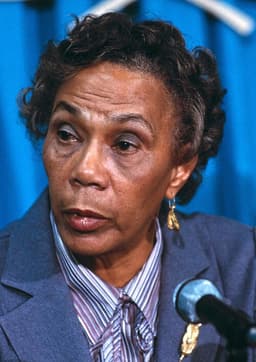
Eugenia Charles
Politician · Modern
55.7Total
Basic Information
Born
1923
1919
Died
—
2005
Era
Modern
Modern
Nationality
Colombia
Dominica
Occupation
Politician
Politician
Civilization
Western
Western
Score Comparison
Military (10%)
49.4
49.7
Political (20%)
55.0
62.7
Influence (20%)
57.2
60.0
Legacy (20%)
49.2
48.3
Leadership (15%)
72.0
66.0
Strategy (15%)
43.0
43.3
TOTAL
54.9
55.7
Belisario Betancur — Complete Timeline
1982 AD
Presidency of ColombiaPolitical Action◆ Major
Belisario Betancur became President of Colombia in 1982. His administration pursued peace negotiations with guerrilla groups and implemented social reforms, earning him a reputation as a peacemaker.
PresidencyPeace ProcessSocial Reform
Impact: nationalconstructive
1984 AD
Peace Process with Guerrilla GroupsPolitical Action◆ Major
Betancur negotiated ceasefires with the FARC, M-19, and ELN guerrilla groups in 1984. The peace process included amnesty for guerrillas and political reforms, though it ultimately failed as violence continued.
Peace ProcessCeasefireGuerrilla Groups
Impact: nationalconstructive
1985 AD
Palace of Justice SiegeWar
The M-19 guerrilla group seized the Palace of Justice in Bogot
Palace of JusticeM-19TragedyMilitary Response
Impact: nationaltragic
Armero TragedyOther◆ Major
The Nevado del Ruiz volcano erupted on November 13, 1985, causing a lahar that destroyed the town of Armero, killing approximately 25,000 people. Betancur's government faced criticism for inadequate warning and response.
Natural DisasterArmeroVolcanic Eruption
Impact: nationaltragic
Eugenia Charles — Complete Timeline
1980 AD
Implemented Economic ReformsReform◆ Major
Charles's government implemented free-market economic reforms, including privatization, tax cuts, and attracting foreign investment. These policies stabilized Dominica's economy but increased inequality.
Economic ReformFree MarketPrivatization
Impact: nationalconstructive
Became First Female Prime Minister of DominicaPolitical Action
Charles led the Dominica Freedom Party to victory in the 1980 general election, becoming the first female Prime Minister of Dominica and the first female head of government in the Caribbean.
First Female PMGender EqualityMilestone
Impact: regionalprogressive
1981 AD
Survived a Coup AttemptPolitical Action◆ Major
Charles's government survived a coup attempt by white supremacist mercenaries, who planned to overthrow her and install a white-led government. The plot was foiled by US and Dominican authorities.
Coup AttemptMercenariesPolitical Violence
Impact: nationaltragic
1983 AD
Led the US Invasion of GrenadaPolitical Action◆ Major
Charles was a key advocate for the US-led invasion of Grenada in 1983, following the execution of Maurice Bishop. She argued that the invasion was necessary to restore democracy and stability in the region.
US InvasionGrenadaForeign PolicyRegional Intervention
Impact: regionalconstructive
This comparison has not been analyzed yet.
One-time AI generation (~1 minute). Scores and timeline are already available below.
Rankings
🥇
Eugenia CharlesLeader
Mil: 49.7Pol: 62.7Inf: 60.0
55.7
🥈
Belisario Betancur
Mil: 49.4Pol: 55.0Inf: 57.2
54.9
+0.8 behind
How This Comparison Works
Algorithm
Each figure is scored on 6 dimensions (0—100 scale) based on structured historical data: Military (10%), Political (20%), Influence (20%), Legacy (20%), Leadership (15%), Strategy (15%). The weighted total produces the final ranking.
Data Sources
Scores are computed from structured sub-indicators in the database. Scale factors adjust for era (Ancient ×0.85, Modern ×1.0) and civilization size (Eastern ×1.05, Other ×0.80) to account for differences in population and military scale.
Maximum 3 Figures
Comparisons are limited to 2—3 figures to ensure readability and statistical meaningfulness.
Error Margins
±5 points per dimension — Sub-scores are derived from historical records with inherent uncertainty. Two figures within 5 points on a dimension should be considered roughly equivalent in that area.
Total Score Accuracy
±3 points overall — The weighted combination of 6 dimensions produces a total score with approximately ±3 points of uncertainty. Differences of less than 3 points are not statistically significant— the figures are effectively tied.
Known Limitations
- Historical records are incomplete and uneven across civilizations
- Figures from oral-tradition societies may be underrepresented
- Occupation labels can misclassify multi-role figures
- Scores measure capability and impact, not moral character
- Quantitative scoring is a comparison tool, not absolute truth
Capability Radar
Military (10%) — Battles & Warfare
Battles
31
30
Win Rate
32
29
Expansion
33
37
Political (20%) — Governance & Reform
Reform
70
55
Diplomacy
75
65
Economy
55
50
Influence (20%) — Cultural & Global Reach
Cultural
40
45
Global
45
45
Legacy (20%) — Historical Impact
Historical
55
50
Longevity
40
40
Leadership (15%) — Power & Stability
Tenure
60
60
Stability
50
55
Strategy (15%) — Tactics & Innovation
Strategy
38
38
Tactics
41
43
Reform
45
43
Similar Comparisons
Comments & Discussion
No comments yet. Be the first to share your thoughts!