Loading...
Basil II vs John of England
Basil II leads by 11.9 pts · 2 figures compared
…
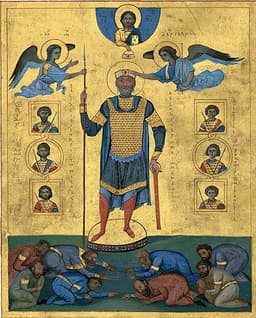
Basil II
Emperor · Medieval
63.8Total
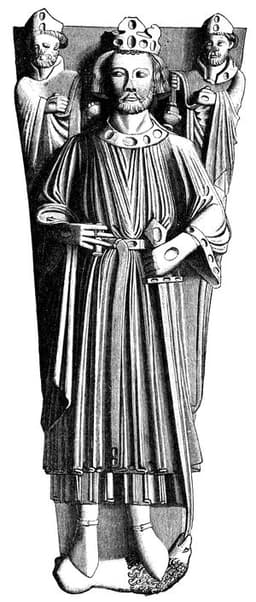
John of England
Emperor · Medieval
51.9Total
Basic Information
Born
958
1166
Died
1025
1216
Era
Medieval
Medieval
Nationality
Byzantine Empire
England
Occupation
Emperor
Emperor
Civilization
Western
Western
Score Comparison
Military (10%)
85.0
50.0
Political (20%)
59.3
39.4
Influence (20%)
56.7
62.0
Legacy (20%)
55.0
55.0
Leadership (15%)
78.0
45.0
Strategy (15%)
68.0
50.0
TOTAL
63.8
51.9
Basil II — Complete Timeline
986 AD
Battle of the Gates of TrajanWar◆ Major
Basil II led an invasion of Bulgaria but was ambushed and defeated at the Gates of Trajan pass. The Byzantine army was routed, and Basil barely escaped. This defeat forced him to adopt a more cautious strategy and delayed the conquest of Bulgaria.
Byzantine-Bulgarian WarsDefeatAmbush
Impact: regionaltragic
1000 AD
Reforms of the Military and Land SystemReform◆ Major
Basil II implemented reforms to strengthen the Byzantine military and economy. He increased the size of the army, improved fortifications, and curbed the power of the landed aristocracy by enforcing laws against the accumulation of large estates. These measures stabilized the empire.
Military ReformLand ReformByzantine Empire
Impact: nationalconstructive
1014 AD
Battle of KleidionWar
Basil II decisively defeated the Bulgarian army at the Battle of Kleidion. After the victory, he blinded 15,000 Bulgarian prisoners, leaving one in every hundred with one eye to lead them home. This earned him the epithet 'Bulgar-Slayer' and broke Bulgarian resistance.
Byzantine-Bulgarian WarsMass BlindingBulgar-Slayer
Impact: regionaldestructive
1018 AD
Annexation of BulgariaWar◆ Major
Following the death of Bulgarian Tsar Samuel and the collapse of Bulgarian resistance, Basil II formally annexed the First Bulgarian Empire into the Byzantine Empire. He established the Theme of Bulgaria, integrating the territory and ending the long war.
AnnexationBulgariaByzantine Expansion
Impact: regionalconstructive
John of England — Complete Timeline
1204 AD
Loss of NormandyWar◆ Major
King John lost the Duchy of Normandy to King Philip II of France after the fall of Ch
Territorial LossFranceAngevin Empire
Impact: regionaldestructive
1208 AD
Interdict on EnglandPolitical Action◆ Major
Pope Innocent III placed England under interdict after John refused to accept Stephen Langton as Archbishop of Canterbury. This suspended church services, causing widespread discontent and leading to John's excommunication.
Church ConflictPapal InterdictExcommunication
Impact: nationaldestructive
1215 AD
First Barons' WarWar◆ Major
After repudiating Magna Carta, John faced the First Barons' War, where rebel barons invited Prince Louis of France to take the English throne. John fought to retain control, leading to widespread devastation.
Civil WarBaronial RevoltFrench Invasion
Impact: nationaldestructive
Signing of Magna CartaPolitical Action
Under pressure from rebellious barons, John signed Magna Carta at Runnymede. The charter limited royal power, established legal rights, and influenced constitutional law, though John later repudiated it.
CharterConstitutionalBaronial Revolt
Impact: globalconstructive
1216 AD
Death from DysenteryOther◆ Major
John died of dysentery at Newark Castle during the First Barons' War. His death allowed his young son Henry III to succeed, and the war ended with the Treaty of Lambeth.
DeathDisease
Impact: nationaltragic
Expert Analysis
Origins
Basil II was born in 958 AD into the Macedonian dynasty of the Byzantine Empire. His father was Emperor Romanos II, but Basil's early life was marked by political instability and regency under the eunuch Basil Lekapenos. He received military training and learned to navigate court intrigue. In contrast, John of England was born in 1166 AD, the youngest son of King Henry II and Eleanor of Aquitaine. John grew up in the shadow of his older brothers, receiving little inheritance (his nickname 'Lackland') despite being his father's favorite. He was educated but lacked the martial prowess of his brothers.
Rise to Power
Basil II became co-emperor in 960 AD and sole emperor in 976 AD after the death of John I Tzimiskes. He faced revolts from powerful generals like Bardas Skleros and Bardas Phokas. Basil crushed these rebellions, notably defeating Phokas at the Battle of Abydos in 989 AD. John of England rose to power after his brother Richard I died in 1199 AD. John had conspired against Richard during his absence, but succeeded him. He immediately lost Normandy and other territories to Philip II of France, undermining his authority.
Leadership & Governance
Basil II was an autocratic ruler who reformed the Byzantine military and land system. He increased army size, improved fortifications, and curbed the power of the aristocracy by taxing them and protecting small farmers. His leadership was hands-on, often leading campaigns personally. John of England, on the other hand, was criticized for his arbitrary rule and heavy taxation. He alienated the nobility and the Church, leading to the Barons' Revolt. His governance scores 39.4 in politics compared to Basil's 59.3, reflecting his inability to maintain support.
Triumph & Tragedy
Basil II's greatest triumph was the annexation of Bulgaria after the Battle of Kleidion in 1014 AD, where he blinded 15,000 prisoners. This earned him the epithet 'Bulgar-Slayer'. However, his tragedy was the Battle of the Gates of Trajan in 986 AD, where he was ambushed and barely escaped. John's triumph was the signing of Magna Carta in 1215 AD, which limited royal power and influenced constitutional law. His tragedy was the loss of Normandy in 1204 AD and the subsequent First Barons' War, which nearly cost him his throne.
Character & Destiny
Basil II was known for his patience, frugality, and military focus. He never married, dedicating his life to the empire. His strategic score of 68.0 reflects his careful planning. John was vengeful, suspicious, and untrustworthy, earning him the reputation of a failed king. His leadership score of 45.0 indicates his inability to inspire loyalty. John's character led to constant conflict with his barons and eventual humiliation at Runnymede.
Legacy
Basil II left a legacy of a restored Byzantine Empire at its greatest territorial extent since Justinian. His military reforms lasted for centuries. However, his successes were not sustained after his death. John's legacy is the Magna Carta, which became a symbol of liberty and influenced later documents like the U.S. Constitution. His influence score of 62.0 is higher than Basil's 56.7, but his overall total of 51.9 is lower.
Conclusion
Despite John's enduring influence through Magna Carta, Basil II had a greater impact on his own era and beyond. Basil's total score of 63.8 surpasses John's 51.9 by 11.9 points. Basil restored Byzantine power and secured its borders for generations, while John's reign was a series of failures mitigated only by the unintended consequence of the Magna Carta. Basil's military and leadership scores (85.0 and 78.0) dwarf John's (50.0 and 45.0). In a direct comparison, Basil II is the more effective and impactful ruler.
Rankings
🥇
Basil IILeader
Mil: 85.0Pol: 59.3Inf: 56.7
63.8
🥈
John of England
Mil: 50.0Pol: 39.4Inf: 62.0
51.9
+11.9 behind
How This Comparison Works
Algorithm
Each figure is scored on 6 dimensions (0—100 scale) based on structured historical data: Military (10%), Political (20%), Influence (20%), Legacy (20%), Leadership (15%), Strategy (15%). The weighted total produces the final ranking.
Data Sources
Scores are computed from structured sub-indicators in the database. Scale factors adjust for era (Ancient ×0.85, Modern ×1.0) and civilization size (Eastern ×1.05, Other ×0.80) to account for differences in population and military scale.
Maximum 3 Figures
Comparisons are limited to 2—3 figures to ensure readability and statistical meaningfulness.
Error Margins
±5 points per dimension — Sub-scores are derived from historical records with inherent uncertainty. Two figures within 5 points on a dimension should be considered roughly equivalent in that area.
Total Score Accuracy
±3 points overall — The weighted combination of 6 dimensions produces a total score with approximately ±3 points of uncertainty. Differences of less than 3 points are not statistically significant— the figures are effectively tied.
Known Limitations
- Historical records are incomplete and uneven across civilizations
- Figures from oral-tradition societies may be underrepresented
- Occupation labels can misclassify multi-role figures
- Scores measure capability and impact, not moral character
- Quantitative scoring is a comparison tool, not absolute truth
Capability Radar
Military (10%) — Battles & Warfare
Battles
85
25
Win Rate
90
20
Expansion
80
10
Political (20%) — Governance & Reform
Reform
80
60
Diplomacy
70
20
Economy
75
25
Influence (20%) — Cultural & Global Reach
Cultural
60
45
Global
65
65
Legacy (20%) — Historical Impact
Historical
75
75
Longevity
70
70
Leadership (15%) — Power & Stability
Tenure
85
40
Stability
80
15
Strategy (15%) — Tactics & Innovation
Strategy
85
25
Tactics
80
30
Reform
75
15
Similar Comparisons
Comments & Discussion
No comments yet. Be the first to share your thoughts!