Loading...
This comparison has not been analyzed yet.
One-time AI generation (~1 minute). Scores and timeline are already available below.
Bashar al-Assad vs Zviad Gamsakhurdia
Bashar al-Assad leads by 3.6 pts · 2 figures compared
…

Bashar al-Assad
Politician · Modern
49.4Total
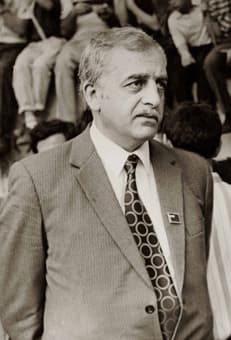
Zviad Gamsakhurdia
Politician · Modern
45.8Total
Basic Information
Born
1965
1939
Died
—
—
Era
Modern
Modern
Nationality
Syria
Georgia
Occupation
Politician
Politician
Civilization
Middle Eastern
Western
Score Comparison
Military (10%)
50.0
48.6
Political (20%)
36.5
37.9
Influence (20%)
56.4
53.3
Legacy (20%)
45.0
41.7
Leadership (15%)
65.0
48.4
Strategy (15%)
38.3
42.1
TOTAL
49.4
45.8
Bashar al-Assad — Complete Timeline
2000 AD
Damascus Spring ReformsReform◆ Major
Assad initially allowed limited political liberalization, including the release of political prisoners and the emergence of civil society forums. The reforms were quickly reversed after 2001 when the regime cracked down on dissent.
Political ReformLiberalizationCrackdown
Impact: national
Assumption of PresidencyPolitical Action◆ Major
Bashar al-Assad became President of Syria after the death of his father Hafez al-Assad. He was confirmed by a referendum with 99.7% approval, inheriting a repressive authoritarian system.
SuccessionAuthoritarianism
Impact: national
2011 AD
Syrian Civil War BeginsWar
Assad responded to peaceful pro-democracy protests with military force, leading to a full-scale civil war. The conflict killed hundreds of thousands, displaced millions, and drew in regional and global powers.
Civil WarArab SpringHumanitarian Crisis
Impact: globaldestructive
2013 AD
Use of Chemical Weapons in GhoutaWar
Assad's forces used sarin gas in the Ghouta suburbs of Damascus, killing over 1,400 civilians. The attack crossed a US 'red line' but led to a negotiated deal to dismantle Syria's chemical weapons arsenal.
Chemical WeaponsWar CrimeInternational Intervention
Impact: globaldestructive
2015 AD
Russian Military InterventionWar
Assad requested Russian military intervention to support his forces. Russian airstrikes turned the tide of the civil war, allowing Assad to regain control of most of Syria's territory.
Foreign InterventionRussiaMilitary Alliance
Impact: regional
Zviad Gamsakhurdia — Complete Timeline
1990 AD
Elected Chairman of the Supreme Council of GeorgiaPolitical Action◆ Major
Gamsakhurdia was elected Chairman of the Supreme Council of Georgia, effectively becoming the head of state. He led Georgia's declaration of independence from the Soviet Union in 1991, ending 70 years of Soviet rule.
Georgian IndependenceSoviet DissolutionNationalism
Impact: nationalconstructive
1991 AD
Elected First President of GeorgiaPolitical Action◆ Major
Gamsakhurdia won the first direct presidential election in Georgia with 86% of the vote. He became the first democratically elected president of the country. His presidency focused on consolidating independence and asserting Georgian sovereignty.
Georgian IndependenceDemocracyPresidency
Impact: nationalconstructive
1992 AD
Overthrow in a Coup d'ÉtatPolitical Action◆ Major
Gamsakhurdia was overthrown by a military coup backed by paramilitary groups and former allies. He fled to Chechnya. The coup led to a civil war and the rise of Eduard Shevardnadze. Gamsakhurdia's authoritarian style and nationalist policies had alienated many.
Georgian Civil WarCoupPolitical Crisis
Impact: nationaldestructive
1993 AD
Death in a Rebellion AttemptWar◆ Major
Gamsakhurdia returned to Georgia to lead an armed rebellion against Shevardnadze's government. He died in unclear circumstances in a village in western Georgia, reportedly by suicide or assassination. His death ended the rebellion.
Georgian Civil WarRebellionDeath
Impact: nationaltragic
This comparison has not been analyzed yet.
One-time AI generation (~1 minute). Scores and timeline are already available below.
Rankings
🥇
Bashar al-AssadLeader
Mil: 50.0Pol: 36.5Inf: 56.4
49.4
🥈
Zviad Gamsakhurdia
Mil: 48.6Pol: 37.9Inf: 53.3
45.8
+3.6 behind
How This Comparison Works
Algorithm
Each figure is scored on 6 dimensions (0—100 scale) based on structured historical data: Military (10%), Political (20%), Influence (20%), Legacy (20%), Leadership (15%), Strategy (15%). The weighted total produces the final ranking.
Data Sources
Scores are computed from structured sub-indicators in the database. Scale factors adjust for era (Ancient ×0.85, Modern ×1.0) and civilization size (Eastern ×1.05, Other ×0.80) to account for differences in population and military scale.
Maximum 3 Figures
Comparisons are limited to 2—3 figures to ensure readability and statistical meaningfulness.
Error Margins
±5 points per dimension — Sub-scores are derived from historical records with inherent uncertainty. Two figures within 5 points on a dimension should be considered roughly equivalent in that area.
Total Score Accuracy
±3 points overall — The weighted combination of 6 dimensions produces a total score with approximately ±3 points of uncertainty. Differences of less than 3 points are not statistically significant— the figures are effectively tied.
Known Limitations
- Historical records are incomplete and uneven across civilizations
- Figures from oral-tradition societies may be underrepresented
- Occupation labels can misclassify multi-role figures
- Scores measure capability and impact, not moral character
- Quantitative scoring is a comparison tool, not absolute truth
Capability Radar
Military (10%) — Battles & Warfare
Battles
35
31
Win Rate
30
31
Expansion
10
36
Political (20%) — Governance & Reform
Reform
15
40
Diplomacy
45
25
Economy
20
20
Influence (20%) — Cultural & Global Reach
Cultural
25
35
Global
45
25
Legacy (20%) — Historical Impact
Historical
40
30
Longevity
30
20
Leadership (15%) — Power & Stability
Tenure
70
30
Stability
10
10
Strategy (15%) — Tactics & Innovation
Strategy
35
37
Tactics
40
39
Reform
20
45
Similar Comparisons
Comments & Discussion
No comments yet. Be the first to share your thoughts!