Loading...
Basdeo Panday vs Georges Pompidou
Georges Pompidou leads by 13.2 pts · 2 figures compared
…
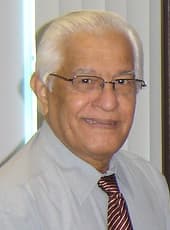
Basdeo Panday
Politician · Modern
46.8Total

Georges Pompidou
Politician · Modern
60.0Total
Basic Information
Born
1933
1911
Died
—
1974
Era
Modern
Modern
Nationality
Trinidad and Tobago
France
Occupation
Politician
Politician
Civilization
Other
Western
Score Comparison
Military (10%)
24.9
46.6
Political (20%)
48.0
59.3
Influence (20%)
54.1
72.0
Legacy (20%)
42.5
50.0
Leadership (15%)
58.8
78.0
Strategy (15%)
41.4
42.7
TOTAL
46.8
60.0
Basdeo Panday — Complete Timeline
1989 AD
Founding of the United National CongressPolitical Action◆ Major
Panday founded the United National Congress (UNC), a political party representing primarily Indo-Trinidadian interests. The party became a major force in Trinidadian politics, winning elections and shaping policy.
Political PartyFoundingRepresentation
Impact: nationalconstructive
1995 AD
First Indo-Trinidadian Prime MinisterPolitical Action
Basdeo Panday became the first Prime Minister of Trinidad and Tobago of Indian descent after leading the United National Congress to victory in the 1995 general election. His election marked a milestone in the country's ethnic politics.
Prime MinisterEthnic PoliticsMilestone
Impact: nationalconstructive
1996 AD
Economic Reforms and Austerity MeasuresReform◆ Major
Panday implemented economic reforms, including austerity measures and privatization, to address fiscal deficits. The policies stabilized the economy but were unpopular with labor unions and led to protests.
Economic ReformAusterityPrivatization
Impact: national
2001 AD
Loss of 2001 General Election and Political CrisisPolitical Action◆ Major
Panday's UNC lost the 2001 general election to the People's National Movement, resulting in a tied parliament and a political crisis. The deadlock led to a second election in 2002, which the PNM won, ending Panday's tenure.
ElectionPolitical CrisisDefeat
Impact: nationaltragic
2002 AD
Corruption Allegations and Legal BattlesPolitical Action◆ Major
Panday faced corruption allegations related to a bank scandal, leading to legal battles and his eventual conviction in 2006 for failing to declare a bank account. The case damaged his political reputation and led to his imprisonment.
CorruptionLegalScandal
Impact: nationaldestructive
Georges Pompidou — Complete Timeline
1962 AD
Appointed Prime Minister of FrancePolitical Action◆ Major
Pompidou was appointed Prime Minister of France by President Charles de Gaulle, serving from 1962 to 1968. He oversaw economic modernization and social reforms during the postwar boom.
Prime MinisterEconomic GrowthDe Gaulle
Impact: nationalconstructive
1968 AD
May 1968 CrisisPolitical Action◆ Major
Pompidou faced the May 1968 student protests and general strikes, which paralyzed France. He negotiated with unions and students, eventually securing a settlement that ended the crisis, but de Gaulle dissolved the government.
May 1968ProtestsCrisis Management
Impact: national
1969 AD
Elected President of FrancePolitical Action◆ Major
Pompidou won the French presidential election after de Gaulle's resignation, defeating Alain Poher. He continued de Gaulle's policies of national independence and European integration.
ElectionPresidentGaullism
Impact: nationalconstructive
1971 AD
Pompidou Center ProjectCultural◆ Major
Pompidou initiated the construction of the Centre Georges Pompidou in Paris, a modern art museum and cultural center. The building, designed by Renzo Piano and Richard Rogers, became an iconic landmark.
Cultural CenterArchitectureArt
Impact: globalconstructive
1974 AD
Death in OfficeOther◆ Major
Pompidou died in office from cancer at age 62. His death triggered a presidential election won by Val
DeathSuccessionElection
Impact: nationaltragic
Expert Analysis
Origins
Basdeo Panday was born on May 25, 1933, in Princes Town, Trinidad, to a poor Indo-Trinidadian family of sugarcane workers. He excelled in school and studied law in London, becoming a barrister. His early life was shaped by racial and class divisions in colonial Trinidad. Georges Pompidou was born on July 5, 1911, in Montboudif, France, to a teacher and a farmer. He studied classics at the École Normale Supérieure and later taught literature. His background was more privileged, and he entered politics through the circle of Charles de Gaulle.
Rise to Power
Panday entered politics in the 1960s, becoming a trade union leader and then a member of parliament. He founded the United National Congress (UNC) in 1989, which coalesced Indo-Trinidadian support. In 1995, he became the first Indo-Trinidadian Prime Minister after his coalition won the general election. Pompidou rose as a trusted aide to de Gaulle, becoming Prime Minister in 1962. He managed the May 1968 crisis by negotiating with unions and students, which solidified his reputation. After de Gaulle resigned in 1969, Pompidou won the presidency with 58.2% of the vote.
Leadership & Governance
Panday’s leadership focused on ethnic representation and economic stabilization. He implemented austerity measures and privatization, reducing the fiscal deficit from 7% to 2% of GDP. However, his governance was marred by corruption allegations and a bank scandal, leading to his conviction in 2006. Pompidou continued de Gaulle’s policies of national independence and economic modernization. He prioritized industrial development, including the Concorde supersonic jet and the nuclear power program. His leadership score of 78.0 reflects his effective handling of crises and governance, compared to Panday’s 58.8.
Triumph & Tragedy
Panday’s greatest triumph was breaking the ethnic barrier by becoming Prime Minister and advancing Indo-Trinidadian representation. His tragedy was his fall from grace: he was convicted for failing to declare a bank account in London, which tarnished his reputation. Pompidou’s triumph includes the construction of the Pompidou Center, a cultural landmark that attracts millions, and his successful management of the May 1968 crisis. His tragedy was dying in office from cancer at age 62, cutting short his presidency and preventing him from completing his second term.
Character & Destiny
Panday was a charismatic and combative figure, often polarizing. His determination to uplift Indo-Trinidadians shaped his political destiny, but his aggressive style led to conflicts and legal troubles. Pompidou was pragmatic and reserved, a skilled negotiator who valued stability. His character allowed him to navigate the turbulent 1960s in France, but his health issues ultimately determined his fate. Historians view Pompidou as a steady hand who continued de Gaulle’s legacy without the same charisma.
Legacy
Panday’s legacy is mixed: he remains a symbol of Indo-Trinidadian political empowerment but is also remembered for corruption. The UNC continues as a major party in Trinidad. Pompidou’s legacy is more institutional: the Pompidou Center revolutionized museum design, and his economic policies modernized France. His scores in influence (72.0) and leadership (78.0) exceed Panday’s (influence 54.1, leadership 58.8). Overall, Pompidou’s impact on French culture and politics is more enduring.
Conclusion
While both leaders broke barriers—Panday as an ethnic pioneer and Pompidou as a successor to de Gaulle—Pompidou had greater impact on a global scale. His total score of 60.0 versus Panday’s 46.8 reflects his superior leadership and influence. Pompidou’s policies shaped modern France, while Panday’s achievements were more localized and marred by controversy. Therefore, Georges Pompidou is the more significant historical figure.
Rankings
🥇
Georges PompidouLeader
Mil: 46.6Pol: 59.3Inf: 72.0
60.0
🥈
Basdeo Panday
Mil: 24.9Pol: 48.0Inf: 54.1
46.8
+13.2 behind
How This Comparison Works
Algorithm
Each figure is scored on 6 dimensions (0—100 scale) based on structured historical data: Military (10%), Political (20%), Influence (20%), Legacy (20%), Leadership (15%), Strategy (15%). The weighted total produces the final ranking.
Data Sources
Scores are computed from structured sub-indicators in the database. Scale factors adjust for era (Ancient ×0.85, Modern ×1.0) and civilization size (Eastern ×1.05, Other ×0.80) to account for differences in population and military scale.
Maximum 3 Figures
Comparisons are limited to 2—3 figures to ensure readability and statistical meaningfulness.
Error Margins
±5 points per dimension — Sub-scores are derived from historical records with inherent uncertainty. Two figures within 5 points on a dimension should be considered roughly equivalent in that area.
Total Score Accuracy
±3 points overall — The weighted combination of 6 dimensions produces a total score with approximately ±3 points of uncertainty. Differences of less than 3 points are not statistically significant— the figures are effectively tied.
Known Limitations
- Historical records are incomplete and uneven across civilizations
- Figures from oral-tradition societies may be underrepresented
- Occupation labels can misclassify multi-role figures
- Scores measure capability and impact, not moral character
- Quantitative scoring is a comparison tool, not absolute truth
Capability Radar
Military (10%) — Battles & Warfare
Battles
21
31
Win Rate
24
33
Expansion
25
37
Political (20%) — Governance & Reform
Reform
40
65
Diplomacy
45
70
Economy
35
75
Influence (20%) — Cultural & Global Reach
Cultural
40
50
Global
25
55
Legacy (20%) — Historical Impact
Historical
35
55
Longevity
20
40
Leadership (15%) — Power & Stability
Tenure
30
70
Stability
25
70
Strategy (15%) — Tactics & Innovation
Strategy
30
38
Tactics
35
39
Reform
37
46
Similar Comparisons
Comments & Discussion
No comments yet. Be the first to share your thoughts!