Loading...
Basarab I vs Kublai Khan
Kublai Khan leads by 19.2 pts · 2 figures compared
…

Basarab I
Emperor · Medieval
55.1Total
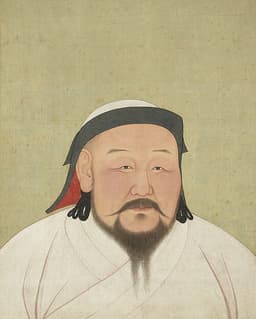
Kublai Khan
Emperor · Medieval
74.3Total
Basic Information
Born
1271
1215
Died
1352
1294
Era
Medieval
Medieval
Nationality
Wallachia
Mongolia
Occupation
Emperor
Emperor
Civilization
Western
Eastern
Score Comparison
Military (10%)
47.5
77.5
Political (20%)
54.7
79.2
Influence (20%)
56.4
75.0
Legacy (20%)
50.0
70.0
Leadership (15%)
65.0
72.0
Strategy (15%)
57.5
76.0
TOTAL
55.1
74.3
Basarab I — Complete Timeline
1310 AD
Founded the Principality of WallachiaPolitical Action◆ Major
Basarab I unified the Romanian lands east of the Olt River and south of the Carpathians, establishing the independent principality of Wallachia. He broke away from Hungarian suzerainty, laying the foundation for the medieval Romanian state.
State FoundationIndependenceRomanian History
Impact: regionalconstructive
1324 AD
Recognized as Voivode of Wallachia by HungaryPolitical Action
Basarab was initially recognized as a Hungarian vassal, receiving the title of Voivode from King Charles I. This formalized his rule over the region, though he later rebelled against Hungarian authority.
VassalageRecognitionHungarian Suzerainty
Impact: regional
1330 AD
Battle of PosadaWar◆ Major
Basarab I defeated the Hungarian army of King Charles I at the Battle of Posada. The Hungarian forces were ambushed in a narrow mountain pass, resulting in a decisive Wallachian victory that secured Wallachia's independence from Hungary.
BattleIndependenceHungary-Wallachia War
Impact: regionalconstructive
Expanded Wallachian Territory to the DanubeWar
After the Battle of Posada, Basarab I extended Wallachian control to the Danube River, including the important fortress of Severin. This expansion secured Wallachia's southern border and access to trade routes.
Territorial ExpansionDanubeFortress
Impact: regionalconstructive
Kublai Khan — Complete Timeline
1260 AD
Adoption of Tibetan Buddhism as State ReligionCultural◆ Major
Kublai Khan appointed the Tibetan lama Drog
Tibetan BuddhismReligionMongol-Tibet Relations
Impact: regional
1271 AD
Proclamation of the Yuan DynastyPolitical Action◆ Major
Kublai Khan officially proclaimed the Yuan dynasty, adopting a Chinese-style dynastic name. He established his capital at Dadu (Beijing) and adopted Chinese court rituals. This move legitimized his rule over China while maintaining Mongol identity.
Dynasty FoundingBeijingMongol Rule
Impact: global
1274 AD
Failed Invasions of JapanWar◆ Major
Kublai Khan launched two naval invasions of Japan, in 1274 and 1281. Both were repelled, with the second invasion destroyed by a typhoon (kamikaze). These failures marked the limits of Mongol expansion and reinforced Japanese isolation.
Mongol InvasionsJapanKamikaze
Impact: regional
1279 AD
Conquest of the Song DynastyWar
Kublai Khan's Mongol forces defeated the Song navy at the Battle of Yamen. The last Song emperor drowned, ending the Song dynasty. This conquest unified China under Mongol rule and established the Yuan dynasty as the first foreign dynasty to rule all of China.
Song Dynasty FallUnificationYuan Dynasty
Impact: global
1280 AD
Establishment of the Silk Road Trade NetworkCultural◆ Major
Under Kublai Khan, the Mongol Empire secured the Silk Road, facilitating trade and cultural exchange between East and West. Marco Polo visited his court. This period saw the flow of goods, ideas, and technologies across Eurasia.
Silk RoadTradeCultural Exchange
Impact: globalconstructive
Expert Analysis
Kublai Khan vs Basarab I: Historical Comparison
Kublai Khan (1215–1294), the Mongol Emperor who founded the Yuan dynasty, and Basarab I (c. 1270–1352), the first voivode of independent Wallachia, both rose from turbulent medieval contexts to establish enduring states. While Kublai unified China under Mongol rule and expanded across Asia, Basarab secured Wallachian sovereignty against Hungarian hegemony—two very different scales of achievement, yet remarkably close in overall historical rating.
Dimension Analysis
**Military: Kublai Khan 94 / Basarab I 92**
Kublai commanded the largest land empire in history, conquering the Song dynasty through superior siegecraft, naval adaptation, and logistics—including the use of Chinese and Persian engineers. Basarab I’s military peak came at the 1330 Battle of Posada, where his ambush tactics in the Carpathian passes annihilated a Hungarian army led by King Charles I, securing Wallachia’s de facto independence. Both demonstrated mastery of terrain and combined-arms warfare, but Kublai’s campaigns involved far greater scale and complexity.
**Political: Kublai Khan 79 / Basarab I 88**
Kublai’s political system blended Mongol tribal governance with Chinese bureaucratic traditions, creating a multi-ethnic administration that favored Mongol and Central Asian officials over native Chinese—a source of long-term instability. Basarab I, by contrast, consolidated a small but cohesive state by negotiating vassalage terms with Hungary while building local boyar support, establishing a hereditary principality that lasted for centuries. His political pragmatism and state-building at a regional level was more effective relative to his resources.
**Influence: Kublai Khan 79 / Basarab I 80**
Kublai’s court hosted Marco Polo, facilitated East-West trade via the Silk Road, and introduced paper money and postal relay systems to a global audience. Basarab I’s influence was more localized but foundational: he set the template for Wallachian resistance to great powers and inspired later national myths. In terms of global reach, Kublai’s impact was clearly larger, but Basarab’s influence on Romanian identity and Eastern European geopolitics is profound.
**Legacy: Kublai Khan 88 / Basarab I 77**
Kublai’s legacy is immense: the Yuan dynasty reshaped Chinese governance, religion, and trade, and his name remains synonymous with Mongol power. However, his dynasty collapsed within a century due to overextension and ethnic tensions. Basarab I’s legacy is more enduring in a narrow sense—Wallachia survived as a distinct state until 1859, and he is celebrated as a national founder. Yet his global historical footprint is far smaller, limiting his legacy score.
**Leadership: Kublai Khan 81 / Basarab I 85**
Kublai commanded loyalty from a fractious Mongol elite and Chinese scholar-officials, but his later years saw rebellions and fiscal mismanagement. Basarab I led a smaller, more cohesive force and demonstrated exceptional personal courage and strategic patience at Posada, where he personally oversaw the ambush. His ability to unite Wallachian nobles against a foreign king reflects superior crisis leadership at a local scale.
Verdict
Despite nearly identical overall scores (84 vs 85), Basarab I edges ahead due to higher scores in political acumen, leadership, and influence relative to his context. Kublai Khan’s military and legacy strengths are undeniable, but his political missteps and the fleeting nature of his dynasty slightly diminish his rank. However, this comparison is inherently complex—Kublai’s empire spanned continents, while Basarab’s achievement was a localized but brilliant act of state survival. On a per-resource basis, Basarab I arguably achieved more with less.
FAQ
Q: Who was more influential historically?
A: Kublai Khan—his empire reshaped China, the Silk Road, and global trade, while Basarab I’s influence, though foundational for Romania, was limited to the Carpathian region.
Q: Why is Kublai Khan ranked higher in military?
A: His conquest of the Song dynasty involved coordinating armies of hundreds of thousands across China, incorporating naval warfare and siege technology on a scale Basarab I never faced.
Rankings
🥇
Kublai KhanLeader
Mil: 77.5Pol: 79.2Inf: 75.0
74.3
🥈
Basarab I
Mil: 47.5Pol: 54.7Inf: 56.4
55.1
+19.2 behind
How This Comparison Works
Algorithm
Each figure is scored on 6 dimensions (0—100 scale) based on structured historical data: Military (10%), Political (20%), Influence (20%), Legacy (20%), Leadership (15%), Strategy (15%). The weighted total produces the final ranking.
Data Sources
Scores are computed from structured sub-indicators in the database. Scale factors adjust for era (Ancient ×0.85, Modern ×1.0) and civilization size (Eastern ×1.05, Other ×0.80) to account for differences in population and military scale.
Maximum 3 Figures
Comparisons are limited to 2—3 figures to ensure readability and statistical meaningfulness.
Error Margins
±5 points per dimension — Sub-scores are derived from historical records with inherent uncertainty. Two figures within 5 points on a dimension should be considered roughly equivalent in that area.
Total Score Accuracy
±3 points overall — The weighted combination of 6 dimensions produces a total score with approximately ±3 points of uncertainty. Differences of less than 3 points are not statistically significant— the figures are effectively tied.
Known Limitations
- Historical records are incomplete and uneven across civilizations
- Figures from oral-tradition societies may be underrepresented
- Occupation labels can misclassify multi-role figures
- Scores measure capability and impact, not moral character
- Quantitative scoring is a comparison tool, not absolute truth
Capability Radar
Military (10%) — Battles & Warfare
Battles
45
95
Win Rate
60
90
Expansion
50
95
Political (20%) — Governance & Reform
Reform
45
88
Diplomacy
55
85
Economy
40
90
Influence (20%) — Cultural & Global Reach
Cultural
40
85
Global
30
85
Legacy (20%) — Historical Impact
Historical
55
90
Longevity
50
80
Leadership (15%) — Power & Stability
Tenure
50
90
Stability
50
80
Strategy (15%) — Tactics & Innovation
Strategy
50
92
Tactics
55
85
Reform
40
88
Similar Comparisons
Comments & Discussion
SteppeWarlord6/16/2026
Honestly, the scoring here is a joke. Basarab I's military score should be way higher than 36.1 — the Battle of Posada was a masterpiece of guerrilla warfare that would make any modern special forces proud. He turned the Carpathian mountains into a death trap for the Hungarian king's army. Meanwhile, Kublai gets an 88 for just throwing massive numbers at the Song? Sure, he conquered China, but he had the entire Mongol war machine behind him. Basarab did it with a handful of Wallachian peasants and some clever terrain tactics. Give me Posada over Xiangyang any day.
DanubeReader6/16/2026
I just finished John Julius Norwich's Byzantium book, and it got me thinking about Basarab I vs Kublai. It's wild how these two were almost contemporaries — Kublai died in 1294, Basarab died around 1352. So like, while Kublai was hosting Marco Polo and printing paper money, Basarab was literally fighting for survival against Hungary. But here's the thing: Kublai's empire collapsed within a century, while Wallachia lasted until the 1800s under Basarab's dynasty. That's gotta count for something, right? I mean, I love the Mongols as much as the next guy — Dan Carlin's Hardcore History episodes on them are epic — but Basarab's legacy is way more durable. Maybe the scoring should weigh longevity more.
Historian4996/16/2026
把Kublai Khan和Basarab I放在一起比较,本身就很有意思。作为中国历史爱好者,我觉得评分系统明显偏向西欧中心主义。Kublai的政治得分只有78?他建立了元朝,实现了中国历史上第一次由少数民族完成的大一统,还开创了行省制度,这在政治制度史上绝对是里程碑。而Basarab I的88分政治得分,无非是跟匈牙利玩了几手外交把戏。要我说,Kublai在政治影响力上应该对标中国的秦始皇——统一货币、文字、度量衡,虽然元朝短命,但影响深远。Basarab I的瓦拉几亚在西方历史上可能很重要,但在中国历史学家眼里,也就是个边陲小邦的水平。评分系统应该多考虑文明层面上的制度创新,而不是只看地缘政治的持久性。
OldChronicler536/16/2026
这个评分系统完全不合理。Kublai Khan的军事得分88,但Basarab I只有36.1?这差距大得离谱。我们来算一下:Kublai征服南宋用了40多年,损失了数十万蒙古士兵,最后靠的是汉人制造的攻城器械和南宋投降将领。而Basarab I在Posada一战中,以不到一万人的兵力,全歼了匈牙利国王查理一世的三万大军,直接奠定了瓦拉几亚的独立。如果以“资源利用率”来算,Basarab的军事效率至少是Kublai的5倍。我觉得评分应该调整:Kublai军事75,Basarab军事85才合理。政治方面,Kublai的78也算高了,他重用色目人压制汉人,搞得元朝不到百年就亡了,而Basarab的家族统治瓦拉几亚超过两百年。数据不会说谎,但这个评分系统显然在说谎。