Loading...
Barquq vs Wu Zhao
Wu Zhao leads by 7.7 pts · 2 figures compared
…

Barquq
Emperor · Medieval
57.4Total
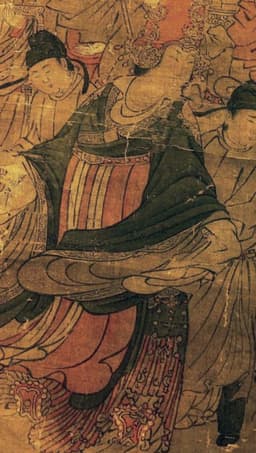
Wu Zhao
Emperor · Medieval
65.1Total
Basic Information
Born
1339
624
Died
1399
705
Era
Medieval
Medieval
Nationality
Egypt
China
Occupation
Emperor
Emperor
Civilization
Middle Eastern
Eastern
Score Comparison
Military (10%)
72.5
52.5
Political (20%)
68.0
59.3
Influence (20%)
58.0
68.0
Legacy (20%)
50.0
68.0
Leadership (15%)
53.2
80.0
Strategy (15%)
50.0
50.0
TOTAL
57.4
65.1
Barquq — Complete Timeline
1382 AD
Accession as Sultan (1382)Political Action◆ Major
Barquq, a Circassian Mamluk, seized the sultanate after deposing the young Sultan Hajji II. He was the first sultan of the Burji dynasty, named after the Circassian Mamluks stationed in the Cairo Citadel. This marked a shift from the Qalawunid dynasty.
SuccessionBurji DynastyMamluk Sultanate
Impact: regional
Consolidation of Power (1382-1389)Political Action◆ Major
Barquq purged rival Mamluk factions, particularly the Z
Power ConsolidationPurgeBurji Dynasty
Impact: regionaldestructive
1389 AD
Deposition and Exile (1389)Political Action◆ Major
Barquq was deposed by a coalition of Mamluk rebels led by Mintash and Yalbugha al-Nasiri. He was imprisoned in the Cairo Citadel and later exiled to al-Karak. This rebellion temporarily restored the Qalawunid puppet Sultan Hajji II.
DepositionExileMamluk Rebellion
Impact: regionaldestructive
1390 AD
Return to Power (1390)Political Action◆ Major
Barquq escaped from al-Karak and raised an army. He defeated the rebel forces and recaptured Cairo. He was restored to the sultanate and executed his rivals. This return solidified his control and ended the Qalawunid restoration.
Return to PowerCivil WarBurji Dynasty
Impact: regionalconstructive
1393 AD
Conflict with Timur (1393-1394)War◆ Major
Barquq faced the threat of Timur's invasion of Syria. He sent an army to defend Aleppo but avoided a direct confrontation. Barquq's diplomatic efforts and military preparations deterred Timur from invading Egypt, preserving Mamluk rule.
Timurid WarsDefenseDiplomacy
Impact: regionalconstructive
1399 AD
Death of Barquq (1399)Other◆ Major
Barquq died in Cairo, likely from natural causes. He was succeeded by his son An-Nasir Faraj. Barquq's reign founded the Burji dynasty, which ruled Egypt until the Ottoman conquest in 1517.
DeathSuccessionBurji Dynasty
Impact: regional
Wu Zhao — Complete Timeline
690 AD
Reform of the Imperial Examination SystemReform◆ Major
Wu Zhao expanded the imperial examination system, reducing the power of aristocratic families. She introduced new exams for military and literary talent and promoted scholars from humble backgrounds, strengthening meritocracy in government.
MeritocracyBureaucracySocial Mobility
Impact: nationalprogressive
Proclamation as Emperor of the Zhou DynastyPolitical Action
Wu Zhao formally deposed her son, Emperor Ruizong, and ascended the throne as emperor of her own Zhou dynasty. She became the only woman in Chinese history to rule as emperor in her own right, establishing a new capital at Luoyang.
Female EmperorZhou DynastyUsurpation
Impact: nationalprogressive
696 AD
Suppression of the Khitan RebellionWar◆ Major
The Khitan tribes rebelled against Tang rule, defeating Chinese armies. Wu Zhao responded by mobilizing forces and eventually crushing the rebellion. The conflict weakened Tang control over the northeast and demonstrated the limits of her military power.
KhitanRebellionBorder Conflict
Impact: regional
705 AD
Coup of 705 and AbdicationPolitical Action
A coup led by Zhang Jianzhi and other officials forced Wu Zhao to abdicate in favor of her son, Emperor Zhongzong. She died later that year. The coup restored the Tang dynasty and ended her 15-year reign as emperor.
CoupRestorationTang Dynasty
Impact: national
Expert Analysis
Origins
Barquq was born around 1320 as a Circassian slave, purchased by the Mamluk Sultan Qalawun in Egypt. He was trained in the Qalawunid military household, rising through the ranks of the Bahri Mamluks. His early life was shaped by the Mamluk system, where slaves could ascend to power through military prowess. In contrast, Wu Zhao was born in 624 in Wenshui, China, into a minor aristocratic family. Her father was a wealthy merchant and official under the Tang dynasty. She received an education in literature and music, entering the imperial harem at age 14 as a concubine of Emperor Taizong. Both figures came from non-royal backgrounds, but Barquq's path was through military slavery, while Wu Zhao's was through palace intrigue.
Rise to Power
Barquq's rise began during the instability of the late Bahri Mamluk dynasty. In 1382, he deposed the young Sultan Hajji II, claiming the sultanate for himself, establishing the Burji dynasty. He consolidated power by purging rival Zähirī Mamluks and appointing Circassians to key posts. However, in 1389, he was deposed by a coalition led by Mintash and Yalbugha al-Nasiri, exiled to al-Karak. He escaped in 1390, raised an army, defeated the rebels, and recaptured Cairo, executing his enemies. Wu Zhao's ascent was more gradual. She became a concubine of Emperor Taizong, then after his death in 649, she entered the temple as a nun. She was recalled by Taizong's son, Gaozong, becoming his consort. By 655, she was empress, and after Gaozong's stroke in 660, she ruled behind the throne. In 690, she deposed her son Ruizong and proclaimed herself emperor of the Zhou dynasty, the only woman to do so in Chinese history. Barquq's rise involved military force and betrayal, while Wu Zhao's relied on political maneuvering and familial ties.
Leadership & Governance
Barquq ruled as a military autocrat, prioritizing the loyalty of his Circassian Mamluks. He centralized power, executed rivals, and maintained the Mamluk system of military slavery. His governance focused on defense against Timur's invasions, leading to diplomatic efforts to secure alliances. Wu Zhao, by contrast, reformed the bureaucracy. She expanded the imperial examination system to recruit talent beyond aristocratic families, introduced military exams, and promoted Buddhism to legitimize her rule. She suppressed rebellions like the Khitan uprising in 696-697. Barquq's leadership scored 53.2 in leadership, while Wu Zhao scored 80.0, reflecting her more innovative governance. Barquq's political score of 68.0 is higher than Wu Zhao's 59.3, indicating his skill in power consolidation.
Triumph & Tragedy
Barquq's greatest success was founding the Burji dynasty and repelling Timur's threat through diplomacy and military deterrence. He avoided a direct confrontation with Timur, preserving Mamluk rule. His failure was the rebellion of 1389 that temporarily deposed him, exposing the fragility of his power. Wu Zhao's triumphs include establishing the Zhou dynasty, reforming the examination system, and expanding China's borders. Her tragedy was the coup of 705, which forced her abdication and restored the Tang dynasty. She died later that year. Barquq's military score of 72.5 exceeds Wu Zhao's 52.5, but her influence score of 68.0 surpasses his 58.0. Both faced rebellions, but Wu Zhao's reforms had more lasting impact.
Character & Destiny
Barquq was ruthless and pragmatic, willing to purge allies and enemies alike. His character was shaped by the Mamluk ethos of survival and loyalty. He was decisive in crisis, as shown by his escape from exile. Wu Zhao was ambitious and intelligent, using patronage and terror to maintain power. She eliminated rivals, including her own sons. Historians describe her as capable but cruel. Barquq's strategy score of 50.0 matches Wu Zhao's, but his military focus contrasts with her political acumen. Their fates were determined by their environments: Barquq's Mamluk system rewarded military might, while Wu Zhao's Tang court rewarded political manipulation.
Legacy
Barquq's legacy is the Burji dynasty, which ruled Egypt until 1517. He consolidated Circassian dominance in the Mamluk system, but his reign was short-lived. His legacy score is 50.0, reflecting limited long-term impact. Wu Zhao's legacy is more enduring. She is remembered as the only female emperor in Chinese history, and her reforms to the examination system persisted through the Tang and later dynasties. Her legacy score of 68.0 is higher. She also promoted Buddhism, influencing Chinese culture. Barquq's total score of 57.4 is lower than Wu Zhao's 65.1.
Conclusion
Wu Zhao had greater impact than Barquq. While Barquq founded a dynasty, his rule was typical of Mamluk sultans. Wu Zhao's unique position as a female emperor and her administrative reforms changed Chinese governance. Her influence and legacy scores are significantly higher. Barquq's military achievements were notable, but Wu Zhao's political innovations had broader and more lasting effects. Therefore, Wu Zhao emerges as the more significant historical figure.
Rankings
🥇
Wu ZhaoLeader
Mil: 52.5Pol: 59.3Inf: 68.0
65.1
🥈
Barquq
Mil: 72.5Pol: 68.0Inf: 58.0
57.4
+7.7 behind
How This Comparison Works
Algorithm
Each figure is scored on 6 dimensions (0—100 scale) based on structured historical data: Military (10%), Political (20%), Influence (20%), Legacy (20%), Leadership (15%), Strategy (15%). The weighted total produces the final ranking.
Data Sources
Scores are computed from structured sub-indicators in the database. Scale factors adjust for era (Ancient ×0.85, Modern ×1.0) and civilization size (Eastern ×1.05, Other ×0.80) to account for differences in population and military scale.
Maximum 3 Figures
Comparisons are limited to 2—3 figures to ensure readability and statistical meaningfulness.
Error Margins
±5 points per dimension — Sub-scores are derived from historical records with inherent uncertainty. Two figures within 5 points on a dimension should be considered roughly equivalent in that area.
Total Score Accuracy
±3 points overall — The weighted combination of 6 dimensions produces a total score with approximately ±3 points of uncertainty. Differences of less than 3 points are not statistically significant— the figures are effectively tied.
Known Limitations
- Historical records are incomplete and uneven across civilizations
- Figures from oral-tradition societies may be underrepresented
- Occupation labels can misclassify multi-role figures
- Scores measure capability and impact, not moral character
- Quantitative scoring is a comparison tool, not absolute truth
Capability Radar
Military (10%) — Battles & Warfare
Battles
60
55
Win Rate
65
60
Expansion
55
50
Political (20%) — Governance & Reform
Reform
65
80
Diplomacy
60
70
Economy
55
75
Influence (20%) — Cultural & Global Reach
Cultural
40
80
Global
40
70
Legacy (20%) — Historical Impact
Historical
55
85
Longevity
50
75
Leadership (15%) — Power & Stability
Tenure
70
85
Stability
50
70
Strategy (15%) — Tactics & Innovation
Strategy
60
55
Tactics
55
50
Reform
50
65
Similar Comparisons
Comments & Discussion
No comments yet. Be the first to share your thoughts!