Loading...
Barquq vs Julius Caesar
Julius Caesar leads by 25.4 pts · 2 figures compared
…
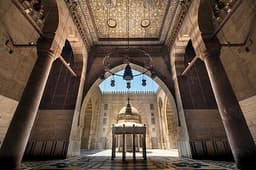
Barquq
Emperor · Medieval
57.4Total

Julius Caesar
General · Ancient
82.8Total
Basic Information
Born
1339
-100
Died
1399
-44
Era
Medieval
Ancient
Nationality
Egypt
Roman Republic
Occupation
Emperor
General
Civilization
Middle Eastern
Western
Score Comparison
Military (10%)
72.5
88.0
Political (20%)
68.0
78.0
Influence (20%)
58.0
85.0
Legacy (20%)
50.0
82.0
Leadership (15%)
53.2
80.0
Strategy (15%)
50.0
85.0
TOTAL
57.4
82.8
Barquq — Complete Timeline
1382 AD
Accession as Sultan (1382)Political Action◆ Major
Barquq, a Circassian Mamluk, seized the sultanate after deposing the young Sultan Hajji II. He was the first sultan of the Burji dynasty, named after the Circassian Mamluks stationed in the Cairo Citadel. This marked a shift from the Qalawunid dynasty.
SuccessionBurji DynastyMamluk Sultanate
Impact: regional
Consolidation of Power (1382-1389)Political Action◆ Major
Barquq purged rival Mamluk factions, particularly the Z
Power ConsolidationPurgeBurji Dynasty
Impact: regionaldestructive
1389 AD
Deposition and Exile (1389)Political Action◆ Major
Barquq was deposed by a coalition of Mamluk rebels led by Mintash and Yalbugha al-Nasiri. He was imprisoned in the Cairo Citadel and later exiled to al-Karak. This rebellion temporarily restored the Qalawunid puppet Sultan Hajji II.
DepositionExileMamluk Rebellion
Impact: regionaldestructive
1390 AD
Return to Power (1390)Political Action◆ Major
Barquq escaped from al-Karak and raised an army. He defeated the rebel forces and recaptured Cairo. He was restored to the sultanate and executed his rivals. This return solidified his control and ended the Qalawunid restoration.
Return to PowerCivil WarBurji Dynasty
Impact: regionalconstructive
1393 AD
Conflict with Timur (1393-1394)War◆ Major
Barquq faced the threat of Timur's invasion of Syria. He sent an army to defend Aleppo but avoided a direct confrontation. Barquq's diplomatic efforts and military preparations deterred Timur from invading Egypt, preserving Mamluk rule.
Timurid WarsDefenseDiplomacy
Impact: regionalconstructive
1399 AD
Death of Barquq (1399)Other◆ Major
Barquq died in Cairo, likely from natural causes. He was succeeded by his son An-Nasir Faraj. Barquq's reign founded the Burji dynasty, which ruled Egypt until the Ottoman conquest in 1517.
DeathSuccessionBurji Dynasty
Impact: regional
Julius Caesar — Complete Timeline
58 BC
Gallic WarsWar◆ Major
Caesar, as proconsul of Gaul, launched a series of campaigns that conquered all of Gaul (modern France, Belgium, and parts of Switzerland). He fought numerous battles, including against the Helvetii, the Belgae, and the Gallic chieftain Vercingetorix. The wars brought immense wealth and a loyal army to Caesar.
Gallic WarsConquestRoman Expansion
Impact: regional
49 BC
Crossing the RubiconPolitical Action◆ Major
Caesar led Legio XIII across the Rubicon River into Italy, defying the Roman Senate's order to disband his army. This act triggered a civil war against Pompey and the Optimates, ultimately leading to Caesar's dictatorship and the end of the Roman Republic.
Roman Civil WarEnd of RepublicPower Struggle
Impact: global
48 BC
Battle of PharsalusWar◆ Major
Caesar's outnumbered army defeated the larger forces of Pompey the Great at Pharsalus in Greece. Caesar's tactical use of a reserve line to counter Pompey's cavalry charge proved decisive. Pompey fled to Egypt, where he was assassinated, leaving Caesar as the undisputed master of the Roman world.
Roman Civil WarBattleDecisive Victory
Impact: regional
44 BC
Appointment as Dictator for LifePolitical Action◆ Major
The Roman Senate appointed Caesar dictator perpetuo (dictator for life), granting him unprecedented personal power. This move concentrated military, legislative, and judicial authority in one person, effectively ending the Roman Republic's traditional system of checks and balances and alarming many senators.
DictatorshipEnd of RepublicPower Consolidation
Impact: regionaldestructive
Assassination on the Ides of MarchPolitical Action◆ Major
A group of Roman senators, led by Marcus Junius Brutus and Gaius Cassius Longinus, stabbed Caesar to death at a meeting of the Senate in the Theatre of Pompey. The assassination was intended to restore the Republic, but instead triggered another civil war that led to the rise of the Roman Empire.
AssassinationRoman PoliticsEnd of Republic
Impact: globaldestructive
Expert Analysis
barquq-vs-julius-caesar
# The Crossing Points: How Two Men Seized History from Different Directions
On a January morning in 49 BCE, Julius Caesar stood at the banks of the Rubicon River in northern Italy, knowing that to cross would mean civil war, and to turn back would mean political ruin. He crossed. More than fourteen centuries later, in the dusty streets of Cairo, a Circassian slave named Barquq watched his rival sultan fall, knowing that to seize the throne would mean defying an entire dynasty, and to hesitate would mean death. He seized it. Both men stood at the edge of impossible choices. But the worlds they crossed into could not have been more different—and neither could the paths that led them there.
Origins
Julius Caesar was born into the patrician Julian clan, one of Rome’s oldest families, in 100 BCE. But nobility did not mean wealth. The Republic was collapsing under the weight of its own ambitions—senatorial corruption, landless veterans, and slave revolts. Caesar grew up watching his uncle Gaius Marius fight for power against Sulla, and he learned early that in Rome, survival meant playing a brutal game of alliances, debts, and patronage. He was a man of the city, of the forum, of words and bribes.
Barquq, by contrast, was born in 1339 in the Caucasus, a region of mountains and steppes. He was captured as a child and sold into slavery in Egypt—a common fate for Circassians, prized for their martial skills. In the Mamluk system, slaves became soldiers, and soldiers became kings. Barquq rose through the ranks of the Bahri Mamluk dynasty, a military aristocracy that had ruled Egypt and Syria for over a century. He was a man of the barracks, of the sword, of loyalty bought and betrayed in equal measure.
Rise to Power
Caesar’s ascent was a masterpiece of calculated risk. He borrowed fortunes to buy popularity, secured the governorship of Gaul at age 42, and then spent eight years conquering a territory that doubled Rome’s holdings. His *Commentaries on the Gallic War* were not just military records—they were political propaganda, sent back to Rome to make his name synonymous with victory. When the Senate ordered him to disband his army, he instead marched on Rome, crossing the Rubicon in 49 BCE. The Republic, already fraying, could not stop him.
Barquq’s rise was more brutal and less glorious. In 1382, he deposed the teenage Sultan Hajji II, a puppet of the Bahri line. Barquq was the first Circassian to rule Egypt, and his accession broke a century of Turkic Mamluk dominance. He spent the next seven years purging rivals—particularly the Zähirī Mamluks loyal to the old dynasty. But in 1389, a coalition of rebels led by Mintash and Yalbugha al-Nasiri deposed him and imprisoned him in the Cairo Citadel. Barquq escaped to al-Karak, raised an army, and recaptured Cairo in 1390. His return was not a triumph of rhetoric or romance; it was a raw, desperate grab for power in a system where loyalty lasted only as long as the gold did.
Leadership & Governance
Caesar governed as he conquered—with speed, clarity, and a vision that outran his time. As dictator, he reformed the calendar, extended citizenship to provincials, launched public works, and centralized tax collection. He was generous to his enemies, pardoning many who had fought against him, and he packed the Senate with his own supporters. His military genius lay in mobility and logistics: at Alesia (52 BCE), he built fortifications around a besieged Gallic army, then turned to defeat a relief force—all while outnumbered. His political genius lay in understanding that the Republic was already dead; he simply refused to pretend otherwise.
Barquq ruled a different world. The Mamluk state was a military oligarchy where the sultan was first among equals—and equality was measured by the sharpness of one’s dagger. Barquq’s political score of 80.8 reflects his skill at balancing factions, appointing Circassians to key posts, and suppressing revolts. But his military score of 55.0 tells a quieter story. When Timur (Tamerlane) invaded Syria in 1393, Barquq sent an army to defend Aleppo but avoided a direct confrontation. He knew that a pitched battle against the world’s most feared conqueror could destroy his dynasty before it began. He chose survival over glory.
Triumph & Tragedy
Caesar’s greatest triumph was his own life—a story so improbable that it became legend. He conquered Gaul, defied the Senate, defeated Pompey, and became master of the Roman world. His tragedy was that he could not stop. He refused to restore the Republic, accepted the title “dictator for life,” and was stabbed to death on the Ides of March in 44 BCE by senators he had pardoned. His last breath was not a speech but a gasp of betrayal.
Barquq’s triumph was founding the Burji Mamluk dynasty, which would rule Egypt for over a century. His tragedy was that his successors inherited a state constantly under threat—from Timur, from the Ottomans, from internal coups. He died in 1399, likely from natural causes, and was succeeded by his son An-Nasir Faraj, who would prove unable to hold the realm together.
Character & Destiny
Caesar was driven by an insatiable need for recognition. He wanted to be first—in Rome, in history, in memory. He gambled everything on his own genius, and he won, until the moment he lost. Barquq was driven by survival. He had been a slave; he knew what it meant to have nothing. His decisions were cautious, his ambitions limited to the throne he held. Where Caesar reached for eternity, Barquq reached for the next dawn.
Legacy
Caesar’s legacy is the Roman Empire, the Western calendar, and the word “Caesar” itself—a title that would be used by emperors, tsars, and kaisers for two millennia. He is remembered as a man who broke the world to remake it.
Barquq’s legacy is quieter but no less real. The Burji Mamluks held Egypt against Timur, preserved the Islamic world’s eastern flank, and left behind the architecture of Cairo’s Citadel. He is remembered as a founder, not a destroyer—a man who built a dynasty from the shards of a slave market.
Conclusion
Caesar crossed the Rubicon and changed the world. Barquq crossed the threshold of the Cairo Citadel and changed a kingdom. One acted with the confidence of a man who believed he was destined for greatness; the other acted with the desperation of a man who knew he had nothing to lose. In the end, both understood that power is not given—it is taken. The difference is only in how far you are willing to go, and what you are willing to leave behind.
Rankings
🥇
Julius CaesarLeader
Mil: 88.0Pol: 78.0Inf: 85.0
82.8
🥈
Barquq
Mil: 72.5Pol: 68.0Inf: 58.0
57.4
+25.4 behind
How This Comparison Works
Algorithm
Each figure is scored on 6 dimensions (0—100 scale) based on structured historical data: Military (10%), Political (20%), Influence (20%), Legacy (20%), Leadership (15%), Strategy (15%). The weighted total produces the final ranking.
Data Sources
Scores are computed from structured sub-indicators in the database. Scale factors adjust for era (Ancient ×0.85, Modern ×1.0) and civilization size (Eastern ×1.05, Other ×0.80) to account for differences in population and military scale.
Maximum 3 Figures
Comparisons are limited to 2—3 figures to ensure readability and statistical meaningfulness.
Error Margins
±5 points per dimension — Sub-scores are derived from historical records with inherent uncertainty. Two figures within 5 points on a dimension should be considered roughly equivalent in that area.
Total Score Accuracy
±3 points overall — The weighted combination of 6 dimensions produces a total score with approximately ±3 points of uncertainty. Differences of less than 3 points are not statistically significant— the figures are effectively tied.
Known Limitations
- Historical records are incomplete and uneven across civilizations
- Figures from oral-tradition societies may be underrepresented
- Occupation labels can misclassify multi-role figures
- Scores measure capability and impact, not moral character
- Quantitative scoring is a comparison tool, not absolute truth
Capability Radar
Military (10%) — Battles & Warfare
Battles
60
95
Win Rate
65
92
Expansion
55
97
Political (20%) — Governance & Reform
Reform
65
90
Diplomacy
60
85
Economy
55
82
Influence (20%) — Cultural & Global Reach
Cultural
40
88
Global
40
94
Legacy (20%) — Historical Impact
Historical
55
95
Longevity
50
96
Leadership (15%) — Power & Stability
Tenure
70
75
Stability
50
60
Strategy (15%) — Tactics & Innovation
Strategy
60
94
Tactics
55
96
Reform
50
88
Similar Comparisons
Comments & Discussion
No comments yet. Be the first to share your thoughts!