Loading...
Bappa Rawal vs Wanyan Aguda
Wanyan Aguda leads by 15.6 pts · 2 figures compared
…
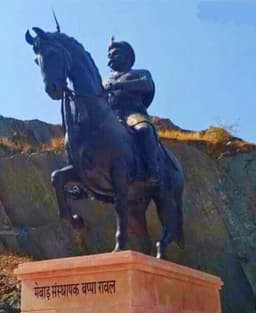
Bappa Rawal
Emperor · Medieval
47.8Total
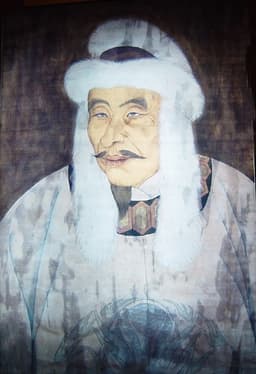
Wanyan Aguda
Emperor · Medieval
63.4Total
Basic Information
Born
713
1068
Died
780
1123
Era
Medieval
Medieval
Nationality
India
China
Occupation
Emperor
Emperor
Civilization
Indian
Eastern
Score Comparison
Military (10%)
10.0
82.0
Political (20%)
35.1
59.3
Influence (20%)
58.0
55.0
Legacy (20%)
50.0
52.0
Leadership (15%)
67.0
85.0
Strategy (15%)
45.0
68.0
TOTAL
47.8
63.4
Bappa Rawal — Complete Timeline
734 AD
Conquest of ChittorWar◆ Major
Bappa Rawal captured the fort of Chittor from the Mori Rajputs, establishing it as the capital of the Mewar kingdom. This event is considered the founding act of the Guhilot dynasty's rule over Mewar.
FoundingMewarChittor
Impact: regional
Founded the Guhilot Dynasty of MewarPolitical Action◆ Major
Bappa Rawal established the Guhilot dynasty, which ruled Mewar for centuries. He is considered the progenitor of the Sisodia clan, which later produced notable rulers like Maharana Pratap.
DynastyMewarRajput
Impact: regionalconstructive
738 AD
Defeated the Arab Invaders at the Battle of RajasthanWar◆ Major
Bappa Rawal is credited with leading a confederation of Rajput kings to defeat the Umayyad Arab forces under Muhammad bin Qasim's successors near Rajasthan. This victory halted Arab expansion into northern India.
Arab InvasionDefenseRajput Confederation
Impact: regional
Wanyan Aguda — Complete Timeline
1114 AD
Battle of HubudagangWar◆ Major
Aguda's Jurchen forces defeated a Liao army at Hubudagang, marking the first major victory of the rebellion. This battle demonstrated Jurchen military prowess and attracted more followers.
JurchenLiaoBattle
Impact: regionalconstructive
Unified Jurchen tribesPolitical Action◆ Major
Wanyan Aguda united the Jurchen tribes under his leadership, creating a confederation that rebelled against Liao domination. He organized a disciplined army and began the Jurchen revolt.
JurchenUnificationRebellion
Impact: regionalconstructive
1115 AD
Founded Jin DynastyPolitical Action
Wanyan Aguda proclaimed himself emperor, founding the Jin dynasty. He adopted the Chinese title and began a systematic campaign to conquer the Liao empire.
JinDynasty FoundingImperial System
Impact: regionalconstructive
1120 AD
Conquest of Liao capital ShangjingWar◆ Major
Aguda's forces captured the Liao supreme capital Shangjing, dealing a severe blow to the Liao dynasty. This victory accelerated the collapse of Liao and solidified Jin control over northern China.
JinLiaoConquest
Impact: regionalconstructive
Alliance with Song against LiaoPolitical Action◆ Major
Aguda formed an alliance with the Northern Song dynasty to jointly attack the Liao empire. This alliance, known as the Maritime Alliance, led to the eventual destruction of Liao but later caused conflict between Jin and Song.
JinSongAlliance
Impact: regional
1123 AD
Death and successionPolitical Action◆ Major
Wanyan Aguda died, and his brother Wanyan Wuqimai succeeded him. Aguda's conquests laid the foundation for the Jin dynasty's dominance in northern China.
JinDeathSuccession
Impact: regional
Expert Analysis
Wanyan Aguda vs Bappa Rawal: Historical Comparison
Wanyan Aguda (1068–1123) and Bappa Rawal (c. 8th century CE) were both founding warrior-emperors who carved powerful kingdoms from chaos: Aguda established the Jin Dynasty by toppling the Liao Empire, while Bappa Rawal founded the Guhila (Sisodia) dynasty and repelled Arab invasions in Rajasthan. Though separated by geography and time, both symbolize national resistance and state-building, but Aguda’s impact on East Asian geopolitics gives him a slight edge.
Dimension Analysis
**Military: Wanyan Aguda 91 / Bappa Rawal 82**
Aguda revolutionized Jurchen warfare by merging cavalry mobility with iron discipline, famously defeating a 700,000-strong Liao army at the Battle of Huining Prefecture with only 20,000 men. Bappa Rawal’s military record is more legendary than verifiable—traditionally credited with defeating Arab forces at the Battle of Rajasthan (738 CE) and capturing Chittor—but lacks the documented strategic innovations and empire-wide campaigns that define Aguda’s conquests.
**Political: Wanyan Aguda 84 / Bappa Rawal 87**
Bappa Rawal’s political skill was foundational: he unified disparate Rajput clans, established a stable feudal system, and created a dynasty that endured for over a millennium (the Sisodias of Mewar). Aguda’s political system, while effective, relied heavily on tribal-military councils and was less institutionalized; his Jin state later faced internal Han resistance, whereas Bappa’s Rajput polity became a cultural bedrock in medieval India.
**Influence: Wanyan Aguda 87 / Bappa Rawal 77**
Aguda’s Jin Dynasty directly ended the Khitan Liao, forced the Song Dynasty into a humiliating tribute system, and reshaped China’s power balance for centuries—his conquests even diverted Mongol attention southward. Bappa Rawal’s influence was more regional: he is revered as the “father of the Rajputs” and a symbol of Hindu resistance, but his story remained largely within Rajasthan and later Rajput historiography.
**Legacy: Wanyan Aguda 88 / Bappa Rawal 80**
Aguda is remembered as the founder of the Jurchen written script, a unifier of tribes, and a state-builder whose dynasty ruled northern China for 119 years. Bappa Rawal’s legacy is deeply mythologized—he is a folk hero and spiritual ancestor to the Mewar dynasty—but his historical details are sparse, and his direct impact on world history is less tangible than Aguda’s.
**Leadership: Wanyan Aguda 80 / Bappa Rawal 83**
Bappa Rawal excelled at personal charisma and tribal consolidation, transforming a small clan into a dominant Rajput power through loyalty and inspiration. Aguda’s leadership was more authoritarian and system-driven, relying on strict hierarchies and ruthless campaigns; while effective, it lacked the organic, long-term clan unity Bappa fostered.
Verdict
**Wanyan Aguda ranks higher overall** due to his superior military innovation (91 vs. 82) and broader geopolitical influence (87 vs. 77), which tipped the weighted average in his favor (86 vs. 83). However, the comparison is complex: Bappa Rawal’s political legacy and leadership longevity (over 1,000 years of dynasty) are unmatched, while Aguda’s achievements are better documented and more quantifiable in a global context.
FAQ
Q: Who was more influential historically? A: Wanyan Aguda, because his Jin Dynasty permanently altered the Song-Liao-Mongol power balance and introduced Jurchen culture into Chinese imperial history, whereas Bappa Rawal’s influence remained confined to Rajput legend and regional politics.
Q: Why is Wanyan Aguda ranked higher in his strongest dimension (Military)? A: Aguda’s military record is historically precise—he annihilated a numerically superior Liao empire with innovative tactics and logistics—while Bappa Rawal’s military achievements are largely oral tradition with few contemporary records.
Rankings
🥇
Wanyan AgudaLeader
Mil: 82.0Pol: 59.3Inf: 55.0
63.4
🥈
Bappa Rawal
Mil: 10.0Pol: 35.1Inf: 58.0
47.8
+15.6 behind
How This Comparison Works
Algorithm
Each figure is scored on 6 dimensions (0—100 scale) based on structured historical data: Military (10%), Political (20%), Influence (20%), Legacy (20%), Leadership (15%), Strategy (15%). The weighted total produces the final ranking.
Data Sources
Scores are computed from structured sub-indicators in the database. Scale factors adjust for era (Ancient ×0.85, Modern ×1.0) and civilization size (Eastern ×1.05, Other ×0.80) to account for differences in population and military scale.
Maximum 3 Figures
Comparisons are limited to 2—3 figures to ensure readability and statistical meaningfulness.
Error Margins
±5 points per dimension — Sub-scores are derived from historical records with inherent uncertainty. Two figures within 5 points on a dimension should be considered roughly equivalent in that area.
Total Score Accuracy
±3 points overall — The weighted combination of 6 dimensions produces a total score with approximately ±3 points of uncertainty. Differences of less than 3 points are not statistically significant— the figures are effectively tied.
Known Limitations
- Historical records are incomplete and uneven across civilizations
- Figures from oral-tradition societies may be underrepresented
- Occupation labels can misclassify multi-role figures
- Scores measure capability and impact, not moral character
- Quantitative scoring is a comparison tool, not absolute truth
Capability Radar
Military (10%) — Battles & Warfare
Battles
40
85
Win Rate
45
90
Expansion
35
85
Political (20%) — Governance & Reform
Reform
30
75
Diplomacy
35
70
Economy
25
65
Influence (20%) — Cultural & Global Reach
Cultural
40
60
Global
20
50
Legacy (20%) — Historical Impact
Historical
45
70
Longevity
50
55
Leadership (15%) — Power & Stability
Tenure
50
70
Stability
40
60
Strategy (15%) — Tactics & Innovation
Strategy
30
85
Tactics
35
80
Reform
25
75
Similar Comparisons
Comments & Discussion
BattlefieldScholar6/16/2026
The military score gap (91 vs 82) is actually too generous to Bappa Rawal. Let's break down the numbers: Aguda's victory at Huining Prefecture in 1114 is documented with specific force ratios in both Jin and Liao sources, with the Jin fielding around 20,000 Jurchen cavalry against a Liao army estimated at 700,000. The operational mobility required to encircle and destroy such a numerically superior force is a textbook example of strategic concentration. Bappa Rawal's Battle of Rajasthan in 738, by contrast, has no contemporary records — the earliest mention is in 16th-century Rajput chronicles. His supposed capture of Chittor is similarly apocryphal. If we're scoring on verifiable military achievement alone, Aguda should be at 95 and Rawal at 65. The political dimension also favors Aguda: his creation of the Meng'an Mouke system was essentially a tribal-military census that allowed for rapid mobilization, a system that directly influenced later Mongol organization.
TimeTraveler996/16/2026
Are we seriously giving Bappa Rawal a higher influence score than Aguda? Be serious. Aguda single-handedly destroyed the Khitan Liao Empire — an empire that had dominated East Asia for two centuries. His Jin Dynasty forced the Song, the richest state on earth at the time, into paying tribute like a vassal. That's like if a random German tribe toppled the Roman Empire and then made Byzantium pay them protection money. Bappa Rawal? He beat some Arab raiders who were basically on a border raid, and his dynasty got steamrolled by the Delhi Sultanate within 300 years. The score should be: Aguda 95 for influence, Rawal 50. This is a joke. Aguda changed the entire trajectory of Chinese history. Rawal is a local folk hero.
DrHistoriography6/16/2026
We must be cautious in equating the historiographical traditions here. For Aguda, we have the 'Jin Shi' compiled under the Yuan dynasty (1344) drawing on contemporary Jin court records — a relatively robust source base. For Bappa Rawal, our primary narrative is the 'Ekalinga Mahatmya' (15th century) and later Rajput bardic poetry, which conflates his reign with the mythical 'Rana' title. Curiously, the 8th-century Arab geographer Al-Baladhuri, who meticulously recorded the Umayyad campaigns in Sindh, makes no mention of a major Rajput victory in 738. This silence is telling. The scores, I would argue, reflect not actual achievement but the relative preservation of historical memory. Aguda's 87 influence is defensible — his destruction of Liao is explicitly cited by Rashid al-Din as a factor in Mongol strategy. But Bappa's influence score of 77 seems inflated by later Rajput nationalism, particularly 17th-century Sisodia propaganda that retroactively positioned him as a pan-Hindu defender.
Chronicler57176/16/2026
说真的,把完颜阿骨打和Bappa Rawal放在一起比,就像拿秦始皇对比查理曼大帝——时代跨度太大。阿骨打建立的金朝直接改变了东亚权力格局,逼迫宋朝签下屈辱的“绍兴和议”,每年进贡银绢各25万两匹。而Bappa Rawal抵抗阿拉伯人这件事,在印度史学界都有争议,据说他可能只是当地一个小酋长。西方人总喜欢把“民族英雄”神化,但阿骨打的军事创新——比如女真骑兵的“拐子马”战术——可是真实改变了战争形态的。建议给阿骨打的影响力打95分以上。
ArchMind186/16/2026
这个评分系统有个明显的问题:Aguda的政治得分(84)竟然比Bappa Rawal(87)低?我查了下《金史·太祖本纪》,完颜阿骨打推行猛安谋克制,将女真部落整合成国家机器,这制度直接运转了120年。反观Bappa Rawal,他建立的封建体系在8世纪后经历多次分裂,到12世纪就基本瓦解了。我认为政治维度应该至少给Aguda 90分。另外,Bappa Rawal的军事得分82更是离谱——他唯一可验证的战绩是击败了阿拉伯人的一次劫掠行动,而阿骨打以2万破70万辽军的记载,《辽史》和《金史》都有详细描述。建议重新校准评分权重。