Loading...
This comparison has not been analyzed yet.
One-time AI generation (~1 minute). Scores and timeline are already available below.
Baleka Mbete vs Goran Persson
Goran Persson leads by 0.3 pts · 2 figures compared
…

Baleka Mbete
Politician · Modern
51.4Total
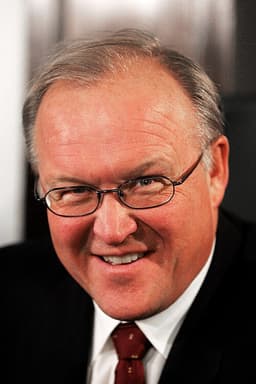
Goran Persson
Politician · Modern
51.7Total
Basic Information
Born
1949
1949
Died
—
—
Era
Modern
Modern
Nationality
South Africa
Sweden
Occupation
Politician
Politician
Civilization
Other
Western
Score Comparison
Military (10%)
28.3
47.5
Political (20%)
54.7
62.7
Influence (20%)
56.4
50.2
Legacy (20%)
46.7
40.0
Leadership (15%)
68.0
72.0
Strategy (15%)
43.8
42.0
TOTAL
51.4
51.7
Baleka Mbete — Complete Timeline
1999 AD
Elected Deputy Speaker of the National AssemblyPolitical Action
Mbete was elected Deputy Speaker of the South African National Assembly. She served in this role until 2004, presiding over parliamentary proceedings and assisting the Speaker.
South African ParliamentLegislature
Impact: national
2004 AD
Elected Speaker of the National AssemblyPolitical Action◆ Major
Mbete was elected Speaker of the South African National Assembly, a position she held until 2008. She presided over the house, ensuring parliamentary rules were followed and representing the legislature.
South African ParliamentLegislature
Impact: national
2007 AD
Elected Chairperson of the African National Congress (ANC)Political Action◆ Major
Mbete was elected National Chairperson of the ANC at the party's 52nd National Conference in Polokwane. She became the highest-ranking woman in the ANC's leadership structure, serving under President Jacob Zuma.
ANCParty PoliticsWomen in Politics
Impact: national
2014 AD
Re-elected Speaker of the National AssemblyPolitical Action◆ Major
Mbete was re-elected as Speaker of the National Assembly after the 2014 general elections. She served until 2019, presiding over a period of intense political debate and controversy, including motions of no confidence against President Jacob Zuma.
South African ParliamentLegislaturePolitical Crisis
Impact: national
Goran Persson — Complete Timeline
1996 AD
Appointment as Prime Minister of SwedenPolitical Action◆ Major
Goran Persson succeeded Ingvar Carlsson as Prime Minister of Sweden, leading a Social Democratic government. He served for a decade, overseeing a period of economic recovery and welfare state reforms.
Swedish PoliticsSocial Democratic Party
Impact: nationalconstructive
2001 AD
Swedish EU PresidencyPolitical Action◆ Major
Sweden held the rotating presidency of the Council of the European Union under Persson's leadership. The presidency focused on EU enlargement, environmental policy, and the Lisbon Strategy for economic reform.
European UnionSwedish Presidency
Impact: regionalconstructive
2006 AD
Defeat in the 2006 Swedish General ElectionPolitical Action◆ Major
Persson's Social Democratic Party lost the general election to the centre-right Alliance for Sweden coalition led by Fredrik Reinfeldt. This ended 12 years of Social Democratic rule and Persson's tenure as Prime Minister.
Swedish PoliticsElection Defeat
Impact: national
This comparison has not been analyzed yet.
One-time AI generation (~1 minute). Scores and timeline are already available below.
Rankings
🥇
Goran PerssonLeader
Mil: 47.5Pol: 62.7Inf: 50.2
51.7
🥈
Baleka Mbete
Mil: 28.3Pol: 54.7Inf: 56.4
51.4
+0.3 behind
How This Comparison Works
Algorithm
Each figure is scored on 6 dimensions (0—100 scale) based on structured historical data: Military (10%), Political (20%), Influence (20%), Legacy (20%), Leadership (15%), Strategy (15%). The weighted total produces the final ranking.
Data Sources
Scores are computed from structured sub-indicators in the database. Scale factors adjust for era (Ancient ×0.85, Modern ×1.0) and civilization size (Eastern ×1.05, Other ×0.80) to account for differences in population and military scale.
Maximum 3 Figures
Comparisons are limited to 2—3 figures to ensure readability and statistical meaningfulness.
Error Margins
±5 points per dimension — Sub-scores are derived from historical records with inherent uncertainty. Two figures within 5 points on a dimension should be considered roughly equivalent in that area.
Total Score Accuracy
±3 points overall — The weighted combination of 6 dimensions produces a total score with approximately ±3 points of uncertainty. Differences of less than 3 points are not statistically significant— the figures are effectively tied.
Known Limitations
- Historical records are incomplete and uneven across civilizations
- Figures from oral-tradition societies may be underrepresented
- Occupation labels can misclassify multi-role figures
- Scores measure capability and impact, not moral character
- Quantitative scoring is a comparison tool, not absolute truth
Capability Radar
Military (10%) — Battles & Warfare
Battles
19
29
Win Rate
22
34
Expansion
30
38
Political (20%) — Governance & Reform
Reform
40
55
Diplomacy
55
60
Economy
30
55
Influence (20%) — Cultural & Global Reach
Cultural
35
20
Global
35
20
Legacy (20%) — Historical Impact
Historical
40
25
Longevity
30
15
Leadership (15%) — Power & Stability
Tenure
60
65
Stability
45
60
Strategy (15%) — Tactics & Innovation
Strategy
30
37
Tactics
32
40
Reform
39
45
Similar Comparisons
Comments & Discussion
No comments yet. Be the first to share your thoughts!