Loading...
This comparison has not been analyzed yet.
One-time AI generation (~1 minute). Scores and timeline are already available below.
Babrak Karmal vs Garret FitzGerald
Garret FitzGerald leads by 12.1 pts · 2 figures compared
…
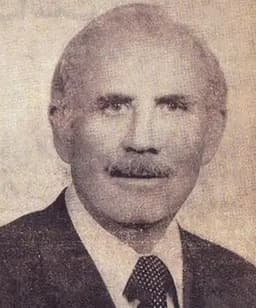
Babrak Karmal
Politician · Modern
43.0Total

Garret FitzGerald
Politician · Modern
55.1Total
Basic Information
Born
1929
1926
Died
—
—
Era
Modern
Modern
Nationality
Afghanistan
Ireland
Occupation
Politician
Politician
Civilization
Middle Eastern
Western
Score Comparison
Military (10%)
33.2
50.0
Political (20%)
29.3
59.3
Influence (20%)
48.6
58.0
Legacy (20%)
38.3
50.0
Leadership (15%)
55.3
66.0
Strategy (15%)
52.8
43.0
TOTAL
43.0
55.1
Babrak Karmal — Complete Timeline
1979 AD
Presidency of Afghanistan (1979-1986)Political Action◆ Major
Babrak Karmal was installed as President of Afghanistan by the Soviet Union in December 1979, following the Soviet invasion. He led the Democratic Republic of Afghanistan during the early years of the Soviet-Afghan War, implementing unpopular reforms and relying on Soviet military support.
Soviet InvasionPuppet GovernmentCommunist
Impact: national
1986 AD
Replacement by Najibullah (1986)Political Action◆ Major
Karmal was replaced as General Secretary of the People's Democratic Party by Mohammad Najibullah in May 1986, under Soviet pressure. He was effectively sidelined, though he remained in Afghanistan until his death. This marked the end of his direct political influence.
Power StruggleNajibullahSoviet Policy
Impact: national
1996 AD
Death in Moscow (1996)Other
Babrak Karmal died in Moscow in 1996, reportedly from liver cancer. He had been living in exile in the Soviet Union since his removal from power. His death went largely unnoticed in Afghanistan, where the civil war was raging.
ExileDeathMoscow
Impact: national
Garret FitzGerald — Complete Timeline
1981 AD
Became Taoiseach of IrelandPolitical Action◆ Major
FitzGerald became Taoiseach in June 1981, leading a Fine Gael-Labour coalition. He was an economist and intellectual, advocating for liberal social reforms and reconciliation in Northern Ireland. His first term lasted only nine months due to a budget defeat.
LeadershipFine GaelCoalition
Impact: national
Proposed a 'Constitutional Crusade'Political Action◆ Major
FitzGerald launched a 'constitutional crusade' to liberalize Irish society, including proposals to remove the constitutional ban on divorce and to reform laws on contraception. The campaign faced strong opposition from the Catholic Church and conservative elements, and many reforms were delayed.
Social ReformConstitutionCatholic Church
Impact: nationalconstructive
1985 AD
Negotiated the Anglo-Irish AgreementPolitical Action
FitzGerald, as Taoiseach, negotiated and signed the Anglo-Irish Agreement with British Prime Minister Margaret Thatcher on November 15, 1985. The agreement established the Intergovernmental Conference, giving Dublin a formal role in Northern Ireland affairs. It was a landmark in Anglo-Irish relations.
Anglo-Irish AgreementNorthern IrelandThatcher
Impact: regionalconstructive
1987 AD
Lost Re-election to Charles HaugheyPolitical Action◆ Major
FitzGerald's coalition government was defeated in the 1987 Irish general election by Fianna F
Election DefeatFine GaelFianna Fáil
Impact: national
This comparison has not been analyzed yet.
One-time AI generation (~1 minute). Scores and timeline are already available below.
Rankings
🥇
Garret FitzGeraldLeader
Mil: 50.0Pol: 59.3Inf: 58.0
55.1
🥈
Babrak Karmal
Mil: 33.2Pol: 29.3Inf: 48.6
43.0
+12.1 behind
How This Comparison Works
Algorithm
Each figure is scored on 6 dimensions (0—100 scale) based on structured historical data: Military (10%), Political (20%), Influence (20%), Legacy (20%), Leadership (15%), Strategy (15%). The weighted total produces the final ranking.
Data Sources
Scores are computed from structured sub-indicators in the database. Scale factors adjust for era (Ancient ×0.85, Modern ×1.0) and civilization size (Eastern ×1.05, Other ×0.80) to account for differences in population and military scale.
Maximum 3 Figures
Comparisons are limited to 2—3 figures to ensure readability and statistical meaningfulness.
Error Margins
±5 points per dimension — Sub-scores are derived from historical records with inherent uncertainty. Two figures within 5 points on a dimension should be considered roughly equivalent in that area.
Total Score Accuracy
±3 points overall — The weighted combination of 6 dimensions produces a total score with approximately ±3 points of uncertainty. Differences of less than 3 points are not statistically significant— the figures are effectively tied.
Known Limitations
- Historical records are incomplete and uneven across civilizations
- Figures from oral-tradition societies may be underrepresented
- Occupation labels can misclassify multi-role figures
- Scores measure capability and impact, not moral character
- Quantitative scoring is a comparison tool, not absolute truth
Capability Radar
Military (10%) — Battles & Warfare
Battles
5
28
Win Rate
5
32
Expansion
5
34
Political (20%) — Governance & Reform
Reform
20
70
Diplomacy
20
75
Economy
15
65
Influence (20%) — Cultural & Global Reach
Cultural
15
40
Global
15
50
Legacy (20%) — Historical Impact
Historical
20
55
Longevity
10
45
Leadership (15%) — Power & Stability
Tenure
40
55
Stability
10
60
Strategy (15%) — Tactics & Innovation
Strategy
5
40
Tactics
5
41
Reform
5
44
Similar Comparisons
Comments & Discussion
No comments yet. Be the first to share your thoughts!