Loading...
This comparison has not been analyzed yet.
One-time AI generation (~1 minute). Scores and timeline are already available below.
Ba Maw vs Julius Nyerere
Julius Nyerere leads by 13.5 pts · 2 figures compared
…
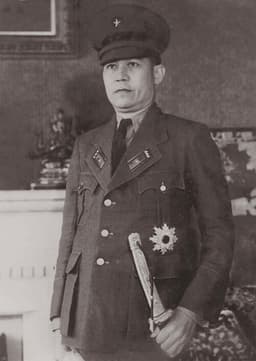
Ba Maw
Politician · Modern
44.1Total

Julius Nyerere
Politician · Modern
57.6Total
Basic Information
Born
1893
1922
Died
1977
—
Era
Modern
Modern
Nationality
Burma
Tanzania
Occupation
Politician
Politician
Civilization
Eastern
Other
Score Comparison
Military (10%)
14.4
10.0
Political (20%)
40.8
72.0
Influence (20%)
54.9
65.0
Legacy (20%)
43.3
56.0
Leadership (15%)
58.8
78.0
Strategy (15%)
31.9
38.3
TOTAL
44.1
57.6
Ba Maw — Complete Timeline
1937 AD
Became first premier of British BurmaPolitical Action◆ Major
Ba Maw was appointed as the first Premier of British Burma under the new constitution that separated Burma from British India. He led a government focused on self-governance and economic development, but faced challenges from both colonial authorities and nationalist factions.
PremiershipSelf-governanceColonial politics
Impact: nationalconstructive
1939 AD
Formed the Freedom BlocPolitical Action◆ Major
Ba Maw founded the Freedom Bloc, a coalition of nationalist parties demanding immediate independence from Britain. The bloc organized protests and strikes, pressuring the British government and uniting various factions under a common goal.
NationalismCoalitionIndependence movement
Impact: nationalconstructive
1942 AD
Collaborated with Japan during WWIIPolitical Action◆ Major
Ba Maw collaborated with the Japanese Imperial Army during their invasion of Burma, serving as head of the Burmese government under Japanese occupation. He declared Burma independent in 1943, but the regime was a puppet state controlled by Japan.
CollaborationJapanese occupationPuppet state
Impact: nationaldestructive
1943 AD
Declared independence under JapanPolitical Action◆ Major
Ba Maw declared Burma an independent state under Japanese sponsorship, with himself as head of state. The declaration was not recognized by the Allies and ended with Japan's defeat in 1945, leaving Ba Maw's reputation tarnished.
IndependenceJapanese sponsorshipWWII
Impact: national
1945 AD
Arrested by British after warPolitical Action
After Japan's surrender, British authorities arrested Ba Maw for collaboration. He was imprisoned but later released without trial. His political career effectively ended, and he spent his later years in obscurity.
ArrestCollaborationPost-war
Impact: nationaltragic
Julius Nyerere — Complete Timeline
1961 AD
Tanganyika IndependencePolitical Action
Julius Nyerere led Tanganyika to independence from British colonial rule, becoming its first Prime Minister. He advocated for peaceful transition and unity, laying the foundation for his vision of a socialist African state.
IndependenceDecolonizationTanganyika
Impact: nationalconstructive
1964 AD
Union with ZanzibarPolitical Action◆ Major
Nyerere negotiated the union of Tanganyika and Zanzibar to form the United Republic of Tanzania. This merger aimed to promote stability and unity after the Zanzibar Revolution, creating a single nation with a shared identity.
UnionZanzibarNation-Building
Impact: regionalconstructive
1967 AD
Arusha DeclarationPolitical Action◆ Major
Nyerere issued the Arusha Declaration, outlining his policy of Ujamaa (African socialism). The declaration called for self-reliance, nationalization of key industries, and collectivization of agriculture. It became the guiding ideology of Tanzania's development.
SocialismUjamaaEconomic Policy
Impact: nationalprogressive
1978 AD
War with UgandaWar◆ Major
Nyerere ordered Tanzanian forces to invade Uganda after Idi Amin's troops annexed Tanzanian territory. The war resulted in the overthrow of Amin and the restoration of Ugandan President Milton Obote, demonstrating Tanzania's military capability and regional influence.
WarUgandaIdi Amin
Impact: regional
1985 AD
Retirement from PresidencyPolitical Action◆ Major
Nyerere voluntarily stepped down as President of Tanzania, a rare act among African leaders. He handed power to Ali Hassan Mwinyi but remained influential as chairman of the ruling party. His retirement set a precedent for peaceful transitions in Africa.
RetirementTransitionLeadership
Impact: nationalconstructive
This comparison has not been analyzed yet.
One-time AI generation (~1 minute). Scores and timeline are already available below.
Rankings
🥇
Julius NyerereLeader
Mil: 10.0Pol: 72.0Inf: 65.0
57.6
🥈
Ba Maw
Mil: 14.4Pol: 40.8Inf: 54.9
44.1
+13.5 behind
How This Comparison Works
Algorithm
Each figure is scored on 6 dimensions (0—100 scale) based on structured historical data: Military (10%), Political (20%), Influence (20%), Legacy (20%), Leadership (15%), Strategy (15%). The weighted total produces the final ranking.
Data Sources
Scores are computed from structured sub-indicators in the database. Scale factors adjust for era (Ancient ×0.85, Modern ×1.0) and civilization size (Eastern ×1.05, Other ×0.80) to account for differences in population and military scale.
Maximum 3 Figures
Comparisons are limited to 2—3 figures to ensure readability and statistical meaningfulness.
Error Margins
±5 points per dimension — Sub-scores are derived from historical records with inherent uncertainty. Two figures within 5 points on a dimension should be considered roughly equivalent in that area.
Total Score Accuracy
±3 points overall — The weighted combination of 6 dimensions produces a total score with approximately ±3 points of uncertainty. Differences of less than 3 points are not statistically significant— the figures are effectively tied.
Known Limitations
- Historical records are incomplete and uneven across civilizations
- Figures from oral-tradition societies may be underrepresented
- Occupation labels can misclassify multi-role figures
- Scores measure capability and impact, not moral character
- Quantitative scoring is a comparison tool, not absolute truth
Capability Radar
Military (10%) — Battles & Warfare
Battles
13
0
Win Rate
18
0
Expansion
20
0
Political (20%) — Governance & Reform
Reform
30
75
Diplomacy
45
70
Economy
20
40
Influence (20%) — Cultural & Global Reach
Cultural
20
65
Global
20
55
Legacy (20%) — Historical Impact
Historical
25
60
Longevity
15
50
Leadership (15%) — Power & Stability
Tenure
40
85
Stability
15
60
Strategy (15%) — Tactics & Innovation
Strategy
23
0
Tactics
25
0
Reform
32
10
Similar Comparisons
Comments & Discussion
No comments yet. Be the first to share your thoughts!