Loading...
Archibald Wavell vs Ayub Khan
Archibald Wavell leads by 2.7 pts · 2 figures compared
…
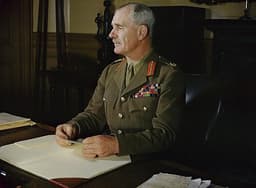
Archibald Wavell
General · Modern
57.4Total

Ayub Khan
General · Modern
54.7Total
Basic Information
Born
1883
1907
Died
1950
1974
Era
Modern
Modern
Nationality
United Kingdom
Pakistan
Occupation
General
General
Civilization
Western
Indian
Score Comparison
Military (10%)
70.0
38.3
Political (20%)
46.6
55.0
Influence (20%)
55.0
57.2
Legacy (20%)
54.0
48.3
Leadership (15%)
71.0
68.0
Strategy (15%)
55.0
60.0
TOTAL
57.4
54.7
Archibald Wavell — Complete Timeline
1939 AD
Appointed Commander-in-Chief of Middle East CommandOther◆ Major
Wavell was appointed Commander-in-Chief of the Middle East Command in July 1939. He oversaw British forces in Egypt, Sudan, Palestine, and East Africa, preparing for the expected conflict with Italy in North Africa at the outbreak of World War II.
World War IINorth Africa
Impact: national
1940 AD
Launched Operation CompassOther◆ Major
Wavell ordered Operation Compass in December 1940, a British offensive against Italian forces in North Africa. The attack captured 130,000 Italian prisoners, advanced 500 miles into Libya, and destroyed the Italian Tenth Army, achieving the first major Allied land victory of World War II.
World War IINorth AfricaVictory
Impact: nationalconstructive
1941 AD
Defeated Italian Forces in East AfricaOther◆ Major
Wavell's forces conducted a campaign in East Africa from January to May 1941. British, Commonwealth, and Ethiopian troops defeated the Italian army in Eritrea and Ethiopia, capturing 230,000 prisoners and restoring Emperor Haile Selassie to the Ethiopian throne.
World War IIEast AfricaVictory
Impact: nationalconstructive
Relieved of Command in the Middle EastOther◆ Major
Wavell was relieved as Commander-in-Chief of Middle East Command in July 1941 following a series of setbacks, including the failure of Operation Battleaxe to relieve Tobruk and the German capture of Crete. He was replaced by Claude Auchinleck and reassigned to India.
World War IINorth AfricaSetback
Impact: nationaldestructive
1943 AD
Appointed Viceroy of IndiaPolitical Action◆ Major
Wavell was appointed Viceroy and Governor-General of India in October 1943, succeeding Lord Linlithgow. He faced the Bengal famine of 1943, which killed an estimated 2-3 million people, and attempted to negotiate Indian independence with political leaders including Gandhi and Jinnah.
IndiaWorld War IIColonial Administration
Impact: national
Ayub Khan — Complete Timeline
1958 AD
1958 Pakistani coup d'étatPolitical Action
General Ayub Khan led a military coup that overthrew the civilian government of Iskander Mirza, who had declared martial law. Ayub Khan assumed the presidency and imposed martial law, beginning a decade of military rule.
CoupMartial lawMilitary rule
Impact: nationaldestructive
1962 AD
1962 ConstitutionReform◆ Major
Ayub Khan promulgated a new constitution that established a presidential system with strong executive powers. It introduced indirect elections through Basic Democracies, concentrating power in the presidency and the military.
ConstitutionPresidential systemBasic Democracies
Impact: national
1965 AD
Indo-Pakistani War of 1965War◆ Major
Ayub Khan's government fought a war with India over Kashmir. The conflict ended in a stalemate with the Tashkent Agreement, but it exposed military weaknesses and led to political unrest, contributing to his eventual downfall.
Indo-Pakistani warKashmirTashkent Agreement
Impact: regional
1969 AD
Resignation after mass protestsPolitical Action◆ Major
Facing widespread protests led by opposition parties and labor movements, Ayub Khan resigned and handed power to General Yahya Khan. The protests were fueled by economic inequality, political repression, and the 1965 war's aftermath.
ResignationProtestsPolitical crisis
Impact: nationaltragic
Expert Analysis
Origins
Archibald Wavell was born on May 5, 1883, in Colchester, England, into a military family. His father, Archibald Graham Wavell, was a major general in the British Army. Wavell attended Winchester College and the Royal Military College, Sandhurst, graduating in 1901. He served in the Second Boer War and later in India, gaining experience in colonial warfare. His formative years were shaped by the British imperial tradition and a focus on military discipline.
Muhammad Ayub Khan was born on May 14, 1907, in Rehana, a village in the North-West Frontier Province of British India (now Khyber Pakhtunkhwa, Pakistan). His father was a Risaldar Major in the British Indian Army. Ayub Khan attended Aligarh Muslim University and the Royal Military College, Sandhurst, graduating in 1928. He served in the British Indian Army, fighting in World War II in Burma. His background combined a traditional rural upbringing with modern military training.
Rise to Power
Wavell rose through the ranks of the British Army, serving in World War I where he lost an eye. He became a staff officer and military theorist, writing on military history. His big break came in July 1939 when he was appointed Commander-in-Chief of Middle East Command, overseeing British forces in Egypt, Sudan, Palestine, and East Africa. This position placed him at the center of World War II operations.
Ayub Khan's rise began in the Pakistan Army after the 1947 partition. He became Commander-in-Chief of the Pakistan Army in 1951. On October 27, 1958, he led a military coup that overthrew the civilian government of Iskander Mirza, who had declared martial law. Ayub Khan assumed the presidency, consolidating power through the 1962 Constitution that established a presidential system with indirect elections.
Leadership & Governance
Wavell's leadership style was methodical and cautious, emphasizing logistics and planning. As Viceroy of India from October 1943, he faced the Bengal famine of 1943, which killed an estimated 2-3 million people. His governance focused on maintaining British control and preparing for Indian independence. He scored 71.0 in leadership and 46.6 in political, reflecting his military strengths but political struggles.
Ayub Khan's governance was authoritarian but developmental. His regime introduced the 1962 Constitution, centralized power, and implemented economic reforms known as 'Decade of Development', achieving 6% GDP growth. However, his political score of 55.0 reflects his inability to sustain democratic institutions. He scored 68.0 in leadership, better than Wavell in political context.
Triumph & Tragedy
Wavell's greatest triumph was Operation Compass in December 1940, which captured 130,000 Italian prisoners and advanced British positions in North Africa. He also defeated Italian forces in East Africa in 1941. His greatest failure was being relieved of command in July 1941 after setbacks like Operation Battleaxe. As Viceroy, he failed to prevent the Bengal famine, a humanitarian disaster.
Ayub Khan's triumph includes modernizing Pakistan's economy and infrastructure, with industrial growth and the construction of the Tarbela Dam. The 1965 Indo-Pakistani War ended in stalemate, but exposed military weaknesses. His failure came in 1969 when mass protests forced his resignation, leading to the 1971 war and Bangladesh's independence.
Character & Destiny
Wavell was known for his taciturn, reserved nature and intellectual depth. He authored books on military history and poetry. His character led to underestimation by superiors, contributing to his relief in 1941. He scored 57.4 total, reflecting a competent but overshadowed figure.
Ayub Khan was pragmatic and ambitious, using military power to drive modernization. His authoritarianism created opposition, leading to his downfall. His total score of 54.7 is slightly lower than Wavell's, but his impact on Pakistan's trajectory was profound.
Legacy
Wavell's legacy is mixed: a capable commander overshadowed by later generals, and a viceroy who oversaw the end of British India. He is remembered for his North African victories and his role in the 1945 Simla Conference. His military score of 70.0 reflects his operational success.
Ayub Khan's legacy is more enduring in Pakistan: his constitutional changes and economic policies shaped the country's development. However, his authoritarianism set a precedent for military intervention. His influence score of 57.2 is higher than Wavell's 55.0.
Conclusion
While Wavell scored higher overall (57.4 vs 54.7), Ayub Khan had a greater impact on his nation's trajectory. Wavell's military achievements were significant but contained within a larger war effort, whereas Ayub Khan fundamentally altered Pakistan's political and economic landscape. Ayub Khan's governance and modernization efforts had lasting consequences, making him the more influential figure in shaping a country's destiny. Wavell's role was crucial but ultimately transitional. Therefore, Ayub Khan had greater impact.
Rankings
🥇
Archibald WavellLeader
Mil: 70.0Pol: 46.6Inf: 55.0
57.4
🥈
Ayub Khan
Mil: 38.3Pol: 55.0Inf: 57.2
54.7
+2.7 behind
How This Comparison Works
Algorithm
Each figure is scored on 6 dimensions (0—100 scale) based on structured historical data: Military (10%), Political (20%), Influence (20%), Legacy (20%), Leadership (15%), Strategy (15%). The weighted total produces the final ranking.
Data Sources
Scores are computed from structured sub-indicators in the database. Scale factors adjust for era (Ancient ×0.85, Modern ×1.0) and civilization size (Eastern ×1.05, Other ×0.80) to account for differences in population and military scale.
Maximum 3 Figures
Comparisons are limited to 2—3 figures to ensure readability and statistical meaningfulness.
Error Margins
±5 points per dimension — Sub-scores are derived from historical records with inherent uncertainty. Two figures within 5 points on a dimension should be considered roughly equivalent in that area.
Total Score Accuracy
±3 points overall — The weighted combination of 6 dimensions produces a total score with approximately ±3 points of uncertainty. Differences of less than 3 points are not statistically significant— the figures are effectively tied.
Known Limitations
- Historical records are incomplete and uneven across civilizations
- Figures from oral-tradition societies may be underrepresented
- Occupation labels can misclassify multi-role figures
- Scores measure capability and impact, not moral character
- Quantitative scoring is a comparison tool, not absolute truth
Capability Radar
Military (10%) — Battles & Warfare
Battles
65
30
Win Rate
60
40
Expansion
50
20
Political (20%) — Governance & Reform
Reform
30
70
Diplomacy
50
55
Economy
20
60
Influence (20%) — Cultural & Global Reach
Cultural
30
40
Global
45
35
Legacy (20%) — Historical Impact
Historical
55
50
Longevity
40
30
Leadership (15%) — Power & Stability
Tenure
55
65
Stability
35
40
Strategy (15%) — Tactics & Innovation
Strategy
75
40
Tactics
70
35
Reform
40
60
Similar Comparisons
Comments & Discussion
No comments yet. Be the first to share your thoughts!