Loading...
This comparison has not been analyzed yet.
One-time AI generation (~1 minute). Scores and timeline are already available below.
Aybak vs John III of Brabant
John III of Brabant leads by 11.1 pts · 2 figures compared
…
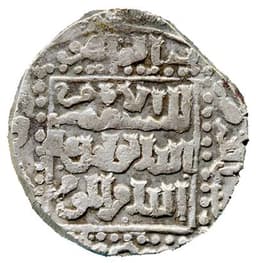
Aybak
Emperor · Medieval
40.5Total
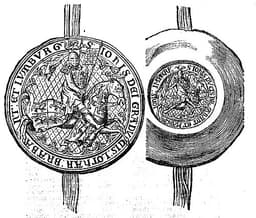
John III of Brabant
Emperor · Medieval
51.6Total
Basic Information
Born
1200
1300
Died
1257
1355
Era
Medieval
Medieval
Nationality
Egypt
Brabant
Occupation
Emperor
Emperor
Civilization
Middle Eastern
Western
Score Comparison
Military (10%)
55.0
40.0
Political (20%)
26.4
68.0
Influence (20%)
47.9
54.9
Legacy (20%)
40.8
46.7
Leadership (15%)
33.6
40.0
Strategy (15%)
38.6
60.0
TOTAL
40.5
51.6
Aybak — Complete Timeline
1250 AD
Conflict with the Ayyubids (1250-1251)War◆ Major
Aybak faced a rebellion from the Ayyubid prince An-Nasir Yusuf of Syria, who claimed the sultanate. Aybak defeated the Ayyubid forces at the Battle of Al-Kura in 1251. This victory consolidated Mamluk control over Egypt and prevented Ayyubid restoration.
Mamluk-Ayyubid WarBattleConsolidation
Impact: regionaldestructive
Accession as First Mamluk Sultan (1250)Political Action◆ Major
Aybak became the first Mamluk Sultan of Egypt after marrying Shajar al-Durr and forcing her abdication. He was recognized by the Abbasid Caliph in Cairo. This marked the formal establishment of the Mamluk Sultanate, ending Ayyubid rule in Egypt.
Mamluk SultanateSuccessionEgypt
Impact: regional
1257 AD
Murder of Aybak (1257)Other◆ Major
Aybak was murdered in his bathhouse on the orders of his wife Shajar al-Durr. She feared he would replace her with another wife. His death triggered a succession crisis and led to the rise of his son Al-Mansur Ali, with Qutuz as regent.
AssassinationSuccession CrisisMamluk Sultanate
Impact: regionaltragic
John III of Brabant — Complete Timeline
1312 AD
Charter of KortenbergPolitical Action
John III, as Duke of Brabant, granted the Charter of Kortenberg, a landmark document that limited ducal power and established a council of nobles and towns to oversee governance. This charter is considered an early step toward constitutional rule in Brabant.
CharterConstitutional HistoryBrabant
Impact: regionalprogressive
1355 AD
War of the Brabant SuccessionWar◆ Major
Upon John III's death, his daughter Joanna inherited Brabant, but her husband Wenceslaus I of Luxembourg faced challenges from the Count of Flanders. This conflict, known as the War of the Brabant Succession, began immediately after John's death.
Succession WarBrabantLuxembourg
Impact: regional
1356 AD
Battle of ScheutWar◆ Major
John III of Brabant led the Brabantine army to victory against the forces of the Count of Flanders near Brussels. The battle secured Brabant's independence from Flemish expansion and solidified John's reputation as 'the Triumphant'.
BattleBrabant-Flanders ConflictMedieval Warfare
Impact: regional
This comparison has not been analyzed yet.
One-time AI generation (~1 minute). Scores and timeline are already available below.
Rankings
🥇
John III of BrabantLeader
Mil: 40.0Pol: 68.0Inf: 54.9
51.6
🥈
Aybak
Mil: 55.0Pol: 26.4Inf: 47.9
40.5
+11.1 behind
How This Comparison Works
Algorithm
Each figure is scored on 6 dimensions (0—100 scale) based on structured historical data: Military (10%), Political (20%), Influence (20%), Legacy (20%), Leadership (15%), Strategy (15%). The weighted total produces the final ranking.
Data Sources
Scores are computed from structured sub-indicators in the database. Scale factors adjust for era (Ancient ×0.85, Modern ×1.0) and civilization size (Eastern ×1.05, Other ×0.80) to account for differences in population and military scale.
Maximum 3 Figures
Comparisons are limited to 2—3 figures to ensure readability and statistical meaningfulness.
Error Margins
±5 points per dimension — Sub-scores are derived from historical records with inherent uncertainty. Two figures within 5 points on a dimension should be considered roughly equivalent in that area.
Total Score Accuracy
±3 points overall — The weighted combination of 6 dimensions produces a total score with approximately ±3 points of uncertainty. Differences of less than 3 points are not statistically significant— the figures are effectively tied.
Known Limitations
- Historical records are incomplete and uneven across civilizations
- Figures from oral-tradition societies may be underrepresented
- Occupation labels can misclassify multi-role figures
- Scores measure capability and impact, not moral character
- Quantitative scoring is a comparison tool, not absolute truth
Capability Radar
Military (10%) — Battles & Warfare
Battles
30
45
Win Rate
35
50
Expansion
25
40
Political (20%) — Governance & Reform
Reform
15
55
Diplomacy
20
65
Economy
15
60
Influence (20%) — Cultural & Global Reach
Cultural
15
40
Global
10
30
Legacy (20%) — Historical Impact
Historical
25
45
Longevity
20
35
Leadership (15%) — Power & Stability
Tenure
20
60
Stability
10
55
Strategy (15%) — Tactics & Innovation
Strategy
20
45
Tactics
25
40
Reform
15
30
Similar Comparisons
Comments & Discussion
No comments yet. Be the first to share your thoughts!