Loading...
Axel Oxenstierna vs Julius Nyerere
Axel Oxenstierna leads by 8.6 pts · 2 figures compared
…
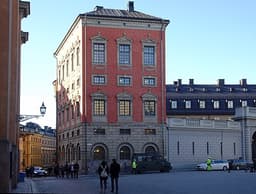
Axel Oxenstierna
Politician · Modern
66.2Total

Julius Nyerere
Politician · Modern
57.6Total
Basic Information
Born
1583
1922
Died
1654
—
Era
Modern
Modern
Nationality
Sweden
Tanzania
Occupation
Politician
Politician
Civilization
Western
Other
Score Comparison
Military (10%)
55.0
10.0
Political (20%)
75.0
72.0
Influence (20%)
72.0
65.0
Legacy (20%)
55.0
56.0
Leadership (15%)
78.0
78.0
Strategy (15%)
60.0
38.3
TOTAL
66.2
57.6
Axel Oxenstierna — Complete Timeline
1612 AD
Appointed Lord High Chancellor of SwedenPolitical Action◆ Major
Axel Oxenstierna was appointed Lord High Chancellor by King Gustavus Adolphus. This position made him the chief administrator of the Swedish government, a role he held for over four decades, shaping Swedish policy during its rise as a great power.
GovernmentAdministrationSwedish Empire
Impact: nationalconstructive
1632 AD
Governed Sweden during Christina's minorityPolitical Action◆ Major
After King Gustavus Adolphus died at the Battle of L
RegencyThirty Years' WarGovernment
Impact: nationalconstructive
1634 AD
Implemented the Form of Government of 1634Reform◆ Major
Oxenstierna introduced a new constitution that established a centralized administrative system with five government colleges. This reform streamlined governance, reduced the power of the nobility, and created a more efficient state apparatus that lasted for over a century.
ConstitutionAdministrationReform
Impact: nationalconstructive
1648 AD
Negotiated the Treaty of WestphaliaPolitical Action
Oxenstierna led Swedish negotiations at the Peace of Westphalia, which ended the Thirty Years' War. Sweden gained territories including Western Pomerania, Bremen, and Verden, securing its status as a major European power and gaining control of key Baltic and North Sea ports.
TreatyThirty Years' WarSwedish Empire
Impact: globalconstructive
Julius Nyerere — Complete Timeline
1961 AD
Tanganyika IndependencePolitical Action
Julius Nyerere led Tanganyika to independence from British colonial rule, becoming its first Prime Minister. He advocated for peaceful transition and unity, laying the foundation for his vision of a socialist African state.
IndependenceDecolonizationTanganyika
Impact: nationalconstructive
1964 AD
Union with ZanzibarPolitical Action◆ Major
Nyerere negotiated the union of Tanganyika and Zanzibar to form the United Republic of Tanzania. This merger aimed to promote stability and unity after the Zanzibar Revolution, creating a single nation with a shared identity.
UnionZanzibarNation-Building
Impact: regionalconstructive
1967 AD
Arusha DeclarationPolitical Action◆ Major
Nyerere issued the Arusha Declaration, outlining his policy of Ujamaa (African socialism). The declaration called for self-reliance, nationalization of key industries, and collectivization of agriculture. It became the guiding ideology of Tanzania's development.
SocialismUjamaaEconomic Policy
Impact: nationalprogressive
1978 AD
War with UgandaWar◆ Major
Nyerere ordered Tanzanian forces to invade Uganda after Idi Amin's troops annexed Tanzanian territory. The war resulted in the overthrow of Amin and the restoration of Ugandan President Milton Obote, demonstrating Tanzania's military capability and regional influence.
WarUgandaIdi Amin
Impact: regional
1985 AD
Retirement from PresidencyPolitical Action◆ Major
Nyerere voluntarily stepped down as President of Tanzania, a rare act among African leaders. He handed power to Ali Hassan Mwinyi but remained influential as chairman of the ruling party. His retirement set a precedent for peaceful transitions in Africa.
RetirementTransitionLeadership
Impact: nationalconstructive
Expert Analysis
Origins
Axel Oxenstierna was born on June 16, 1583, in Fånö, Sweden, into a noble family. His father, Gabriel Oxenstierna, was a privy councillor, and his mother, Märta Turesdotter, came from a high-ranking lineage. He studied at the universities of Rostock, Wittenberg, and Jena, gaining a humanist education in law, administration, and diplomacy. This aristocratic background and legal training prepared him for a career in state service.
Julius Nyerere was born on March 13, 1922, in Butiama, Tanganyika (now Tanzania), to a Zanaki chief. He was one of 26 children. He attended Makerere University in Uganda and later earned a degree from the University of Edinburgh in 1952—one of the first Tanganyikans to study abroad. His education exposed him to socialist ideas and African nationalism, shaping his vision for an independent Tanzania.
Rise to Power
Oxenstierna rose through the Swedish bureaucracy, becoming Lord High Chancellor in 1612 under King Gustavus Adolphus. He reformed the central government, creating a more efficient administration. His key turning point came after the king's death at the Battle of Lützen in 1632, when he became regent for the six-year-old Queen Christina. He effectively ruled Sweden for the next 12 years, managing the Thirty Years' War and domestic affairs.
Nyerere became the first Prime Minister of independent Tanganyika in 1961, after leading a peaceful independence movement through the Tanganyika African National Union (TANU). He was elected President in 1962. His major turning point was the Arusha Declaration of 1967, which set Tanzania on a path of African socialism (Ujamaa). He also negotiated the union with Zanzibar in 1964 to form Tanzania, consolidating his power.
Leadership & Governance
Oxenstierna's leadership was administrative and strategic. He implemented the Form of Government of 1634, which established five central colleges (chancery, treasury, war, admiralty, and mining) that streamlined Swedish governance. This bureaucratic system made Sweden one of the most efficiently administered states in Europe. He also managed war finances, securing subsidies from France and the Netherlands. His governance scored 78.0 in leadership and 60.0 in strategy.
Nyerere's leadership was ideological and charismatic. He promoted Ujamaa, a form of African socialism emphasizing communal agriculture and self-reliance. He nationalized industries and forced villagization (Operation Vijiji), relocating millions into collective farms. While his political score is 72.0, his strategy score is only 38.3, reflecting the economic failures of Ujamaa. He also maintained stability in a multi-ethnic nation, avoiding the coups common in post-colonial Africa.
Triumph & Tragedy
Oxenstierna's greatest triumph was negotiating the Treaty of Westphalia in 1648, which ended the Thirty Years' War. Sweden gained Western Pomerania, Bremen-Verden, and Wismar, securing control of the Baltic Sea and a voice in the Holy Roman Empire. His greatest failure was the regency's inability to manage Queen Christina's erratic rule. Christina abdicated in 1654, partly due to conflict with Oxenstierna over her extravagance and conversion to Catholicism, which weakened Sweden's international position.
Nyerere's triumph was leading Tanganyika to independence peacefully and uniting it with Zanzibar, creating a stable nation. His invasion of Uganda in 1978-79, which overthrew Idi Amin, is also seen as a success. His tragedy was the economic collapse under Ujamaa. By the 1980s, Tanzania was one of the poorest countries in Africa, with per capita income dropping. Agricultural output fell, and the country became dependent on foreign aid.
Character & Destiny
Oxenstierna was pragmatic, detail-oriented, and cautious. He believed in strong central institutions and rule of law. His character shaped Sweden's destiny as a great power, but his conflict with Christina showed his inability to adapt to a sovereign's will. Historians note his stubbornness and loyalty to the state over the crown.
Nyerere was idealistic, principled, and revered as "Mwalimu" (teacher). He was one of the few African leaders to voluntarily step down in 1985. However, his adherence to socialism despite its failures showed a dogmatic streak. His destiny was to be the father of his nation but also the architect of its economic hardship.
Legacy
Oxenstierna's legacy is the modern Swedish state. His administrative reforms lasted until the 19th century. He is remembered as a master bureaucrat who built the foundation of Sweden's golden age. His political score of 75.0 and influence of 72.0 reflect his lasting impact on European diplomacy.
Nyerere's legacy is mixed. He is honored as the father of Tanzania and a symbol of African unity and anti-colonialism. Yet his economic policies failed. His legacy score of 56.0 reflects this ambivalence. He influenced other African leaders, but his model of socialism was largely abandoned.
Conclusion
Axel Oxenstierna had greater impact. He scored 66.2 overall versus Nyerere's 57.6. Oxenstierna's administrative reforms created a lasting state structure that propelled Sweden into a European power for over a century. Nyerere's achievements were significant in nation-building and stability, but his economic policies damaged Tanzania's development. In the long term, Oxenstierna's bureaucratic innovations had a more enduring effect on governance and international relations.
Rankings
🥇
Axel OxenstiernaLeader
Mil: 55.0Pol: 75.0Inf: 72.0
66.2
🥈
Julius Nyerere
Mil: 10.0Pol: 72.0Inf: 65.0
57.6
+8.6 behind
How This Comparison Works
Algorithm
Each figure is scored on 6 dimensions (0—100 scale) based on structured historical data: Military (10%), Political (20%), Influence (20%), Legacy (20%), Leadership (15%), Strategy (15%). The weighted total produces the final ranking.
Data Sources
Scores are computed from structured sub-indicators in the database. Scale factors adjust for era (Ancient ×0.85, Modern ×1.0) and civilization size (Eastern ×1.05, Other ×0.80) to account for differences in population and military scale.
Maximum 3 Figures
Comparisons are limited to 2—3 figures to ensure readability and statistical meaningfulness.
Error Margins
±5 points per dimension — Sub-scores are derived from historical records with inherent uncertainty. Two figures within 5 points on a dimension should be considered roughly equivalent in that area.
Total Score Accuracy
±3 points overall — The weighted combination of 6 dimensions produces a total score with approximately ±3 points of uncertainty. Differences of less than 3 points are not statistically significant— the figures are effectively tied.
Known Limitations
- Historical records are incomplete and uneven across civilizations
- Figures from oral-tradition societies may be underrepresented
- Occupation labels can misclassify multi-role figures
- Scores measure capability and impact, not moral character
- Quantitative scoring is a comparison tool, not absolute truth
Capability Radar
Military (10%) — Battles & Warfare
Battles
30
0
Win Rate
40
0
Expansion
65
0
Political (20%) — Governance & Reform
Reform
90
75
Diplomacy
85
70
Economy
80
40
Influence (20%) — Cultural & Global Reach
Cultural
60
65
Global
65
55
Legacy (20%) — Historical Impact
Historical
75
60
Longevity
70
50
Leadership (15%) — Power & Stability
Tenure
85
85
Stability
75
60
Strategy (15%) — Tactics & Innovation
Strategy
60
0
Tactics
45
0
Reform
70
10
Similar Comparisons
Comments & Discussion
No comments yet. Be the first to share your thoughts!