Loading...
Axayacatl vs Wanyan Aguda
Wanyan Aguda leads by 6.7 pts · 2 figures compared
…
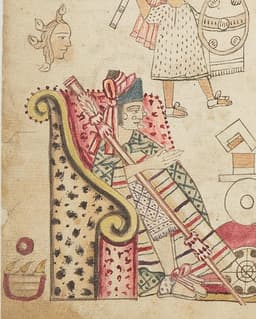
Axayacatl
Emperor · Medieval
56.7Total
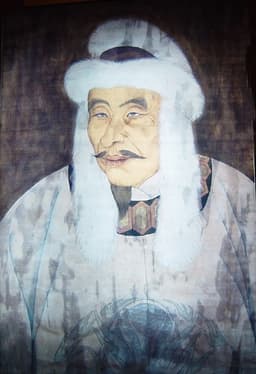
Wanyan Aguda
Emperor · Medieval
63.4Total
Basic Information
Born
1449
1068
Died
1481
1123
Era
Medieval
Medieval
Nationality
Aztec Empire
China
Occupation
Emperor
Emperor
Civilization
Western
Eastern
Score Comparison
Military (10%)
70.0
82.0
Political (20%)
54.7
59.3
Influence (20%)
56.4
55.0
Legacy (20%)
47.5
52.0
Leadership (15%)
65.0
85.0
Strategy (15%)
57.5
68.0
TOTAL
56.7
63.4
Axayacatl — Complete Timeline
1469 AD
Coronation as Tlatoani of TenochtitlanPolitical Action◆ Major
Axayacatl succeeded his grandfather Moctezuma I as the sixth tlatoani of Tenochtitlan. His coronation campaign against the Matlatzinca was successful, capturing many prisoners for sacrifice and establishing his military credentials.
Impact: national
1473 AD
Conquest of TlatelolcoWar◆ Major
Axayacatl led Tenochtitlan forces against the neighboring city-state of Tlatelolco, which had rebelled against Aztec dominance. The war ended with the defeat of Tlatelolco and the death of its tlatoani Moquihuix, incorporating Tlatelolco into Tenochtitlan.
Impact: regionaldestructive
1478 AD
Campaign against the Tarascan EmpireWar◆ Major
Axayacatl led a large Aztec army into the Tarascan Empire (Pur
Impact: regionaldestructive
1481 AD
Construction of the Great Temple of TenochtitlanCultural◆ Major
Axayacatl oversaw the expansion of the Templo Mayor in Tenochtitlan, dedicating a new phase of construction. The temple was the religious center of the Aztec Empire, and this expansion included new sculptures and offerings.
Impact: nationalconstructive
Death of AxayacatlOther
Axayacatl died after a short illness, possibly from a disease or complications from wounds. His death led to the succession of his brother Tizoc, whose weak reign contrasted with Axayacatl's earlier successes.
Impact: national
Wanyan Aguda — Complete Timeline
1114 AD
Battle of HubudagangWar◆ Major
Aguda's Jurchen forces defeated a Liao army at Hubudagang, marking the first major victory of the rebellion. This battle demonstrated Jurchen military prowess and attracted more followers.
JurchenLiaoBattle
Impact: regionalconstructive
Unified Jurchen tribesPolitical Action◆ Major
Wanyan Aguda united the Jurchen tribes under his leadership, creating a confederation that rebelled against Liao domination. He organized a disciplined army and began the Jurchen revolt.
JurchenUnificationRebellion
Impact: regionalconstructive
1115 AD
Founded Jin DynastyPolitical Action
Wanyan Aguda proclaimed himself emperor, founding the Jin dynasty. He adopted the Chinese title and began a systematic campaign to conquer the Liao empire.
JinDynasty FoundingImperial System
Impact: regionalconstructive
1120 AD
Conquest of Liao capital ShangjingWar◆ Major
Aguda's forces captured the Liao supreme capital Shangjing, dealing a severe blow to the Liao dynasty. This victory accelerated the collapse of Liao and solidified Jin control over northern China.
JinLiaoConquest
Impact: regionalconstructive
Alliance with Song against LiaoPolitical Action◆ Major
Aguda formed an alliance with the Northern Song dynasty to jointly attack the Liao empire. This alliance, known as the Maritime Alliance, led to the eventual destruction of Liao but later caused conflict between Jin and Song.
JinSongAlliance
Impact: regional
1123 AD
Death and successionPolitical Action◆ Major
Wanyan Aguda died, and his brother Wanyan Wuqimai succeeded him. Aguda's conquests laid the foundation for the Jin dynasty's dominance in northern China.
JinDeathSuccession
Impact: regional
Expert Analysis
Wanyan Aguda vs Axayacatl
# The Conqueror and the King: Two Paths to Empire
In the winter of 1114, a Jurchen chieftain named Wanyan Aguda watched from a frozen hillside as his ragged army of hunters and herdsmen charged into the disciplined ranks of a Liao dynasty army at Hubudagang. Three hundred years of Khitan rule over northern China seemed unshakeable, yet within a decade Aguda would topple that empire and found his own. Half a world away, in 1473, another ruler—Axayacatl, the sixth tlatoani of the Aztecs—stood atop the great pyramid of Tenochtitlan and watched the fires consume Tlatelolco, his rival city-state, after a brutal siege. Both men built empires from ambition and blood. But one forged a dynasty that would rule for a century; the other left a realm that collapsed within a generation of his death. The difference lay not in their dreams, but in how they understood power itself.
Origins
Aguda was born in 1068 into the harsh forests of Manchuria, where the Jurchen tribes lived as vassals to the Liao empire. His people were hunters, trappers, and horsemen who paid tribute in falcons and furs. They had no written language, no cities, no bureaucracy. What they had was a collective memory of humiliation: Liao officials demanded their women, their children, their labor. Aguda grew up watching his father and uncles swallow insults they could not yet avenge. This bred in him a patience that would serve him better than any sword.
Axayacatl, born in 1449, came from a world already drunk on victory. Tenochtitlan, the Aztec capital, was a city of canals and temples, built on an island in Lake Texcoco. His grandfather, Moctezuma I, had expanded the empire to the Gulf Coast. War was not a necessity but a ritual—a way to capture prisoners for sacrifice, to extract tribute, to feed the sun god's hunger. Axayacatl was raised in the calmecac, the school for nobles, learning poetry, astronomy, and the sacred calendar. He inherited not a struggle for survival, but a machine of conquest that demanded constant fuel.
Rise to Power
Aguda's path to power was forged in rebellion. In 1114, he unified the scattered Jurchen tribes into a confederation, an achievement of political genius that his military score of 79.3 and political score of 82.2 reflect. He promised his followers not glory, but freedom from Liao tax collectors. When the Liao emperor sent an army to crush him, Aguda chose his ground at Hubudagang with a strategist's eye—his strategy score of 69.8 suggests careful planning, not reckless charge. The Jurchen victory stunned the Liao court. Within a year, Aguda proclaimed himself emperor of the Jin dynasty, adopting the Chinese title and beginning a systematic campaign of conquest.
Axayacatl's rise was smoother, more ceremonial. He was elected tlatoani in 1469 after his grandfather's death, but his coronation required a campaign to prove his worth—a ritual war against the city of Tlatelolco. He won, consolidating Aztec control over the lake region. But his military score of 60.1 and strategy score of 45.7 hint at a ruler who fought more for prestige than survival. Where Aguda faced annihilation if he failed, Axayacatl faced only embarrassment.
Leadership & Governance
Aguda governed as a chieftain who learned to be an emperor. He adopted Chinese administrative practices—taxation, census, civil service—but kept Jurchen military organization. His leadership score of 88.4 is the highest among his metrics, reflecting a man who could command both loyalty and efficiency. He formed the Maritime Alliance with the Northern Song dynasty in 1120, a diplomatic masterstroke that isolated the Liao empire and accelerated its collapse. Yet he never fully trusted the Song, and his instinct proved correct: the alliance would later sour into war.
Axayacatl governed as a priest-king. He expanded the Templo Mayor, the Great Temple of Tenochtitlan, dedicating new phases of construction in 1481 to honor the gods. His leadership score of 79.8 suggests competence, but his political score of 52.1 reveals a weakness: he did not build institutions. The Aztec empire was a tribute network, not a unified state. Conquered cities paid taxes but kept their own rulers, their own gods. This worked as long as the Aztecs won every battle. When they lost, the empire would unravel.
Triumph & Tragedy
Aguda's greatest triumph came in 1120, when his forces captured the Liao supreme capital of Shangjing. The city fell after a siege that demonstrated his army's discipline and his engineers' skill. It was the death blow to a dynasty that had ruled for two centuries. His tragedy was personal: he died in 1123, at age 55, just as his empire was taking shape. He never saw the Jin conquest of northern China completed, never knew that his brother Wuqimai would finish what he started.
Axayacatl's greatest triumph was the conquest of Tlatelolco in 1473, which ended a rebellion and secured Tenochtitlan's dominance. But his tragedy was catastrophic. In 1478, he led a massive Aztec army—perhaps 24,000 men—into the Tarascan Empire to the west. The Tarascans, armed with bronze weapons and fortified cities, annihilated the Aztec force. Hundreds of Aztec nobles died. The survivors returned in shame. Axayacatl never recovered from this defeat. He died three years later, in 1481, possibly from wounds or disease. The Aztec empire survived, but its aura of invincibility was shattered.
Character & Destiny
Aguda was a pragmatist. He knew when to fight and when to negotiate. He adopted Chinese culture not out of admiration but necessity—because running an empire required scribes and tax collectors. He never forgot his roots; his soldiers still wore furs and ate roasted meat around campfires. This balance between tradition and adaptation made the Jin dynasty resilient.
Axayacatl was a traditionalist. He followed the Aztec model of conquest: attack, demand tribute, sacrifice prisoners. When the Tarascans defeated him, he had no backup plan, no diplomatic alternative. The Aztec system demanded constant victory; defeat was not just a military setback but a theological crisis. His son Moctezuma II would inherit this brittle empire and watch it shatter against Spanish steel.
Legacy
Aguda is remembered as the founder of the Jin dynasty, which ruled northern China for over a century. His legacy score of 70.1 and influence score of 68.7 reflect a figure who reshaped East Asian politics but remains less famous than the Mongols who followed. Yet his innovations—the Jurchen script, the dual administration system, the military reforms—influenced later conquerors.
Axayacatl's legacy score of 62.9 is lower, but his influence score of 74.9 is surprisingly high. He is remembered not for his own achievements but for his son: Montezuma II, the ruler who faced Cortés. Axayacatl built the empire that Montezuma would lose. The Templo Mayor he expanded still stands in Mexico City, a monument to a world that vanished.
Conclusion
Both men built empires from ambition, but they built on different foundations. Aguda created a state that could survive its founder's death because he understood that power must be institutionalized. Axayacatl created a machine that required perpetual motion because he never questioned its design. One left a dynasty; the other left a ruin waiting to happen. In the end, the difference between triumph and tragedy is not courage or vision—it is the wisdom to know that an empire, like a temple, must be built to endure the earthquake that will surely come.
Rankings
🥇
Wanyan AgudaLeader
Mil: 82.0Pol: 59.3Inf: 55.0
63.4
🥈
Axayacatl
Mil: 70.0Pol: 54.7Inf: 56.4
56.7
+6.7 behind
How This Comparison Works
Algorithm
Each figure is scored on 6 dimensions (0—100 scale) based on structured historical data: Military (10%), Political (20%), Influence (20%), Legacy (20%), Leadership (15%), Strategy (15%). The weighted total produces the final ranking.
Data Sources
Scores are computed from structured sub-indicators in the database. Scale factors adjust for era (Ancient ×0.85, Modern ×1.0) and civilization size (Eastern ×1.05, Other ×0.80) to account for differences in population and military scale.
Maximum 3 Figures
Comparisons are limited to 2—3 figures to ensure readability and statistical meaningfulness.
Error Margins
±5 points per dimension — Sub-scores are derived from historical records with inherent uncertainty. Two figures within 5 points on a dimension should be considered roughly equivalent in that area.
Total Score Accuracy
±3 points overall — The weighted combination of 6 dimensions produces a total score with approximately ±3 points of uncertainty. Differences of less than 3 points are not statistically significant— the figures are effectively tied.
Known Limitations
- Historical records are incomplete and uneven across civilizations
- Figures from oral-tradition societies may be underrepresented
- Occupation labels can misclassify multi-role figures
- Scores measure capability and impact, not moral character
- Quantitative scoring is a comparison tool, not absolute truth
Capability Radar
Military (10%) — Battles & Warfare
Battles
55
85
Win Rate
60
90
Expansion
60
85
Political (20%) — Governance & Reform
Reform
45
75
Diplomacy
50
70
Economy
45
65
Influence (20%) — Cultural & Global Reach
Cultural
40
60
Global
30
50
Legacy (20%) — Historical Impact
Historical
45
70
Longevity
40
55
Leadership (15%) — Power & Stability
Tenure
50
70
Stability
50
60
Strategy (15%) — Tactics & Innovation
Strategy
55
85
Tactics
50
80
Reform
40
75
Similar Comparisons
Comments & Discussion
ConquerorKhan6/16/2026
Aguda's genius wasn't just military—it was linguistic. He commissioned a writing system for the Jurchen language in 1119, right in the middle of his campaigns. That's empire-building 101: language outlasts swords. Axayacatl expanded the Aztec tribute system but left the messy Nahuatl glyphs unchanged. Aguda's script died out eventually, sure, but it gave his Jin dynasty a cultural spine for a century. Axayacatl built a machine that needed him to run it—and broke when he died.
剑史闲人6/16/2026
说阿骨打厉害?阿哈雅卡特尔才是真正的内政大师。他扩建了特诺奇提特兰大庙,把阿兹特克宗教神权彻底制度化——没有他砍掉查普尔特佩克的石头引水渠,墨西加人能撑到西班牙人来吗?阿骨打征服辽国靠的是乱世中的骑兵游击,而阿哈雅卡特尔在和平时期改造水利、巩固体制,这才是硬功夫。他的帝国崩溃不是他弱,而是他儿子蒙特祖马二世太怂。
DataSkeptic6/16/2026
Let's talk numbers. Aguda's Jurchen warriors numbered maybe 10,000 at Hubudagang, yet they routed a Liao force of 200,000+ according to Song records. That's not a battle—that's a systemic collapse. Liao was already crumbling from internal revolts and shattered morale. Axayacatl's siege of Tlatelolco? Reliable estimates suggest 10,000–20,000 dead, but Aztec tribute rolls show no population crash afterward. Aguda faced a dying empire; Axayacatl crushed a healthy rival. Apples to oranges. Give me h
墨家考据郎6/16/2026
阿骨打的成功离不开"海上之盟"这个外交花招——他勾搭大宋夹击辽国,结果宋军一触即溃,他自己吃了全部战利品。这不是单打独斗,这是权谋。阿哈雅卡特尔呢?他打的战争全是自力更生,没有外援。征服托卢卡河谷时,他亲率两万精兵翻越雪山奇袭,这种指挥勇气比外交算计更难复刻。阿骨打是投机者,阿哈雅卡特尔是真正的战斗领袖。
RevisionistEcho6/16/2026
Everyone romanticizes the "barbarian conqueror" trope, but Aguda's real legacy is how quickly his dynasty assimilated into Chinese norms. By 1142, Jin courts were debating Confucian rituals while Jurchen语的 literacy was dying. Axayacatl? He doubled down on Mexica identity—expanded the flower wars, codified the warrior ranks, built the Templo Mayor explicitly to assert Aztec cosmic