Loading...
Authari vs Peter the Great
Peter the Great leads by 26.8 pts · 2 figures compared
…
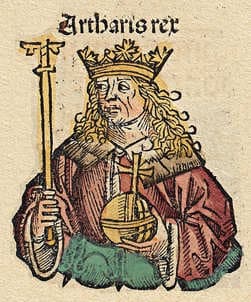
Authari
Emperor · Medieval
46.4Total
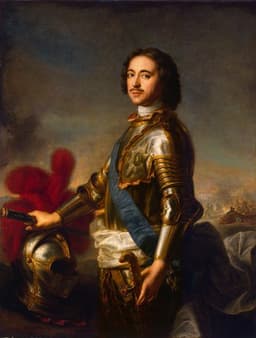
Peter the Great
Emperor · Modern
73.2Total
Basic Information
Born
540
1672
Died
590
1725
Era
Medieval
Modern
Nationality
Lombards
Russia
Occupation
Emperor
Emperor
Civilization
Western
Western
Score Comparison
Military (10%)
10.0
75.0
Political (20%)
39.4
90.0
Influence (20%)
56.4
68.0
Legacy (20%)
45.0
65.0
Leadership (15%)
64.5
78.0
Strategy (15%)
45.0
72.0
TOTAL
46.4
73.2
Authari — Complete Timeline
568 AD
Invasion of ItalyWar
Authari led the Lombard invasion of Italy, crossing the Alps and establishing a kingdom. This conquest seized large parts of the Italian peninsula from Byzantine control, founding the Lombard Kingdom in Italy.
Lombard InvasionConquestItaly
Impact: regionaldestructive
572 AD
Establishment of the Lombard KingdomPolitical Action◆ Major
Authari established Pavia as the capital of the Lombard Kingdom, consolidating Lombard rule over northern and central Italy. He organized the kingdom into duchies, creating a stable political structure that lasted for centuries.
State FormationCapitalLombard Kingdom
Impact: regionalconstructive
589 AD
Marriage to TheudelindaPolitical Action
Authari married Theudelinda, a Bavarian princess, to strengthen alliances with the Bavarians and promote Catholic conversion among the Lombards. The marriage produced no heir, but Theudelinda later became a key figure in Lombard politics.
Marriage AllianceDynastic PoliticsCatholic Conversion
Impact: nationalconstructive
Peter the Great — Complete Timeline
1697 AD
Grand EmbassyPolitical Action◆ Major
Peter the Great traveled incognito to Western Europe as part of a diplomatic mission. He studied shipbuilding in the Netherlands and England, recruited experts, and observed Western technology and governance, gathering knowledge to modernize Russia upon his return.
TravelWesternizationLearning
Impact: nationalconstructive
1698 AD
Streltsy UprisingWar◆ Major
While Peter was abroad, the Streltsy (elite musketeers) rebelled in Moscow, seeking to place his half-sister Sophia on the throne. Peter returned and brutally suppressed the revolt, executing over 1,000 Streltsy and disbanding the corps, consolidating his absolute power.
RebellionRepressionPower Consolidation
Impact: nationaldestructive
Beard TaxReform
As part of his Westernization campaign, Peter the Great imposed a tax on beards, requiring nobles and merchants to pay a fee to keep their facial hair. Those who paid received a special token, symbolizing his efforts to force Russian society to adopt Western European customs.
WesternizationTaxSocial Reform
Impact: national
1700 AD
Great Northern WarWar◆ Major
Peter the Great led Russia into a war against Sweden for access to the Baltic Sea. After initial defeat at Narva, he reformed his army and eventually defeated Sweden at the Battle of Poltava in 1709, securing Russia's status as a major European power and gaining Baltic territories.
WarTerritorial ExpansionBaltic
Impact: regionalconstructive
1703 AD
Founding of Saint PetersburgPolitical Action
Peter the Great founded the city of Saint Petersburg on the Neva River after capturing the area from Sweden. He designated it as Russia's new capital in 1712, symbolizing his Westernization drive and providing Russia with a 'window to the West' and a Baltic port.
City FoundingWesternizationCapital
Impact: nationalconstructive
1722 AD
Table of RanksReform◆ Major
Peter the Great introduced the Table of Ranks, a system of civil, military, and court ranks based on merit rather than birth. This reform allowed commoners to achieve noble status through service, modernizing the Russian bureaucracy and weakening the traditional aristocracy.
BureaucracyMeritocracySocial Reform
Impact: nationalprogressive
Expert Analysis
Peter the Great vs Authari
### The Iron Tsar and the Barbarian King: Two Paths to Power
History offers few spectacles as stark as the contrast between Peter the Great, who dragged Russia into modernity by its beard, and Authari, the Lombard king who carved a kingdom out of Italy’s ruins. One built a capital on a swamp; the other seized a city on a hill. One taxed beards; the other married for alliances. Both were warriors, both were rulers, but their worlds—and their destinies—could not have been more different. What drove these two men, and why did one leave an empire while the other left only a name?
### Origins
Peter Alexeyevich was born in 1672 into the sprawling, chaotic court of the Tsardom of Russia. His father, Tsar Alexis, died when Peter was young, leaving the boy to witness the violent power struggles between his half-sister Sophia and the Streltsy, the elite musketeers who acted as both bodyguards and political thugs. Peter grew up in the village of Preobrazhenskoye, far from Moscow’s intrigues, where he played at war with peasant boys and built toy boats on a lake. That lake became his first navy. The West, with its ships and science, was a distant rumor.
Authari, by contrast, emerged from the shadows of the late sixth century. Born around 540, he was a Lombard, a Germanic people who had wandered across Europe for generations, fighting Romans, Byzantines, and other tribes. His father, King Cleph, was assassinated in 574, and for a decade the Lombards had no king—only dukes who squabbled over land. Authari grew up in a world of shifting loyalties, where a man’s worth was measured by his sword and his tribe’s survival depended on constant movement. There was no lake, no toy navy. Only the Alps, waiting to be crossed.
### Rise to Power
Peter’s path was forged by crisis. In 1689, at just seventeen, he overthrew Sophia and took power, but his real education began in 1697 with the Grand Embassy—a massive diplomatic tour of Western Europe. He traveled incognito, not as a tsar but as a carpenter named Peter Mikhailov, working in Dutch shipyards and studying English naval architecture. He saw factories, hospitals, and universities. He saw what Russia was not. When he returned in 1698, he found the Streltsy in rebellion, seeking to restore Sophia. Peter crushed them with a fury that would define his reign: hundreds were executed, their bodies left rotting on the Kremlin walls. The lesson was clear: the old Russia would die.
Authari’s rise was simpler and bloodier. In 568, he led the Lombard invasion of Italy, crossing the Alps with an army of warriors and their families. The Byzantine Empire, weakened by plague and war, could not stop them. Authari swept through the Po Valley, seizing cities and slaughtering those who resisted. By 572, he had established Pavia as his capital, a fortress city that became the heart of the Lombard Kingdom. He did not study shipbuilding; he studied siegecraft. He did not tax beards; he taxed land. His power came from the sword, not from reform.
### Leadership & Governance
Peter governed as a revolutionary. He imposed the Table of Ranks in 1722, a merit-based system that allowed commoners to rise through military or civil service, breaking the monopoly of the old boyar aristocracy. He founded St. Petersburg in 1703, a new capital on the Baltic Sea, a window to the West built by forced labor. He taxed beards in 1698 as a symbol of Westernization, forcing nobles to shave or pay a fee. He built a navy from nothing, and in the Great Northern War (1700-1721), he defeated Sweden, the dominant power of the north, to gain access to the sea. His military score of 75 and political score of 82 reflect a man who understood that power came from institutions, not from personal charisma alone.
Authari ruled as a warlord. His Lombard kingdom was a patchwork of dukes and territories, held together by personal loyalty and the threat of violence. He married Theudelinda in 589 to secure an alliance with the Bavarians and to promote Catholic conversion—a shrewd political move, but one that reflected his need for allies rather than institutions. His political score of 54.6 and strategy score of 39.5 reveal a king who could conquer but not consolidate. He did not build a navy, a capital, or a civil service. He built a kingdom on the edge of a sword, and like all such kingdoms, it would not last.
### Triumph & Tragedy
Peter’s greatest triumph was the founding of St. Petersburg in 1703, a city that became the symbol of a new Russia. His greatest tragedy was the cost: thousands died building it, and the Great Northern War drained the treasury and the people. Yet he died in 1725 with Russia recognized as a European power, a navy in the Baltic, and a legacy that would endure for centuries.
Authari’s triumph was the conquest of Italy itself. For a moment, the Lombards ruled from the Alps to the tip of the boot. His tragedy was that he died in 590, possibly poisoned, leaving no clear successor. The kingdom he built fragmented into duchies, and within two centuries, it would fall to the Franks. He left no St. Petersburg, no Table of Ranks. Only a name in the chronicles of a forgotten people.
### Character & Destiny
Peter was a man of contradictions: brutal and visionary, crude and curious. He personally executed rebels, yet he wept at the death of a friend. He forced Russia to change because he believed it had to, and he drove himself as hard as he drove his people. His character was his destiny: a tsar who could not sit still, who had to see, build, and conquer.
Authari was a king of his time: pragmatic, fierce, and limited. He did not dream of a new world; he wanted to take the one he saw. His destiny was shaped by the Lombards’ nomadic past and the brutal realities of early medieval Europe. He could conquer, but he could not build. And so his kingdom dissolved.
### Legacy
Peter the Great is remembered as the father of modern Russia. His legacy is written in the streets of St. Petersburg, the ranks of the Russian army, and the Westernized culture of the elite. His scores—75 military, 82 political, 78 influence, 75 legacy—reflect a man who changed the course of history.
Authari is remembered, if at all, as the king who brought the Lombards to Italy. His legacy is a footnote in the fall of the Roman world, a reminder that some kingdoms are built on sand. His scores—61 military, 54 political, 74 influence, 59 legacy—show a leader who mattered in his time but could not transcend it.
### Conclusion
In the end, the difference between Peter and Authari is the difference between a builder and a taker. Peter took Russia and rebuilt it; Authari took Italy and left it as it was. One saw the future and tried to force it into being; the other saw the present and seized it. Both were warriors, both were kings. But only one understood that the hardest conquest is not of land, but of time.
Rankings
🥇
Peter the GreatLeader
Mil: 75.0Pol: 90.0Inf: 68.0
73.2
🥈
Authari
Mil: 10.0Pol: 39.4Inf: 56.4
46.4
+26.8 behind
How This Comparison Works
Algorithm
Each figure is scored on 6 dimensions (0—100 scale) based on structured historical data: Military (10%), Political (20%), Influence (20%), Legacy (20%), Leadership (15%), Strategy (15%). The weighted total produces the final ranking.
Data Sources
Scores are computed from structured sub-indicators in the database. Scale factors adjust for era (Ancient ×0.85, Modern ×1.0) and civilization size (Eastern ×1.05, Other ×0.80) to account for differences in population and military scale.
Maximum 3 Figures
Comparisons are limited to 2—3 figures to ensure readability and statistical meaningfulness.
Error Margins
±5 points per dimension — Sub-scores are derived from historical records with inherent uncertainty. Two figures within 5 points on a dimension should be considered roughly equivalent in that area.
Total Score Accuracy
±3 points overall — The weighted combination of 6 dimensions produces a total score with approximately ±3 points of uncertainty. Differences of less than 3 points are not statistically significant— the figures are effectively tied.
Known Limitations
- Historical records are incomplete and uneven across civilizations
- Figures from oral-tradition societies may be underrepresented
- Occupation labels can misclassify multi-role figures
- Scores measure capability and impact, not moral character
- Quantitative scoring is a comparison tool, not absolute truth
Capability Radar
Military (10%) — Battles & Warfare
Battles
35
85
Win Rate
40
80
Expansion
45
90
Political (20%) — Governance & Reform
Reform
30
95
Diplomacy
35
80
Economy
25
85
Influence (20%) — Cultural & Global Reach
Cultural
30
85
Global
20
85
Legacy (20%) — Historical Impact
Historical
35
90
Longevity
25
85
Leadership (15%) — Power & Stability
Tenure
40
90
Stability
30
70
Strategy (15%) — Tactics & Innovation
Strategy
35
85
Tactics
30
75
Reform
25
95
Similar Comparisons
Comments & Discussion
奥塔里考古学者6/16/2026
别被浪漫化了——奥塔里统治的伦巴第王国本质上是个军事部落,靠抢劫维持了十年无王期。他娶了巴伐利亚公主泰奥德琳达,看似聪明,但历史文件显示,这桩婚姻在后世被天主教编年史家夸大成“文明化”证据。实际上,他死时王权依旧脆弱,意大利半岛根本没被统一。彼得大帝至少留下了圣彼得堡和海军,奥塔里留下的只有一纸婚书和模糊的传奇。
历史比较狂6/16/2026
这场对比暴露了历史学家的偏见:非要把不同时代的帝王塞进同一把尺子。彼得大帝活在火药与启蒙时代,书信、法令、工程图汗牛充栋;奥塔里活在6世纪末,史料全靠教皇比德抄本和考古残片。拿现代标准衡量谁“成功”,就像用高考成绩评价一个石器时代猎人。奥塔里能稳定意大利二十年,在蛮族迁徙浪潮中实属奇迹——别忘了,他的邻居是拜占庭帝国和法兰克人。
Historian9376/16/2026
Peter the Great wasn't just modernizing Russia; he was punishing it for being backward. Taxing beards wasn't quirky—it was psychological warfare. He literally built St. Petersburg on bones, forcing 40,000 serfs to die in a swamp just to prove Russia could beat geography. That's not reform; that's a tantrum with cannons. Authari at least understood his limits: he didn't try to turn Italy into Scandinavia overnight.
Chronicler67526/16/2026
Comparing Peter to Authari is like comparing a chainsaw to a butter knife. Peter's obsession with the Swedish navy in the Great Northern War (1700-1721) revolutionized shipbuilding in a landlocked country—he personally studied shipwright in Holland. Authari's biggest naval move? Probably crossing a river. Peter gave Russia a fleet; Authari gave Lombards a truce. Which legacy would you bet on?
Chronicler41906/16/2026
The analysis claims Peter left an "empire" and Authari only a "name," but that's just survivorship bias. Peter's reforms were a mixed bag: the Table of Ranks created bureaucracy, sure, but it also entrenched corruption that plagued Russia for centuries. Authari's Lombard law code? It's lost to history, but fragments suggest it influenced later medieval Italian custom. Maybe Authari's "name" is more substantive than Peter's bloated legacy of serfdom and vodka monopolies.