Loading...
Authari vs Mao Zedong
Mao Zedong leads by 33.0 pts · 2 figures compared
…
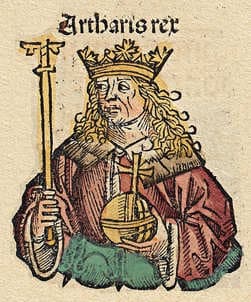
Authari
Emperor · Medieval
46.4Total
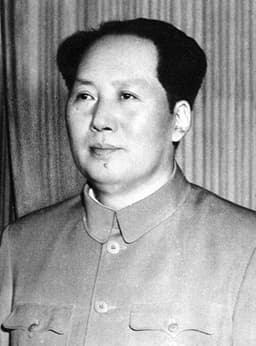
Mao Zedong
Politician · Modern
79.4Total
Basic Information
Born
540
1893
Died
590
1976
Era
Medieval
Modern
Nationality
Lombards
China
Occupation
Emperor
Politician
Civilization
Western
Eastern
Score Comparison
Military (10%)
10.0
75.0
Political (20%)
39.4
88.0
Influence (20%)
56.4
85.0
Legacy (20%)
45.0
70.0
Leadership (15%)
64.5
85.0
Strategy (15%)
45.0
72.0
TOTAL
46.4
79.4
Authari — Complete Timeline
568 AD
Invasion of ItalyWar
Authari led the Lombard invasion of Italy, crossing the Alps and establishing a kingdom. This conquest seized large parts of the Italian peninsula from Byzantine control, founding the Lombard Kingdom in Italy.
Lombard InvasionConquestItaly
Impact: regionaldestructive
572 AD
Establishment of the Lombard KingdomPolitical Action◆ Major
Authari established Pavia as the capital of the Lombard Kingdom, consolidating Lombard rule over northern and central Italy. He organized the kingdom into duchies, creating a stable political structure that lasted for centuries.
State FormationCapitalLombard Kingdom
Impact: regionalconstructive
589 AD
Marriage to TheudelindaPolitical Action
Authari married Theudelinda, a Bavarian princess, to strengthen alliances with the Bavarians and promote Catholic conversion among the Lombards. The marriage produced no heir, but Theudelinda later became a key figure in Lombard politics.
Marriage AllianceDynastic PoliticsCatholic Conversion
Impact: nationalconstructive
Mao Zedong — Complete Timeline
1934 AD
Long MarchWar
Mao Zedong led the Chinese Red Army on a strategic retreat from Nationalist forces, covering approximately 6,000 miles over 370 days. The march solidified Mao's leadership within the Chinese Communist Party and became a foundational myth of the Communist revolution.
Chinese Civil WarCommunist RevolutionRetreat
Impact: national
1949 AD
Proclamation of the People's Republic of ChinaPolitical Action
Mao Zedong declared the founding of the People's Republic of China from Tiananmen Gate in Beijing. This ended the Chinese Civil War and established Communist rule over mainland China, with Mao as Chairman of the Central People's Government.
Founding of PRCCommunist VictoryRevolution
Impact: global
1958 AD
Great Leap ForwardReform◆ Major
Mao launched a campaign to rapidly industrialize China and collectivize agriculture. The policy led to widespread mismanagement, resulting in a famine that caused an estimated 15-45 million deaths between 1959 and 1961.
FamineIndustrializationCollectivization
Impact: nationaldestructive
1960 AD
Sino-Soviet SplitPolitical Action◆ Major
Mao's ideological differences with Soviet leader Nikita Khrushchev led to a breakdown in relations between China and the Soviet Union. The split ended the Sino-Soviet alliance and reshaped global Cold War dynamics, with China pursuing an independent path.
Cold WarIdeological ConflictAlliance Breakdown
Impact: global
1966 AD
Cultural RevolutionPolitical Action
Mao initiated a sociopolitical movement to purge capitalist and traditional elements from Chinese society. The Red Guard youth groups attacked intellectuals and officials, leading to widespread violence, destruction of cultural artifacts, and an estimated 1-2 million deaths.
Political PurgeSocial UpheavalRed Guard
Impact: nationaldestructive
1971 AD
Ping-Pong DiplomacyCultural◆ Major
Mao approved an invitation for the U.S. table tennis team to visit China, initiating a thaw in Sino-American relations. This cultural exchange paved the way for President Nixon's visit to China in 1972 and the eventual normalization of diplomatic ties.
DiplomacyU.S.-China RelationsCultural Exchange
Impact: globalconstructive
Expert Analysis
Mao Zedong vs Authari
### The Long March and the Lombard Crown: Mao Zedong and Authari
In the winter of 1934, a column of exhausted soldiers trudged through the frozen marshes of southwestern China. Their leader, a gaunt man with a shock of black hair, was fighting not just for survival, but for the very idea of a nation. Nearly fourteen centuries earlier, another leader, a fierce warrior-king, led his people across the snow-capped Alps into a land of crumbling Roman ruins and endless opportunity. Mao Zedong and Authari stand at opposite ends of history, yet both faced the same fundamental question: how to turn a people on the move into a lasting power. Their answers—one forged in revolutionary ideology, the other in tribal conquest—could not have been more different.
### Origins
Mao Zedong was born in 1893 in the rural village of Shaoshan, Hunan province. His father was a prosperous peasant who beat his son into a stubborn, bookish defiance. Mao devoured Chinese classics and revolutionary pamphlets alike, growing up in a China humiliated by foreign powers and fractured by warlords. The collapse of the Qing dynasty in 1912 left a vacuum that shaped his generation: everything was possible, and everything was at stake. For Mao, the problem was not just China’s weakness, but its ancient social order—a feudal system that crushed the peasantry. He found his answer in Marxism, but a Marxism he would adapt to Chinese soil.
Authari, by contrast, emerged from the mists of Germanic migration. Born around 540, he was a prince of the Lombards, a tribe that had wandered from the Baltic into the Carpathian Basin. His world was one of blood oaths, war bands, and the slow death of Roman order. The Lombards were pagans, fierce and illiterate, but they had learned from the Romans: they knew how to fight, how to plunder, and how to settle. Authari’s father, King Alboin, had led the Lombards into Italy in 568, but was murdered soon after. Authari inherited a kingdom in chaos—a collection of warring dukes and hostile Byzantines. His problem was not revolution, but consolidation.
### Rise to Power
Mao’s rise was a long, grinding ascent through the ranks of the Chinese Communist Party. He was not the obvious leader. In the 1920s, the Party was dominated by urban intellectuals who looked to Moscow for guidance. Mao, however, saw the peasantry as the true revolutionary force. His 1927 “Report on an Investigation of the Peasant Movement in Hunan” was a manifesto for a new kind of war. But the Nationalists under Chiang Kai-shek nearly destroyed the Communists in 1927, forcing them into the countryside. By 1934, surrounded and outgunned, the Party had no choice but to flee. The Long March—a 6,000-mile retreat through some of the world’s most brutal terrain—became Mao’s crucible. On the march, he outmaneuvered his rivals within the Party and emerged as its undisputed leader. He did not seize power; he earned it through sheer endurance and strategic cunning.
Authari’s path was more direct. He was elected king by the Lombard nobles after his father’s assassination, but his authority was weak. The dukes ruled their own territories like petty kings, and the Byzantines, under Emperor Maurice, were pressing from the south. Authari’s solution was action. In 572, he established Pavia as the capital, a symbolic assertion of Lombard permanence. He then spent years fighting the Byzantines and rebellious dukes, not with grand strategy, but with relentless campaigning. His rise was not ideological; it was a matter of steel and loyalty.
### Leadership & Governance
Mao’s leadership was defined by his ability to combine military pragmatism with ideological fervor. As a military strategist, his score of 65 reflects a man who won a civil war through guerrilla warfare and mass mobilization, not conventional brilliance. The Long March was a retreat, not a victory, but Mao turned it into a legend. His political genius, however, was undeniable. With a political score of 82, he built a state from nothing, creating a party that controlled every aspect of life. The Proclamation of the People’s Republic in 1949 was his triumph—a moment when he stood on Tiananmen Gate and declared a new era. But governance under Mao was a series of colossal experiments. The Great Leap Forward of 1958 was a disaster: a forced industrialization drive that led to famine and death on a scale that still shocks historians. The Cultural Revolution, launched in 1966, was a violent purge of dissent that tore apart families and institutions. Mao was a visionary, but his visions often consumed the people he claimed to save.
Authari’s governance was simpler and more brutal. His military score of 61 is comparable to Mao’s, but his political score of 54 is far lower—because he never built a state in the modern sense. The Lombard kingdom was a warrior’s domain: law was custom, power was personal. Authari’s marriage to Theudelinda in 589 was a masterstroke of diplomacy, securing an alliance with the Bavarians and promoting Catholic conversion, which helped integrate the Lombards with their Roman subjects. But he did not reform or transform. He held the kingdom together through force and marriage, not ideology. His leadership score of 72.8 is high for a medieval king, but it was a leadership of presence, not policy.
### Triumph & Tragedy
Mao’s greatest triumph was the establishment of a unified, independent China. In 1949, he achieved what no Chinese leader had done in a century: he expelled foreign influence and brought the country under a single government. But his tragedy was that he could not stop. The Great Leap Forward and Cultural Revolution were not mistakes; they were logical outcomes of his belief that revolution must be permanent. The famine of 1959-1961 killed an estimated 30 million people, yet Mao refused to admit failure. His greatest moment and his deepest shame are inseparable.
Authari’s triumph was the survival of the Lombard kingdom. He died in 590, at the age of 50, leaving a realm that would last for two centuries. His tragedy was that he never saw his work completed. The Lombards remained a warrior elite, never fully merging with the Italian population. When Authari died, his kingdom was still fragile, and his successors would face the same challenges he had. His triumph was stability; his tragedy was impermanence.
### Character & Destiny
Mao was a man of immense will and ruthless intellect. He wrote poetry, read philosophy, and believed he could reshape human nature. His personality—arrogant, paranoid, visionary—drove every decision. He trusted no one, purged everyone, and demanded total loyalty. His destiny was to be a titan who built a nation but broke its soul. Authari, by contrast, was a product of his time. He was a warrior-king who thought in terms of loyalty and conquest, not ideology. His personality is shadowy—we know little of his inner life—but his actions suggest a man of pragmatism and endurance. His destiny was to be a founder, not a transformer.
### Legacy
Mao’s legacy is a paradox. In China, he is revered as the father of the nation, his portrait still hanging in Tiananmen Square. His total score of 76.4 reflects a figure of immense influence (79.7) and leadership (80.6), but a legacy (69.9) tainted by disaster. He changed China forever, for better and worse. Authari, with a total score of 60.7, is a footnote in European history. The Lombard kingdom he founded was absorbed by Charlemagne in 774. He is remembered only by specialists, a name in a chronicle. Yet his legacy is not nothing: the Lombards left their name on Lombardy, and their fusion with Roman culture shaped medieval Italy.
### Conclusion
Standing on Tiananmen Gate in 1949, Mao Zedong saw a future of endless revolution. Crossing the Alps in 568, Authari saw a land to take and hold. One built a state on ideas, the other on blood. Both succeeded, and both failed. Mao’s China is a superpower; Authari’s Lombardy is a memory. But perhaps the deeper lesson is this: the leaders who change the world are not always the ones who build the most stable foundations. Sometimes, they are the ones who burn the brightest, leaving behind a light that still flickers, even in the darkness of their own mistakes.
Rankings
🥇
Mao ZedongLeader
Mil: 75.0Pol: 88.0Inf: 85.0
79.4
🥈
Authari
Mil: 10.0Pol: 39.4Inf: 56.4
46.4
+33.0 behind
How This Comparison Works
Algorithm
Each figure is scored on 6 dimensions (0—100 scale) based on structured historical data: Military (10%), Political (20%), Influence (20%), Legacy (20%), Leadership (15%), Strategy (15%). The weighted total produces the final ranking.
Data Sources
Scores are computed from structured sub-indicators in the database. Scale factors adjust for era (Ancient ×0.85, Modern ×1.0) and civilization size (Eastern ×1.05, Other ×0.80) to account for differences in population and military scale.
Maximum 3 Figures
Comparisons are limited to 2—3 figures to ensure readability and statistical meaningfulness.
Error Margins
±5 points per dimension — Sub-scores are derived from historical records with inherent uncertainty. Two figures within 5 points on a dimension should be considered roughly equivalent in that area.
Total Score Accuracy
±3 points overall — The weighted combination of 6 dimensions produces a total score with approximately ±3 points of uncertainty. Differences of less than 3 points are not statistically significant— the figures are effectively tied.
Known Limitations
- Historical records are incomplete and uneven across civilizations
- Figures from oral-tradition societies may be underrepresented
- Occupation labels can misclassify multi-role figures
- Scores measure capability and impact, not moral character
- Quantitative scoring is a comparison tool, not absolute truth
Capability Radar
Military (10%) — Battles & Warfare
Battles
35
85
Win Rate
40
80
Expansion
45
85
Political (20%) — Governance & Reform
Reform
30
95
Diplomacy
35
80
Economy
25
70
Influence (20%) — Cultural & Global Reach
Cultural
30
90
Global
20
90
Legacy (20%) — Historical Impact
Historical
35
95
Longevity
25
85
Leadership (15%) — Power & Stability
Tenure
40
95
Stability
30
60
Strategy (15%) — Tactics & Innovation
Strategy
35
85
Tactics
30
75
Reform
25
90
Similar Comparisons
Comments & Discussion
EMPEROR OF THE MOUNTAIN6/16/2026
Mao's Long March was a masterclass in survival logistics, but Authari crossing the Alps with a whole tribe of Lombards? That's not a march, it's a migratory conquest against a crumbling empire. Mao consolidated power through ideology; Authari did it through iron and marriage alliances. Apples and oranges, but Authari's crown was forged in real medieval politics, not revolutionary mythmaking.
长征路上的马克思6/16/2026
说老毛是农民领袖,那Authari算什么?一个日耳曼酋长带着蛮族抢地盘,居然跟解放全中国的革命家相提并论?司马迁写项羽都没这么离谱。想比较,先看看《中国革命战争的战略问题》里怎么分析敌我矛盾的。Authari有写过《论持久战》吗?没有就别来碰瓷。
SPQR SPEEDRUNNER6/16/2026
Authari inherited a tribe, not a movement. Mao built a party from scratch in a feudal wreck. One faced Roman ruins, the other faced warlords and foreign imperialism. Big difference: Authari's power depended on Lombard noble loyalty; Mao's relied on killing off rivals and reshaping a civilization. Sorry, but the peasant mobilizer beats the tribal warlord in historical impact every time.
数据拆穿家6/16/2026
说Mao带兵走6000英里,Authari翻个阿尔卑斯山就齐名了?数据呢?Authari的伦巴第人总数不到10万,Mao指挥红军长征时有10万人,到达陕北剩下不到7000。伤亡率93%的军事行动,叫领导力?倒不如说他在玩人肉俄罗斯轮盘。Authari至少没把族人当消耗品。
BYZANTIUM'S GHOST6/16/2026
Forgive my classics bias, but Authari ruled over Lombard Italy, a kingdom that lasted 200 years and shaped medieval Europe. Mao's PRC is barely a century old. Authari faced Byzantine diplomacy, papal influence, and Frankish ambitions—three superpowers of his age. Mao dealt with warlords and the KMT. The scope is different, but Authari's geopolitical chess game was harder against a real, organized empire.