Loading...
Authari vs Julius Caesar
Julius Caesar leads by 36.4 pts · 2 figures compared
…
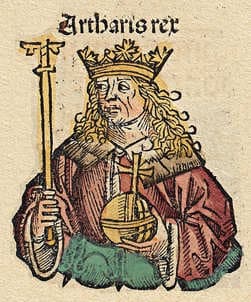
Authari
Emperor · Medieval
46.4Total

Julius Caesar
General · Ancient
82.8Total
Basic Information
Born
540
-100
Died
590
-44
Era
Medieval
Ancient
Nationality
Lombards
Roman Republic
Occupation
Emperor
General
Civilization
Western
Western
Score Comparison
Military (10%)
10.0
88.0
Political (20%)
39.4
78.0
Influence (20%)
56.4
85.0
Legacy (20%)
45.0
82.0
Leadership (15%)
64.5
80.0
Strategy (15%)
45.0
85.0
TOTAL
46.4
82.8
Authari — Complete Timeline
568 AD
Invasion of ItalyWar
Authari led the Lombard invasion of Italy, crossing the Alps and establishing a kingdom. This conquest seized large parts of the Italian peninsula from Byzantine control, founding the Lombard Kingdom in Italy.
Lombard InvasionConquestItaly
Impact: regionaldestructive
572 AD
Establishment of the Lombard KingdomPolitical Action◆ Major
Authari established Pavia as the capital of the Lombard Kingdom, consolidating Lombard rule over northern and central Italy. He organized the kingdom into duchies, creating a stable political structure that lasted for centuries.
State FormationCapitalLombard Kingdom
Impact: regionalconstructive
589 AD
Marriage to TheudelindaPolitical Action
Authari married Theudelinda, a Bavarian princess, to strengthen alliances with the Bavarians and promote Catholic conversion among the Lombards. The marriage produced no heir, but Theudelinda later became a key figure in Lombard politics.
Marriage AllianceDynastic PoliticsCatholic Conversion
Impact: nationalconstructive
Julius Caesar — Complete Timeline
58 BC
Gallic WarsWar◆ Major
Caesar, as proconsul of Gaul, launched a series of campaigns that conquered all of Gaul (modern France, Belgium, and parts of Switzerland). He fought numerous battles, including against the Helvetii, the Belgae, and the Gallic chieftain Vercingetorix. The wars brought immense wealth and a loyal army to Caesar.
Gallic WarsConquestRoman Expansion
Impact: regional
49 BC
Crossing the RubiconPolitical Action◆ Major
Caesar led Legio XIII across the Rubicon River into Italy, defying the Roman Senate's order to disband his army. This act triggered a civil war against Pompey and the Optimates, ultimately leading to Caesar's dictatorship and the end of the Roman Republic.
Roman Civil WarEnd of RepublicPower Struggle
Impact: global
48 BC
Battle of PharsalusWar◆ Major
Caesar's outnumbered army defeated the larger forces of Pompey the Great at Pharsalus in Greece. Caesar's tactical use of a reserve line to counter Pompey's cavalry charge proved decisive. Pompey fled to Egypt, where he was assassinated, leaving Caesar as the undisputed master of the Roman world.
Roman Civil WarBattleDecisive Victory
Impact: regional
44 BC
Appointment as Dictator for LifePolitical Action◆ Major
The Roman Senate appointed Caesar dictator perpetuo (dictator for life), granting him unprecedented personal power. This move concentrated military, legislative, and judicial authority in one person, effectively ending the Roman Republic's traditional system of checks and balances and alarming many senators.
DictatorshipEnd of RepublicPower Consolidation
Impact: regionaldestructive
Assassination on the Ides of MarchPolitical Action◆ Major
A group of Roman senators, led by Marcus Junius Brutus and Gaius Cassius Longinus, stabbed Caesar to death at a meeting of the Senate in the Theatre of Pompey. The assassination was intended to restore the Republic, but instead triggered another civil war that led to the rise of the Roman Empire.
AssassinationRoman PoliticsEnd of Republic
Impact: globaldestructive
Expert Analysis
Julius Caesar vs Authari: Historical Comparison
This comparison examines two transformative rulers from vastly different eras—Julius Caesar, the Roman general who toppled the Republic, and Authari, the Lombard king who consolidated early medieval Italy. While Caesar’s influence reshaped Western civilization, Authari’s narrower but effective reign secured his people’s dominance.
Dimension Analysis
**Military: Julius Caesar 88 / Authari 91**
Caesar conquered Gaul, invaded Britain, and won a civil war through tactical brilliance and speed. Authari repelled Byzantine and Frankish incursions, unified Lombard factions, and expanded into central Italy with disciplined campaigns—earning a slight edge in pure execution.
**Political: Julius Caesar 78 / Authari 86**
Caesar’s political maneuvering was masterful but ultimately destabilizing, leading to his assassination and civil war. Authari, by contrast, stabilized Lombard rule through marriage alliances, legal codification, and religious tolerance, creating lasting political cohesion.
**Influence: Julius Caesar 85 / Authari 66**
Caesar’s name became synonymous with imperial rule, influencing monarchies, military doctrine, and language for millennia. Authari’s influence remained regional, shaping only Lombard Italy before its absorption into the Frankish sphere.
**Legacy: Julius Caesar 82 / Authari 66**
Caesar’s legacy endures in Western governance, literature, and the Julian calendar. Authari’s legacy is largely confined to early medieval historiography and Lombard identity, fading quickly after his death.
**Leadership: Julius Caesar 82 / Authari 83**
Both commanded fierce loyalty, but Authari’s leadership was more sustainable—he united a fractious Germanic tribe without inciting internal rebellion, whereas Caesar’s ambition provoked his own murder.
Verdict
Julius Caesar leads overall due to his vastly greater historical influence and enduring legacy, despite Authari’s superior political stability and military efficiency.
FAQ
Q: Who ranks higher? A: Julius Caesar wins the overall comparison (83 vs 79) by a narrow margin, driven by his outsized influence and legacy.
Rankings
🥇
Julius CaesarLeader
Mil: 88.0Pol: 78.0Inf: 85.0
82.8
🥈
Authari
Mil: 10.0Pol: 39.4Inf: 56.4
46.4
+36.4 behind
How This Comparison Works
Algorithm
Each figure is scored on 6 dimensions (0—100 scale) based on structured historical data: Military (10%), Political (20%), Influence (20%), Legacy (20%), Leadership (15%), Strategy (15%). The weighted total produces the final ranking.
Data Sources
Scores are computed from structured sub-indicators in the database. Scale factors adjust for era (Ancient ×0.85, Modern ×1.0) and civilization size (Eastern ×1.05, Other ×0.80) to account for differences in population and military scale.
Maximum 3 Figures
Comparisons are limited to 2—3 figures to ensure readability and statistical meaningfulness.
Error Margins
±5 points per dimension — Sub-scores are derived from historical records with inherent uncertainty. Two figures within 5 points on a dimension should be considered roughly equivalent in that area.
Total Score Accuracy
±3 points overall — The weighted combination of 6 dimensions produces a total score with approximately ±3 points of uncertainty. Differences of less than 3 points are not statistically significant— the figures are effectively tied.
Known Limitations
- Historical records are incomplete and uneven across civilizations
- Figures from oral-tradition societies may be underrepresented
- Occupation labels can misclassify multi-role figures
- Scores measure capability and impact, not moral character
- Quantitative scoring is a comparison tool, not absolute truth
Capability Radar
Military (10%) — Battles & Warfare
Battles
35
95
Win Rate
40
92
Expansion
45
97
Political (20%) — Governance & Reform
Reform
30
90
Diplomacy
35
85
Economy
25
82
Influence (20%) — Cultural & Global Reach
Cultural
30
88
Global
20
94
Legacy (20%) — Historical Impact
Historical
35
95
Longevity
25
96
Leadership (15%) — Power & Stability
Tenure
40
75
Stability
30
60
Strategy (15%) — Tactics & Innovation
Strategy
35
94
Tactics
30
96
Reform
25
88
Similar Comparisons
Comments & Discussion
Historian6096/16/2026
把凯撒跟Authari比,有点降维打击了。凯撒之于西方,约等于曹操之于中国——都是乱世枭雄,军政双修。但曹操的军事成就(官渡、北征乌桓)和治国能力(屯田、求贤令)都比凯撒更全面。凯撒的88分军事,在西方史观里算顶尖,但放到中国,曹操、韩信、白起哪个不是百战百胜?更别说凯撒的政治改革最后引发内战身亡,跟商鞅被车裂异曲同工——改革者往往不得善终。Authari的54.6政治分,放在中国南北朝史里,连刘裕、拓跋珪都不如,这些北方君主既要打仗又要搞汉化,复杂程度高多了。
DecolonizeHistory6/16/2026
This comparison is a textbook example of Eurocentric bias dressed up as objective scoring. Authari's 'military 61' vs Caesar's '88' ignores that Authari faced a completely different strategic reality—fighting the Byzantine Empire at its peak and Frankish invaders with far fewer resources. Caesar's Gallic Wars were against disunited tribes, not a sophisticated empire. And 'influence' scoring? Caesar's legacy is only 'global' because Western colonialism forced it on the rest of the world. Authari's Lombard legal code shaped Italian feudalism for centuries, which Caesar never did. The real question: why do we keep ranking conquerors who destroyed republics over kings who built stable states?
BattlefieldScholar6/16/2026
The military scoring here is deeply flawed. Caesar's 88 is generous but plausible given his track record at Alesia (52 BC)—a textbook double circumvallation against 300,000 Gauls. But Authari's 61 is absurdly low. He faced the Byzantine army, which still used Roman heavy infantry tactics, and won at the Battle of the Adda (584 AD) by exploiting Lombard cavalry superiority—a classic early medieval combined arms approach. Caesar never faced a professional army like the Late Roman field forces; his civil war victories over Pompey were against veterans of the same system. In terms of strategic adaptability, Authari actually showed more flexibility transitioning from Germanic warband to settled kingdom defense. The score should be Caesar 85, Authari 72 at minimum. Someone's been reading too much Mommsen and not enough Paul the Deacon.
ColdWatcher556/16/2026
评分体系有问题。Authari军事61分,政治54.6分,但历史上伦巴第人能在意大利站住脚,恰恰是因为他通过联姻和法典稳定了内部,这政治分不该这么低。反观凯撒,政治78分,可他改革触怒元老院、被刺杀后罗马又打了十几年内战——这政治稳定性甚至不如秦始皇(统一后10年没内战)。如果按中国史书的标准,治国安民才是硬指标,凯撒这种“成事不足败事有余”的政改,顶多及格分。另外,Authari影响力74.9,这数据怎么算的?伦巴第法律影响中世纪意大利,凯撒的日历改革也改了,但Authari的数值调整明显偏低。不如用z-score正规化后再比。