Loading...
Authari vs Cyrus the Great
Cyrus the Great leads by 37.5 pts · 2 figures compared
…
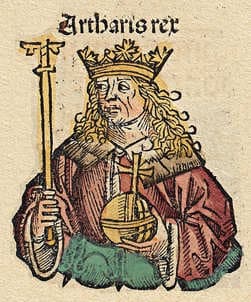
Authari
Emperor · Medieval
46.4Total
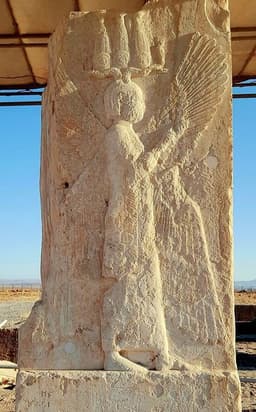
Cyrus the Great
Emperor · Ancient
83.9Total
Basic Information
Born
540
-600
Died
590
-530
Era
Medieval
Ancient
Nationality
Lombards
Persia
Occupation
Emperor
Emperor
Civilization
Western
Middle Eastern
Score Comparison
Military (10%)
10.0
82.0
Political (20%)
39.4
85.0
Influence (20%)
56.4
85.0
Legacy (20%)
45.0
90.0
Leadership (15%)
64.5
78.0
Strategy (15%)
45.0
75.0
TOTAL
46.4
83.9
Authari — Complete Timeline
568 AD
Invasion of ItalyWar
Authari led the Lombard invasion of Italy, crossing the Alps and establishing a kingdom. This conquest seized large parts of the Italian peninsula from Byzantine control, founding the Lombard Kingdom in Italy.
Lombard InvasionConquestItaly
Impact: regionaldestructive
572 AD
Establishment of the Lombard KingdomPolitical Action◆ Major
Authari established Pavia as the capital of the Lombard Kingdom, consolidating Lombard rule over northern and central Italy. He organized the kingdom into duchies, creating a stable political structure that lasted for centuries.
State FormationCapitalLombard Kingdom
Impact: regionalconstructive
589 AD
Marriage to TheudelindaPolitical Action
Authari married Theudelinda, a Bavarian princess, to strengthen alliances with the Bavarians and promote Catholic conversion among the Lombards. The marriage produced no heir, but Theudelinda later became a key figure in Lombard politics.
Marriage AllianceDynastic PoliticsCatholic Conversion
Impact: nationalconstructive
Cyrus the Great — Complete Timeline
550 BC
Founding of the Achaemenid EmpirePolitical Action
Cyrus led a rebellion against the Median Empire, defeating King Astyages and capturing Ecbatana. He then united the Persian and Median tribes, establishing the Achaemenid Empire, which became the largest empire the world had yet seen.
Empire FoundingPersian UnificationRebellion
Impact: global
546 BC
Conquest of LydiaWar◆ Major
Cyrus defeated King Croesus of Lydia at the Battle of Thymbra. The Lydian capital Sardis was captured, and Croesus was taken prisoner. This conquest brought Anatolia under Persian control and secured access to the Aegean coast.
Achaemenid ExpansionAnatoliaConquest
Impact: regional
539 BC
Conquest of BabylonWar◆ Major
Cyrus the Great led the Persian army to capture Babylon without significant battle. The city's gates were opened, and Cyrus entered peacefully. This conquest added Mesopotamia to the Achaemenid Empire and marked the end of the Neo-Babylonian Empire.
Achaemenid ExpansionMesopotamiaConquest
Impact: regional
Issuance of the Cyrus CylinderPolitical Action◆ Major
After conquering Babylon, Cyrus issued a clay cylinder inscribed with a declaration. It described his policy of restoring temples, repatriating displaced peoples, and allowing religious freedom. The cylinder is often cited as an early charter of human rights.
Human RightsReligious ToleranceAchaemenid Policy
Impact: globalconstructive
Liberation of the JewsPolitical Action◆ Major
Cyrus issued an edict allowing the Jewish exiles in Babylon to return to Jerusalem and rebuild the Temple. This event is recorded in the biblical Book of Ezra and is a key moment in Jewish history, ending the Babylonian captivity.
Jewish HistoryReligious FreedomReturn from Exile
Impact: regionalconstructive
Expert Analysis
Cyrus the Great vs Authari
# The Conqueror and the King: Cyrus the Great and Authari
In the autumn of 539 BCE, the ancient world witnessed something unprecedented. The great city of Babylon, with its impenetrable walls and towering ziggurats, fell without a single arrow fired in anger. Its conqueror, a Persian king named Cyrus, walked through the gates not as a destroyer but as a liberator, ordering his soldiers to harm no one. Less than twelve centuries later, in 568 CE, another king named Authari led his Lombard warriors across the snow-capped Alps into Italy. Where Cyrus had offered mercy, Authari brought fire and sword. Where Cyrus had sought to unite, Authari came to conquer and settle. Why did these two rulers, both founders of kingdoms, leave such radically different marks on history?
Origins
Cyrus was born around 600 BCE into a world of empires. The Medes dominated the north, the Babylonians ruled the south, and the Persians were a subject people, scattered across the Iranian plateau. His grandfather, Astyages, was the Median king—a fact that would prove crucial. Cyrus grew up in a culture that valued horsemanship, archery, and loyalty to clan, but he also absorbed the sophisticated court traditions of the Medes. This dual heritage gave him a foot in two worlds: the tribal warrior ethos of the Persians and the imperial administration of the Medes.
Authari, born in 540 CE, emerged from a very different world. The Lombards were a Germanic people who had wandered for centuries, pressing against the borders of the Roman world. They were warriors first and everything else second. Their society was built on warbands, personal loyalty to chieftains, and the belief that land belonged to those strong enough to take it. Authari inherited a kingdom that was little more than a confederation of war leaders, each jealous of his own power. There was no imperial tradition to draw upon, no sophisticated bureaucracy to inherit—only the sword and the spear.
Rise to Power
Cyrus came to power through rebellion. Around 550 BCE, he rallied the Persian tribes against his own grandfather, King Astyages of Media. The campaign was swift and decisive. At Ecbatana, the Median capital, Cyrus defeated Astyages in battle and absorbed the Median Empire into his own. This was no mere conquest—Cyrus treated the defeated Medes as partners, retaining their nobles in high positions and respecting their customs. He understood that an empire built on loyalty would outlast one built on fear.
Authari's rise was less a rebellion than a migration. When he became king of the Lombards around 584 CE, his people were already camped on the edge of Italy, having crossed the Alps in 568. The Byzantine Empire, weakened by plague and war, could not stop them. Authari's challenge was not defeating an enemy but holding together a fractious army. He did so through sheer force of personality and the promise of plunder. Where Cyrus had built coalitions, Authari commanded through fear and reward.
Leadership & Governance
Cyrus the Great was a political genius. After conquering Babylon in 539 BCE, he issued the Cyrus Cylinder, a clay declaration that announced his policies: he would restore temples, return displaced peoples to their homelands, and respect local customs. Most famously, he freed the Jewish exiles, allowing them to return to Jerusalem and rebuild their Temple—an act recorded in the Hebrew Bible with astonishing gratitude. His empire stretched from the Indus to the Mediterranean, yet he governed it through satraps, local governors who ruled with considerable autonomy. Tolerance was not just a virtue for Cyrus; it was a strategy. An empire where every people felt respected was an empire that would not rebel.
Authari governed differently. He established Pavia as his capital in 572 CE and imposed Lombard law on the conquered Italian population. The native Romans were reduced to tributaries, their lands divided among Lombard warriors. There was no cylinder, no declaration of rights, no policy of restoration. Authari's kingdom was a warrior state, held together by the king's personal authority and the distribution of land. His marriage to Theudelinda, a Bavarian princess, in 589 CE was a political move to secure alliances and promote conversion to Catholicism, but it was a fragile bond in a kingdom always on the verge of fragmentation.
Triumph & Tragedy
Cyrus's greatest triumph was the conquest of Babylon itself—bloodless, merciful, and brilliantly executed. His greatest tragedy came later, in 530 BCE, when he died fighting nomadic tribes on the northeastern frontier. Even in death, his legacy endured: his tomb at Pasargadae became a pilgrimage site, and his policies shaped Persian rule for centuries.
Authari's triumph was the conquest of Italy itself. Within a few years, the Lombards controlled most of the peninsula, a feat that would have seemed impossible to the Romans. His tragedy was that he could not consolidate it. When he died in 590 CE, possibly poisoned, his kingdom was still a patchwork of warring duchies. The Lombards would survive for another two centuries, but they never achieved the unity or stability of Cyrus's Persia.
Character & Destiny
Cyrus was a visionary. He saw that power, to be lasting, must be legitimate—that subjects must consent to be ruled. His personality was marked by magnanimity and strategic patience. He did not need to destroy his enemies because he knew he could win them over.
Authari was a warrior king. He lived by the code of his people: strength, courage, and the will to dominate. He could conquer but not govern, take but not keep. His personality reflected the harsh world that produced him—a world where mercy was weakness and tolerance was unknown.
Legacy
Cyrus the Great is remembered as a model ruler. The Cyrus Cylinder is sometimes called the first charter of human rights. The Jews honored him as a messiah. His empire set the standard for imperial administration for centuries. His military score of 82 and political score of 85 reflect a leader who understood that war and politics were two sides of the same coin.
Authari's legacy is more ambiguous. His total score of 60.7 reflects a competent but limited ruler. The Lombard kingdom he founded would eventually be absorbed by Charlemagne, and his name survives mainly in the pages of medieval chronicles. He is remembered not as a liberator but as a conqueror, not as a builder but as a taker.
Conclusion
The difference between Cyrus and Authari is not merely one of ability—it is one of vision. Cyrus understood that an empire built on tolerance would outlast one built on fear. Authari knew only the logic of the warband. In the end, the Persian Empire endured for two centuries; the Lombard kingdom fractured within a generation. History remembers the builder, not the breaker.
Rankings
🥇
Cyrus the GreatLeader
Mil: 82.0Pol: 85.0Inf: 85.0
83.9
🥈
Authari
Mil: 10.0Pol: 39.4Inf: 56.4
46.4
+37.5 behind
How This Comparison Works
Algorithm
Each figure is scored on 6 dimensions (0—100 scale) based on structured historical data: Military (10%), Political (20%), Influence (20%), Legacy (20%), Leadership (15%), Strategy (15%). The weighted total produces the final ranking.
Data Sources
Scores are computed from structured sub-indicators in the database. Scale factors adjust for era (Ancient ×0.85, Modern ×1.0) and civilization size (Eastern ×1.05, Other ×0.80) to account for differences in population and military scale.
Maximum 3 Figures
Comparisons are limited to 2—3 figures to ensure readability and statistical meaningfulness.
Error Margins
±5 points per dimension — Sub-scores are derived from historical records with inherent uncertainty. Two figures within 5 points on a dimension should be considered roughly equivalent in that area.
Total Score Accuracy
±3 points overall — The weighted combination of 6 dimensions produces a total score with approximately ±3 points of uncertainty. Differences of less than 3 points are not statistically significant— the figures are effectively tied.
Known Limitations
- Historical records are incomplete and uneven across civilizations
- Figures from oral-tradition societies may be underrepresented
- Occupation labels can misclassify multi-role figures
- Scores measure capability and impact, not moral character
- Quantitative scoring is a comparison tool, not absolute truth
Capability Radar
Military (10%) — Battles & Warfare
Battles
35
85
Win Rate
40
90
Expansion
45
92
Political (20%) — Governance & Reform
Reform
30
90
Diplomacy
35
95
Economy
25
80
Influence (20%) — Cultural & Global Reach
Cultural
30
90
Global
20
90
Legacy (20%) — Historical Impact
Historical
35
95
Longevity
25
95
Leadership (15%) — Power & Stability
Tenure
40
70
Stability
30
85
Strategy (15%) — Tactics & Innovation
Strategy
35
88
Tactics
30
80
Reform
25
75
Similar Comparisons
Comments & Discussion
BatteringRamBard6/16/2026
Cyrus winning by propaganda is overrated. Yes, Babylon fell bloodless, but that's because Nabonidus was already hated. Cyrus just read the room better. Give me Authari any day—he actually fought for every inch of Italy, broke the Byzantine hold, and didn't need a PR campaign carved on a clay cylinder. Military reality: conquest by steel is harder than conquest by scroll.
数据猎手6/16/2026
吹捧居鲁士的“仁慈”简直是历史滤镜拉满。巴比伦没打仗是因为城内亲波斯派早就买通了守军,这叫用银子打仗。看看Authari,进入意大利是真的砍翻拜占庭总督,抢地分给老兵,建立实际政权。一个靠贿赂、一个靠刀剑,哪个更硬核?别拿意识形态包装当历史事实。
ClassicsBrawler6/16/2026
Comparing Cyrus to Authari is like comparing a chess grandmaster to a bar brawler. Cyrus built a multi-ethnic empire with satrapies and legal reforms; Authari just seized chunks of Italy and let his dukes bicker. One created the Cyrus Cylinder, a document so influential it's cited as an early human rights charter. The other? His greatest legacy is a Lombard law code copied from Romans. Innovation vs. imitation.
古风吐槽王6/16/2026
说Authari和居鲁士比?别逗了。前者连个像样的都城都没建,帕维亚也就是个破军营。居鲁士建了波斯波利斯、解放犹太人、让帝国各族自治,干的事堪称古代管理学的天花板。Authari干了啥?带着一群蛮子抢北意大利,连自己人都管不住,死后王国差点分裂。创业和当土匪,还是有区别的。
SkepticalSteppe6/16/2026
The Lombards didn't even write their own history—Paul the Deacon wrote it for them centuries later. Cyrus has contemporary Babylonian, Greek, and Hebrew accounts. That alone tells you who actually mattered on the world stage. Authari is a footnote in the Lombard migration; Cyrus is the pivot point of the Ancient Near East. Scale matters.