Loading...
Aurangzeb vs Mir Mahbub Ali Khan
Aurangzeb leads by 18.0 pts · 2 figures compared
…

Aurangzeb
Emperor · Modern
69.9Total
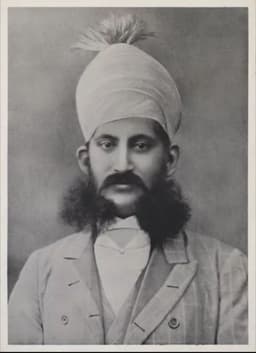
Mir Mahbub Ali Khan
Emperor · Modern
51.9Total
Basic Information
Born
1618
1866
Died
1707
1911
Era
Modern
Modern
Nationality
Mughal Empire
India
Occupation
Emperor
Emperor
Civilization
Indian
Indian
Score Comparison
Military (10%)
85.0
37.7
Political (20%)
72.0
68.0
Influence (20%)
72.0
50.2
Legacy (20%)
55.0
40.0
Leadership (15%)
79.8
64.0
Strategy (15%)
69.1
58.2
TOTAL
69.9
51.9
Aurangzeb — Complete Timeline
1658 AD
War of SuccessionPolitical Action◆ Major
Aurangzeb defeated his brothers Dara Shikoh, Shuja, and Murad Baksh in a civil war for the Mughal throne. He captured and executed Dara Shikoh, who was the favored successor of Shah Jahan. This victory established Aurangzeb as the sole Mughal emperor, but it also weakened the empire through internal conflict.
Civil WarSuccessionDara Shikoh
Impact: nationaldestructive
1675 AD
Execution of Guru Tegh BahadurPolitical Action◆ Major
Aurangzeb ordered the execution of Guru Tegh Bahadur, the ninth Sikh guru, for refusing to convert to Islam. The guru was beheaded in Delhi. This event intensified the Sikh resistance against Mughal rule and led to the formation of the Khalsa by Guru Gobind Singh in 1699.
ExecutionSikhismReligious Persecution
Impact: regionaldestructive
1679 AD
Re-imposition of Jizya TaxReform◆ Major
Aurangzeb re-imposed the jizya tax on non-Muslim subjects, which had been abolished by Akbar. This tax was levied on Hindus, Sikhs, and other non-Muslims. The re-imposition alienated many Hindu subjects and contributed to rebellions, including the Maratha uprising under Shivaji.
TaxReligious PolicyHindu
Impact: nationaldestructive
1680 AD
Maratha War (1680-1707)War
Aurangzeb engaged in a prolonged war against the Maratha Empire under Shivaji and his successors. The conflict lasted for 27 years, with Aurangzeb personally leading campaigns in the Deccan. Despite initial successes, the Mughals failed to subdue the Marathas, and the war exhausted the empire's resources.
WarMarathaDeccan
Impact: regionaldestructive
1686 AD
Conquest of the Deccan SultanatesWar◆ Major
Aurangzeb led a prolonged campaign to conquer the Deccan Sultanates of Bijapur and Golconda. He captured Bijapur in 1686 and Golconda in 1687 after lengthy sieges. These conquests extended Mughal rule to the southern tip of India, but they also drained the empire's treasury and military resources.
ConquestDeccanBijapurGolconda
Impact: regional
Mir Mahbub Ali Khan — Complete Timeline
1869 AD
Accession as Nizam of HyderabadPolitical Action◆ Major
Mir Mahbub Ali Khan became the 6th Nizam of Hyderabad at the age of three after his father's death. A regency council ruled until he came of age.
SuccessionRegency
Impact: regional
1902 AD
Bubonic Plague OutbreakOther◆ Major
A severe outbreak of bubonic plague struck Hyderabad, causing high mortality. The Nizam's administration implemented quarantine and public health measures.
PlaguePublic HealthEpidemic
Impact: regionaltragic
1908 AD
Great Musi River FloodOther◆ Major
A catastrophic flood of the Musi River devastated Hyderabad city, killing thousands and destroying property. The Nizam oversaw relief efforts and reconstruction.
Natural DisasterFloodRelief
Impact: regionaltragic
Expert Analysis
Origins
Aurangzeb was born in 1618 in Dohad, Gujarat, as the third son of Emperor Shah Jahan and Mumtaz Mahal. He received a rigorous education in Islamic theology, military tactics, and statecraft. His early exposure to court intrigues and his father's favoritism toward his elder brother Dara Shikoh shaped his ambition.
Mir Mahbub Ali Khan was born in 1866 in Hyderabad, the only son of Nizam Afzal-ud-Daulah. He ascended the throne at age three after his father's death. A regency council, led by Sir Salar Jung I, managed the state until Mahbub came of age. He was educated in Persian, Arabic, and English, and trained in administration.
Rise to Power
Aurangzeb's rise was marked by the War of Succession (1657-1658). After Shah Jahan fell ill, Aurangzeb defeated his brothers Dara Shikoh, Shuja, and Murad Baksh. He captured and executed Dara Shikoh in 1659, imprisoned Shah Jahan, and declared himself emperor. His military score of 85.0 reflects his tactical acumen in this conflict.
Mir Mahbub Ali Khan became Nizam at age three in 1869. The regency under Sir Salar Jung I stabilized the state and modernized administration. Mahbub assumed full powers in 1884 at age 18. His political score of 68.0 indicates competent but not extraordinary leadership during his reign.
Leadership & Governance
Aurangzeb centralized power and expanded the Mughal Empire to its largest extent, covering almost the entire Indian subcontinent. He reimposed the jizya tax in 1679, which alienated Hindu subjects and led to revolts. His religious policies, including the destruction of temples and execution of Guru Tegh Bahadur in 1675, intensified conflicts. He spent 27 years in the Deccan (1680-1707) fighting the Marathas, draining the treasury and weakening the empire.
Mir Mahbub Ali Khan focused on internal development and crisis management. During the Great Musi River Flood of 1908, he oversaw relief and reconstruction, building Osman Sagar and Himayat Sagar dams to prevent future floods. During the bubonic plague outbreak (1897-1911), his administration implemented quarantine measures and public health improvements. His leadership score of 64.0 reflects effective governance in crises.
Triumph & Tragedy
Aurangzeb's greatest triumph was the conquest of the Deccan Sultanates of Bijapur (1686) and Golconda (1687), adding vast territories. However, his prolonged Maratha war (1680-1707) was a strategic failure; he never fully subdued the Marathas, and the war exhausted the empire. His legacy score of 55.0 indicates mixed long-term impact.
Mir Mahbub Ali Khan's triumphs were his flood and plague responses, which saved lives and improved infrastructure. However, his reign saw the decline of Hyderabad's autonomy under British suzerainty. His military score of 37.7 reflects his limited role in warfare.
Character & Destiny
Aurangzeb was austere, devout, and ruthless. His strict interpretation of Islam drove his policies, but his intolerance alienated many. His decision to campaign in the Deccan for 27 years demonstrated stubbornness. Historians often blame his policies for the Mughal decline after his death.
Mir Mahbub Ali Khan was known for his philanthropy and interest in modernization. He was a patron of education and public works. However, he was also known for his extravagant lifestyle, which strained finances. His character was less decisive than Aurangzeb's, leading to a more passive role in history.
Legacy
Aurangzeb's legacy is controversial. He expanded the empire but his policies sowed discord. The Mughal Empire fragmented after his death in 1707. His total score of 69.9 reflects significant but flawed impact.
Mir Mahbub Ali Khan's legacy is more local. The dams he built still serve Hyderabad. His reign is remembered for effective crisis management. His total score of 51.9 indicates moderate impact within a limited sphere.
Conclusion
Aurangzeb had greater impact by expanding the Mughal Empire and shaping Indian history, despite his failures. His actions triggered long-term changes in the subcontinent. Mir Mahbub Ali Khan's influence was confined to Hyderabad. Thus, Aurangzeb's impact was more significant and enduring.
Rankings
🥇
AurangzebLeader
Mil: 85.0Pol: 72.0Inf: 72.0
69.9
🥈
Mir Mahbub Ali Khan
Mil: 37.7Pol: 68.0Inf: 50.2
51.9
+18.0 behind
How This Comparison Works
Algorithm
Each figure is scored on 6 dimensions (0—100 scale) based on structured historical data: Military (10%), Political (20%), Influence (20%), Legacy (20%), Leadership (15%), Strategy (15%). The weighted total produces the final ranking.
Data Sources
Scores are computed from structured sub-indicators in the database. Scale factors adjust for era (Ancient ×0.85, Modern ×1.0) and civilization size (Eastern ×1.05, Other ×0.80) to account for differences in population and military scale.
Maximum 3 Figures
Comparisons are limited to 2—3 figures to ensure readability and statistical meaningfulness.
Error Margins
±5 points per dimension — Sub-scores are derived from historical records with inherent uncertainty. Two figures within 5 points on a dimension should be considered roughly equivalent in that area.
Total Score Accuracy
±3 points overall — The weighted combination of 6 dimensions produces a total score with approximately ±3 points of uncertainty. Differences of less than 3 points are not statistically significant— the figures are effectively tied.
Known Limitations
- Historical records are incomplete and uneven across civilizations
- Figures from oral-tradition societies may be underrepresented
- Occupation labels can misclassify multi-role figures
- Scores measure capability and impact, not moral character
- Quantitative scoring is a comparison tool, not absolute truth
Capability Radar
Military (10%) — Battles & Warfare
Battles
85
28
Win Rate
80
35
Expansion
90
38
Political (20%) — Governance & Reform
Reform
60
40
Diplomacy
50
50
Economy
65
35
Influence (20%) — Cultural & Global Reach
Cultural
55
25
Global
70
15
Legacy (20%) — Historical Impact
Historical
75
30
Longevity
65
20
Leadership (15%) — Power & Stability
Tenure
90
45
Stability
40
30
Strategy (15%) — Tactics & Innovation
Strategy
85
40
Tactics
75
44
Reform
70
45
Similar Comparisons
Comments & Discussion
No comments yet. Be the first to share your thoughts!