Loading...
Mir Mahbub Ali Khan vs Napoleon Bonaparte
Napoleon Bonaparte leads by 19.0 pts · 2 figures compared
…
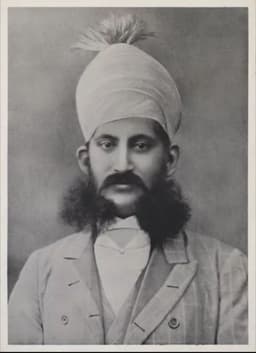
Mir Mahbub Ali Khan
Emperor · Modern
51.9Total

Napoleon Bonaparte
General · Modern
70.9Total
Basic Information
Born
1866
1769
Died
1911
1821
Era
Modern
Modern
Nationality
India
France
Occupation
Emperor
General
Civilization
Indian
Western
Score Comparison
Military (10%)
37.7
94.0
Political (20%)
68.0
72.0
Influence (20%)
50.2
40.0
Legacy (20%)
40.0
80.0
Leadership (15%)
64.0
78.0
Strategy (15%)
58.2
90.0
TOTAL
51.9
70.9
Mir Mahbub Ali Khan — Complete Timeline
1869 AD
Accession as Nizam of HyderabadPolitical Action◆ Major
Mir Mahbub Ali Khan became the 6th Nizam of Hyderabad at the age of three after his father's death. A regency council ruled until he came of age.
SuccessionRegency
Impact: regional
1902 AD
Bubonic Plague OutbreakOther◆ Major
A severe outbreak of bubonic plague struck Hyderabad, causing high mortality. The Nizam's administration implemented quarantine and public health measures.
PlaguePublic HealthEpidemic
Impact: regionaltragic
1908 AD
Great Musi River FloodOther◆ Major
A catastrophic flood of the Musi River devastated Hyderabad city, killing thousands and destroying property. The Nizam oversaw relief efforts and reconstruction.
Natural DisasterFloodRelief
Impact: regionaltragic
Napoleon Bonaparte — Complete Timeline
1799 AD
Coup of 18 BrumaireOther◆ Major
Napoleon Bonaparte, with support from his brother Lucien and key political figures, overthrew the Directory in a bloodless coup. He established the Consulate with himself as First Consul, effectively becoming the ruler of France. This event ended the French Revolution's most unstable period.
French RevolutionCoupRise to Power
Impact: regional
1804 AD
Promulgation of the Napoleonic CodeOther◆ Major
Napoleon enacted the Civil Code of the French, known as the Napoleonic Code, a comprehensive set of laws that replaced the fragmented feudal legal systems. The code established legal equality, protected property rights, and secularized law. It became the basis for legal systems in many European and world countries.
Legal ReformNapoleonic CodeCivil Law
Impact: globalconstructive
1805 AD
Battle of AusterlitzWar◆ Major
Napoleon's Grande Arm
Napoleonic WarsBattleDecisive Victory
Impact: global
1812 AD
Invasion of RussiaWar◆ Major
Napoleon led the Grande Arm
Napoleonic WarsInvasionDisaster
Impact: globaldestructive
1815 AD
Battle of WaterlooWar◆ Major
Napoleon's French army was defeated by the combined forces of the Duke of Wellington's Anglo-Allied army and Gebhard Leberecht von Bl
Napoleonic WarsBattleFinal Defeat
Impact: globaldestructive
Expert Analysis
mir-mahbub-ali-khan-vs-napoleon-bonaparte
# The Emperor and the Prince: Two Paths of Power in a Changing World
On a June morning in 1815, Napoleon Bonaparte stood on a muddy field near Waterloo, watching his Imperial Guard march toward annihilation. Half a world away and half a century later, a three-year-old boy named Mir Mahbub Ali Khan was lifted onto a throne in Hyderabad, surrounded by regents who would rule for him. One man would shake the foundations of Europe; the other would spend his life trying to preserve a kingdom that was never truly his. What separates a titan from a caretaker? The answer lies not in ambition alone, but in the cages that history builds.
Origins
Napoleon was born in 1769 on the island of Corsica, a place that had only recently become French. His family was minor nobility, poor enough to feel the sting of class but proud enough to resent it. He entered the military academy at Brienne at age nine, a small, intense boy mocked by wealthier classmates for his accent and provincial ways. This early humiliation forged a will of iron: he would prove them all wrong, or burn the world trying.
Mir Mahbub Ali Khan was born in 1866 into the wealthiest princely state in India. His father, the Nizam Afzal-ud-Daulah, died when the boy was three, leaving him as the sixth Nizam of Hyderabad under a regency council. Unlike Napoleon, who clawed his way from obscurity, Mahbub inherited a throne he had not earned—and a cage he could not escape. British suzerainty meant that every major decision required approval from a British Resident. His power was real but borrowed, like a man holding a sword that another man holds the hilt of.
Rise to Power
Napoleon’s rise was a masterpiece of speed and audacity. At 24, he drove the British out of Toulon; at 26, he crushed a royalist uprising in Paris with a "whiff of grapeshot"; at 30, he made himself First Consul; at 35, Emperor of the French. Each step was a gamble, each victory a springboard. He understood that in revolutionary France, legitimacy came from success, not birth. "I am not the successor of Louis XVI," he once said, "I am the successor of Charlemagne."
Mahbub’s rise was the opposite: slow, supervised, and shaped by others. He assumed full ruling powers at age 18 in 1884, but the British had already structured Hyderabad’s administration to limit his authority. His military score of 38.1 reflects not cowardice but circumstance—he commanded no armies in the field, fought no battles. His political score of 62.7 suggests a man who learned to negotiate within constraints, not to break them. Where Napoleon conquered nations, Mahbub managed a flood.
Leadership & Governance
Napoleon governed with the energy of a man who believed he was writing history himself. He reformed French law into the Napoleonic Code, centralized education, built roads, and stabilized the currency. His military genius—scored at 93—was matched by a political instinct that turned enemies into allies and allies into subjects. Yet his leadership, scored at 80, was brittle: he could inspire devotion but not loyalty, fear but not trust. "I love power as a musician loves his violin," he said. The metaphor is revealing—he played the instrument, but the instrument had no voice of its own.
Mahbub ruled differently because he had to. His reign saw two major crises: the bubonic plague outbreak of 1902 and the Great Musi River flood of 1908. The plague killed thousands; the flood devastated Hyderabad, destroying entire neighborhoods. Mahbub responded not with armies but with reservoirs—the Osman Sagar and Himayat Sagar, completed in 1920 after his death. These dams saved Hyderabad from future floods, a quiet legacy of engineering rather than conquest. His leadership score of 74.1 reflects a man who governed within limits, who built walls instead of breaking them.
Triumph & Tragedy
Napoleon’s greatest triumph was Austerlitz in 1805, where he smashed the combined armies of Austria and Russia. His greatest tragedy was the invasion of Russia in 1812, where 600,000 men marched in and fewer than 100,000 returned. The same ambition that lifted him to power destroyed him. Exiled to Elba, he escaped; exiled to St. Helena, he died at 51, alone and bitter, dictating memoirs that would become scripture for future tyrants.
Mahbub’s triumphs were quieter. He modernized Hyderabad’s administration, patronized the arts, and built infrastructure that outlasted his reign. His tragedy was the tragedy of all princes under empire: he was a king who could not be a king. When World War I broke out in 1914, three years after his death, Hyderabad’s troops fought for Britain, not for their own Nizam. His legacy score of 53.5 suggests a ruler remembered but not revered—a footnote in a story written by others.
Character & Destiny
Napoleon’s character was a forge of contradictions: brilliant and arrogant, strategic and reckless, visionary and tyrannical. He believed that "impossible is a word to be found only in the dictionary of fools." That belief made him emperor; it also made him a prisoner. His destiny was to rise so high that the only direction left was down.
Mahbub’s character was shaped by constraint. He was known as a generous patron, a lover of poetry and horses, a ruler who took genuine interest in his subjects’ welfare. But he was also a man who knew his limits. His strategy score of 52.5 suggests not incompetence but a different kind of intelligence—the wisdom to know when not to fight. Where Napoleon defied fate, Mahbub accepted it.
Legacy
Napoleon’s legacy is written in the laws of Europe, the borders of nations, the very concept of modern warfare. His military score of 94 and influence of 82 place him among the handful of figures who changed the course of history. Yet his legacy is also a warning: the man who conquers everything conquers nothing, because there is no one left to rule.
Mahbub’s legacy is more modest but more durable. The reservoirs he built still hold water. The institutions he supported still function. His legacy score of 53.5 reflects a ruler who did not change the world but improved his corner of it. In an age of empires, that may be the most any prince could achieve.
Conclusion
Standing at Waterloo, Napoleon saw his empire crumble in a single day. Sitting on his throne in Hyderabad, Mahbub saw his kingdom survive flood and plague, only to be absorbed into independent India in 1948, long after his death. One man tried to conquer history; the other tried to endure it. The difference between them is not talent or ambition—it is the shape of the cage they were born into. Napoleon broke his cage and built a world. Mahbub lived in his and preserved a world. Both were prisoners of their time; only one knew it.
Rankings
🥇
Napoleon BonaparteLeader
Mil: 94.0Pol: 72.0Inf: 40.0
70.9
🥈
Mir Mahbub Ali Khan
Mil: 37.7Pol: 68.0Inf: 50.2
51.9
+19.0 behind
How This Comparison Works
Algorithm
Each figure is scored on 6 dimensions (0—100 scale) based on structured historical data: Military (10%), Political (20%), Influence (20%), Legacy (20%), Leadership (15%), Strategy (15%). The weighted total produces the final ranking.
Data Sources
Scores are computed from structured sub-indicators in the database. Scale factors adjust for era (Ancient ×0.85, Modern ×1.0) and civilization size (Eastern ×1.05, Other ×0.80) to account for differences in population and military scale.
Maximum 3 Figures
Comparisons are limited to 2—3 figures to ensure readability and statistical meaningfulness.
Error Margins
±5 points per dimension — Sub-scores are derived from historical records with inherent uncertainty. Two figures within 5 points on a dimension should be considered roughly equivalent in that area.
Total Score Accuracy
±3 points overall — The weighted combination of 6 dimensions produces a total score with approximately ±3 points of uncertainty. Differences of less than 3 points are not statistically significant— the figures are effectively tied.
Known Limitations
- Historical records are incomplete and uneven across civilizations
- Figures from oral-tradition societies may be underrepresented
- Occupation labels can misclassify multi-role figures
- Scores measure capability and impact, not moral character
- Quantitative scoring is a comparison tool, not absolute truth
Capability Radar
Military (10%) — Battles & Warfare
Battles
28
95
Win Rate
35
90
Expansion
38
95
Political (20%) — Governance & Reform
Reform
40
95
Diplomacy
50
80
Economy
35
85
Influence (20%) — Cultural & Global Reach
Cultural
25
85
Global
15
90
Legacy (20%) — Historical Impact
Historical
30
95
Longevity
20
90
Leadership (15%) — Power & Stability
Tenure
45
85
Stability
30
70
Strategy (15%) — Tactics & Innovation
Strategy
40
95
Tactics
44
98
Reform
45
92
Similar Comparisons
Comments & Discussion
Emperor's Shadow6/17/2026
Comparing Napoleon to Mahbub Ali Khan is like comparing a hurricane to a garden pond. Napoleon rewired Europe’s political DNA—his Napoleonic Code alone governs half the world's legal systems today. Mahbub’s greatest achievement was staying rich and neutral. Sorry, but a prince who couldn’t declare war without British permission isn’t in the same league as a man who crowned himself emperor in Notre Dame. History remembers titans, not caretakers.
历史的秤砣6/17/2026
拿皇在奥斯特里茨一仗打垮三个帝国,马哈布一辈子就打了场没有子弹的“礼仪战争”。铁血与丝绸,根本没法放在一个天平上称。
DataNomad6/17/2026
Raw stats don't lie: Napoleon commanded over 600,000 men in the 1812 invasion of Russia alone. Mahbub’s entire reign saw zero major military campaigns. The only numbers that align are their heights—both short, but that’s clutching at straws. One reshaped continents; the other kept his treasury safe under British watch. The gulf here isn't just size—it's intent. Napoleon built empires; Mahbub managed a portfolio.
古典守望者6/17/2026
拿破仑是罗马恺撒的继承人,在神圣罗马帝国废墟上立起新秩序。马哈布不过是莫卧儿王朝的残片,在英王冠冕下当个装饰。你见过狮子与金丝雀比翼齐飞吗?
Revisionist Lens6/17/2026
Everyone romanticizes Napoleon as a genius, but he bled France dry—one million French soldiers dead in his wars. Mahbub Ali Khan, by contrast, used his vast wealth to fund the famous Osmania University and nurture Hyderabadi culture. Napoleon’s legacy is a body count; Mahbub’s is an educational institution. Maybe the quieter ruler was more human after all. Power that destroys isn't always superior to power that preserves.
灰尘与桂冠6/17/2026
马哈布一辈子都在大英帝国的棋盘上当一枚静默的卒子,连后宫换妃子都要写报告给总督。拿破仑却自己画棋盘、铸棋子,把欧洲踩成碎片。这不是比较,是自取其辱。