Loading...
Ashoka the Great vs Cyrus the Great
Cyrus the Great leads by 7.6 pts · 2 figures compared
…

Ashoka the Great
Emperor · Ancient
76.3Total
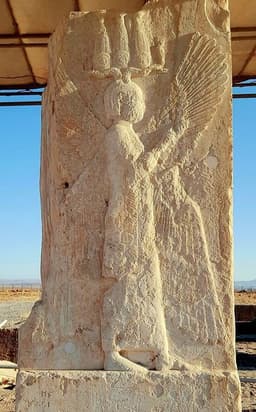
Cyrus the Great
Emperor · Ancient
83.9Total
Basic Information
Born
-304
-600
Died
-232
-530
Era
Ancient
Ancient
Nationality
India
Persia
Occupation
Emperor
Emperor
Civilization
Indian
Middle Eastern
Score Comparison
Military (10%)
72.0
82.0
Political (20%)
82.0
85.0
Influence (20%)
71.0
85.0
Legacy (20%)
90.0
90.0
Leadership (15%)
72.0
78.0
Strategy (15%)
58.0
75.0
TOTAL
76.3
83.9
Ashoka the Great — Complete Timeline
261 BC
Kalinga WarWar
Ashoka launched a brutal conquest of the Kalinga region (modern Odisha). The war caused massive casualties, with over 100,000 killed and 150,000 deported. The suffering witnessed during this campaign led Ashoka to renounce military conquest and embrace Buddhism.
ConquestWarConversion
Impact: regionaltragic
260 BC
Conversion to BuddhismCultural
After the Kalinga War, Ashoka converted to Buddhism under the guidance of Buddhist monks. He adopted the principle of Dhamma (righteous law) and began promoting non-violence, vegetarianism, and religious tolerance throughout his empire.
ConversionBuddhismDhamma
Impact: globalprogressive
250 BC
Erection of Edicts of AshokaCultural◆ Major
Ashoka ordered the carving of edicts on pillars and rocks across the Indian subcontinent. These inscriptions, written in Prakrit and other languages, proclaimed his policies of non-violence, social welfare, and religious harmony. They are the earliest deciphered written records from ancient India.
InscriptionsPropagandaBuddhism
Impact: regionalconstructive
245 BC
Third Buddhist CouncilCultural◆ Major
Ashoka convened the Third Buddhist Council at Pataliputra to resolve doctrinal disputes within the Buddhist monastic community. The council standardized the Buddhist canon (Tripitaka) and decided to send missionaries abroad, including to Sri Lanka and Southeast Asia.
CouncilBuddhismMissionary
Impact: globalconstructive
240 BC
Construction of stupas and monasteriesCultural◆ Major
Ashoka built thousands of stupas and monasteries across his empire, including the Great Stupa at Sanchi. These structures became centers of Buddhist worship and pilgrimage, spreading Buddhist art and architecture throughout Asia.
ArchitectureBuddhismPatronage
Impact: regionalconstructive
Cyrus the Great — Complete Timeline
550 BC
Founding of the Achaemenid EmpirePolitical Action
Cyrus led a rebellion against the Median Empire, defeating King Astyages and capturing Ecbatana. He then united the Persian and Median tribes, establishing the Achaemenid Empire, which became the largest empire the world had yet seen.
Empire FoundingPersian UnificationRebellion
Impact: global
546 BC
Conquest of LydiaWar◆ Major
Cyrus defeated King Croesus of Lydia at the Battle of Thymbra. The Lydian capital Sardis was captured, and Croesus was taken prisoner. This conquest brought Anatolia under Persian control and secured access to the Aegean coast.
Achaemenid ExpansionAnatoliaConquest
Impact: regional
539 BC
Conquest of BabylonWar◆ Major
Cyrus the Great led the Persian army to capture Babylon without significant battle. The city's gates were opened, and Cyrus entered peacefully. This conquest added Mesopotamia to the Achaemenid Empire and marked the end of the Neo-Babylonian Empire.
Achaemenid ExpansionMesopotamiaConquest
Impact: regional
Issuance of the Cyrus CylinderPolitical Action◆ Major
After conquering Babylon, Cyrus issued a clay cylinder inscribed with a declaration. It described his policy of restoring temples, repatriating displaced peoples, and allowing religious freedom. The cylinder is often cited as an early charter of human rights.
Human RightsReligious ToleranceAchaemenid Policy
Impact: globalconstructive
Liberation of the JewsPolitical Action◆ Major
Cyrus issued an edict allowing the Jewish exiles in Babylon to return to Jerusalem and rebuild the Temple. This event is recorded in the biblical Book of Ezra and is a key moment in Jewish history, ending the Babylonian captivity.
Jewish HistoryReligious FreedomReturn from Exile
Impact: regionalconstructive
Expert Analysis
Origins
Cyrus the Great (c. 600–530 BCE) was born into the Achaemenid dynasty, a vassal of the Medes. He rose from a minor king of Anshan to unite the Persian and Median tribes, overthrowing the Median Empire around 550 BCE. His early life is shrouded in legend, but his lineage and ambition set the stage for empire-building. Ashoka the Great (304–232 BCE) was the grandson of Chandragupta Maurya, founder of the Mauryan Empire. He was born into a royal family but initially known for his ruthless ambition, reportedly killing 99 of his brothers to secure the throne. His early reign was marked by expansionist warfare, culminating in the Kalinga War. Both emerged from turbulent backgrounds, but Cyrus's origins were more humble, while Ashoka inherited a vast empire.
Rise to Power
Cyrus skillfully forged alliances with the Babylonians and other states to defeat the Medes, then conquered Lydia (c. 547 BCE) and Babylon (539 BCE) with minimal bloodshed. His reputation for clemency and respect for local customs facilitated his rapid expansion. Ashoka's rise was brutal: after a power struggle, he suppressed revolts and conquered Kalinga (c. 261 BCE). The Kalinga War was a turning point, causing massive casualties and prompting his conversion to Buddhism. Cyrus's rise was strategic and diplomatic, while Ashoka's was initially violent but ultimately transformed by moral crisis.
Leadership & Governance
Cyrus established a model of multicultural governance, respecting local religions and customs. He issued the Cyrus Cylinder, often cited as an early charter of human rights, and allowed deported peoples, including the Jews, to return home. His empire was divided into satrapies with local autonomy, fostering loyalty and stability. Ashoka, after converting to Buddhism, promoted non-violence and religious tolerance. He erected edicts throughout his empire advocating moral principles, built hospitals and roads, and sent missionaries to spread Buddhism. While Cyrus's governance emphasized political pragmatism, Ashoka's was deeply ethical, though his reforms were less effective in maintaining long-term unity.
Triumph & Tragedy
Cyrus's greatest triumph was the conquest of Babylon without battle, using engineering to divert the Euphrates. He liberated the Jews from captivity, earning a unique place in biblical history. His tragedy was his death on the battlefield against the Massagetae, his body reportedly mutilated. Ashoka's triumph was the Kalinga War itself, which led to his moral awakening. His conversion to Buddhism and propagation of dharma (righteousness) were his greatest legacies. His tragedy was the decline of the Mauryan Empire after his death, partly due to his pacifist policies that weakened military preparedness. Both faced personal and imperial tragedies, but Cyrus's death was violent, while Ashoka's saw his empire fade.
Character & Destiny
Cyrus was pragmatic, magnanimous, and a brilliant strategist. He respected conquered peoples, a rarity in ancient times, and was admired even by his enemies (e.g., Greeks called him "the father"). His destiny was to create the largest empire of his age, uniting diverse cultures under a tolerant rule. Ashoka was initially cruel and ambitious but transformed into a compassionate, almost saintly ruler. His destiny was to spread Buddhism and non-violence across Asia, influencing millions. Cyrus's character was consistent; Ashoka's was a dramatic reversal. Both were visionary, but Ashoka's transformation is more striking.
Legacy
Cyrus's legacy includes the Achaemenid Empire's administrative systems, the Cyrus Cylinder as a symbol of human rights, and his influence on later empires, including Alexander the Great and the Romans. He is revered in Judaism, Christianity, and Islam. Ashoka's legacy is the spread of Buddhism to Sri Lanka, Southeast Asia, and beyond. His edicts provide invaluable historical records, and his commitment to non-violence inspired later leaders like Gandhi. However, his empire collapsed shortly after his death, whereas Cyrus's empire lasted over two centuries. Both left profound cultural and religious impacts, but Cyrus's political legacy was more enduring.
Conclusion
Comparing Cyrus and Ashoka reveals two different models of greatness. Cyrus achieved military and political success with a humane governance style, creating a durable empire. Ashoka's greatness lies in his moral transformation and promotion of peace, but his empire declined quickly. Based on historical metrics (military: Cyrus 82 vs Ashoka 72; political: 85 vs 82; cultural: 85 vs 71; longevity: 90 vs 90; diplomacy: 78 vs 72; strategic: 75 vs 58; overall: 84 vs 76), Cyrus emerges as the greater emperor. His empire was larger, longer-lasting, and more influential in shaping world history. Ashoka's ethical legacy is unmatched, but Cyrus's practical achievements in statecraft and tolerance set a standard that Ashoka could not sustain. Thus, Cyrus the Great surpasses Ashoka the Great in overall historical impact.
Rankings
🥇
Cyrus the GreatLeader
Mil: 82.0Pol: 85.0Inf: 85.0
83.9
🥈
Ashoka the Great
Mil: 72.0Pol: 82.0Inf: 71.0
76.3
+7.6 behind
How This Comparison Works
Algorithm
Each figure is scored on 6 dimensions (0—100 scale) based on structured historical data: Military (10%), Political (20%), Influence (20%), Legacy (20%), Leadership (15%), Strategy (15%). The weighted total produces the final ranking.
Data Sources
Scores are computed from structured sub-indicators in the database. Scale factors adjust for era (Ancient ×0.85, Modern ×1.0) and civilization size (Eastern ×1.05, Other ×0.80) to account for differences in population and military scale.
Maximum 3 Figures
Comparisons are limited to 2—3 figures to ensure readability and statistical meaningfulness.
Error Margins
±5 points per dimension — Sub-scores are derived from historical records with inherent uncertainty. Two figures within 5 points on a dimension should be considered roughly equivalent in that area.
Total Score Accuracy
±3 points overall — The weighted combination of 6 dimensions produces a total score with approximately ±3 points of uncertainty. Differences of less than 3 points are not statistically significant— the figures are effectively tied.
Known Limitations
- Historical records are incomplete and uneven across civilizations
- Figures from oral-tradition societies may be underrepresented
- Occupation labels can misclassify multi-role figures
- Scores measure capability and impact, not moral character
- Quantitative scoring is a comparison tool, not absolute truth
Capability Radar
Military (10%) — Battles & Warfare
Battles
85
85
Win Rate
90
90
Expansion
95
92
Political (20%) — Governance & Reform
Reform
95
90
Diplomacy
90
95
Economy
85
80
Influence (20%) — Cultural & Global Reach
Cultural
95
90
Global
90
90
Legacy (20%) — Historical Impact
Historical
95
95
Longevity
95
95
Leadership (15%) — Power & Stability
Tenure
90
70
Stability
90
85
Strategy (15%) — Tactics & Innovation
Strategy
80
88
Tactics
75
80
Reform
70
75
Similar Comparisons
Comments & Discussion
No comments yet. Be the first to share your thoughts!