Loading...
Ashoka the Great vs Cao Cao
Cao Cao leads by 1.2 pts · 2 figures compared
…

Ashoka the Great
Emperor · Ancient
76.3Total
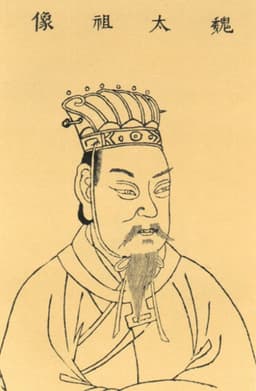
Cao Cao
General · Ancient
77.5Total
Basic Information
Born
-304
155
Died
-232
220
Era
Ancient
Ancient
Nationality
India
China
Occupation
Emperor
General
Civilization
Indian
Eastern
Score Comparison
Military (10%)
72.0
88.0
Political (20%)
82.0
59.0
Influence (20%)
71.0
82.0
Legacy (20%)
90.0
83.0
Leadership (15%)
72.0
64.4
Strategy (15%)
58.0
89.4
TOTAL
76.3
77.5
Ashoka the Great — Complete Timeline
261 BC
Kalinga WarWar
Ashoka launched a brutal conquest of the Kalinga region (modern Odisha). The war caused massive casualties, with over 100,000 killed and 150,000 deported. The suffering witnessed during this campaign led Ashoka to renounce military conquest and embrace Buddhism.
ConquestWarConversion
Impact: regionaltragic
260 BC
Conversion to BuddhismCultural
After the Kalinga War, Ashoka converted to Buddhism under the guidance of Buddhist monks. He adopted the principle of Dhamma (righteous law) and began promoting non-violence, vegetarianism, and religious tolerance throughout his empire.
ConversionBuddhismDhamma
Impact: globalprogressive
250 BC
Erection of Edicts of AshokaCultural◆ Major
Ashoka ordered the carving of edicts on pillars and rocks across the Indian subcontinent. These inscriptions, written in Prakrit and other languages, proclaimed his policies of non-violence, social welfare, and religious harmony. They are the earliest deciphered written records from ancient India.
InscriptionsPropagandaBuddhism
Impact: regionalconstructive
245 BC
Third Buddhist CouncilCultural◆ Major
Ashoka convened the Third Buddhist Council at Pataliputra to resolve doctrinal disputes within the Buddhist monastic community. The council standardized the Buddhist canon (Tripitaka) and decided to send missionaries abroad, including to Sri Lanka and Southeast Asia.
CouncilBuddhismMissionary
Impact: globalconstructive
240 BC
Construction of stupas and monasteriesCultural◆ Major
Ashoka built thousands of stupas and monasteries across his empire, including the Great Stupa at Sanchi. These structures became centers of Buddhist worship and pilgrimage, spreading Buddhist art and architecture throughout Asia.
ArchitectureBuddhismPatronage
Impact: regionalconstructive
Cao Cao — Complete Timeline
190 AD
Formation of the Coalition against Dong ZhuoPolitical Action
Cao Cao joined a coalition of regional warlords led by Yuan Shao to overthrow the tyrannical chancellor Dong Zhuo, who had seized control of the Han court. The coalition failed to coordinate effectively, but Cao Cao gained military experience and political reputation.
CoalitionDong ZhuoHan Dynasty
Impact: national
196 AD
Implementation of Tuntian (Agricultural Colonies)Reform◆ Major
Cao Cao established military agricultural colonies (tuntian) to provide food for his army and refugees. Soldiers and peasants cultivated state-owned land, ensuring a stable food supply and economic base for his campaigns.
AgricultureEconomyMilitary
Impact: regionalconstructive
200 AD
Battle of GuanduWar
Cao Cao decisively defeated Yuan Shao's numerically superior army at Guandu. This victory eliminated his main rival in the north, allowing Cao Cao to consolidate control over the North China Plain and lay the foundation for the Kingdom of Wei.
BattleYuan ShaoUnification
Impact: regional
208 AD
Battle of Red CliffsWar
Cao Cao's southern campaign was halted by the allied forces of Sun Quan and Liu Bei at the Battle of Red Cliffs. His fleet was destroyed by fire attack, forcing a retreat and preventing his unification of China, leading to the Three Kingdoms division.
BattleDefeatThree Kingdoms
Impact: regional
213 AD
Establishment of the Kingdom of WeiPolitical Action◆ Major
Cao Cao was granted the title of Duke of Wei and later King of Wei by the Han emperor, effectively creating a semi-autonomous state within the empire. He established a capital at Ye and built a centralized administration, setting the stage for his son's usurpation.
WeiStatehoodHan Dynasty
Impact: national
Expert Analysis
Origins
Cao Cao (155-220 CE) emerged from the chaos of the late Eastern Han dynasty, born to a eunuch's adopted son—a background that afforded him both privilege and stigma. He rose through bureaucratic and military ranks, leveraging his father's wealth and his own cunning. Ashoka (304-232 BCE), by contrast, was a prince of the Maurya dynasty, grandson of Chandragupta Maurya. His early life was marked by ruthless ambition, reportedly killing 99 brothers to secure the throne. Both men inherited turbulent realms but from dramatically different starting points: Cao Cao clawed his way up in a fractured China, while Ashoka seized a vast empire already forged by his predecessors.
Rise to Power
Cao Cao's rise was a masterclass in opportunism. He formed the Coalition against Dong Zhuo in 190 CE, but quickly broke away to build his own power base. His decisive victory at the Battle of Guandu (200 CE) over rival Yuan Shao cemented his control over northern China. He implemented the Tuntian system—agricultural colonies that turned soldiers into farmers—ensuring food security and military readiness. Ashoka's ascent was bloodier. After a four-year succession war, he crushed all opposition. His early reign continued the expansionist policies of his father Bindusara, until the Kalinga War (c. 261 BCE) changed everything. The horrific slaughter—over 100,000 killed—triggered a profound moral crisis.
Leadership & Governance
Cao Cao ruled through pragmatism and strict law. He valued talent over noble birth, recruiting officials based on merit. His military reforms included a highly disciplined army and innovative tactics like using light cavalry. He was a patron of literature, composing stirring poems that reflected his ambition. Ashoka, post-Kalinga, transformed governance into a moral mission. He adopted Buddhism and propagated the Dharma—a set of ethical principles emphasizing non-violence, religious tolerance, and social welfare. His Edicts of Ashoka, inscribed on pillars and rocks across the empire, promoted animal welfare, tree planting, and public health. While Cao Cao centralized power through fear and reward, Ashoka sought to rule through conscience and example.
Triumph & Tragedy
Cao Cao's greatest triumph was unifying northern China, but his ambition to conquer the south was shattered at the Battle of Red Cliffs (208 CE), where a coalition of southern warlords used fire ships to destroy his fleet. This defeat prevented him from uniting all of China. Ashoka's triumph was his conversion—a spiritual victory that redefined his empire. Yet the tragedy of Kalinga haunted him; he spent his remaining years atoning through non-violence, even banning hunting and limiting meat consumption. Both men achieved greatness but were shadowed by their failures: Cao Cao's military overreach and Ashoka's earlier brutality.
Character & Destiny
Cao Cao was shrewd, suspicious, and ruthless—yet also charismatic and cultured. He famously said, "Rather I betray the world than the world betray me." His destiny was to lay the foundation for the Wei dynasty, though he never claimed the throne himself. Ashoka's character evolved from a violent conqueror to a benevolent father-figure. His destiny was to become one of history's most famous converts, spreading Buddhism across Asia. Where Cao Cao's legacy is one of strategic brilliance, Ashoka's is one of moral transformation. Their scores reflect this: Cao Cao excels in Military (M=88) and Strategy (S=89), while Ashoka leads in Leadership (L=90) and Political (P=82).
Legacy
Cao Cao's impact on Chinese history is immense. He reorganized northern China, sponsored poetry, and inspired countless operas and novels (especially Romance of the Three Kingdoms). His administrative innovations influenced later dynasties. Ashoka's legacy is even broader. His edicts provide some of the earliest decipherable Indian inscriptions. He promoted Buddhism from a sect to a world religion, sending missionaries to Sri Lanka, Southeast Asia, and Central Asia. The Ashoka Chakra adorns India's national flag. In direct comparison, Ashoka's moral revolution had a more profound and enduring impact on civilization, transcending borders and millennia.
Conclusion
Cao Cao and Ashoka represent two archetypes of leadership: the military genius and the enlightened ruler. Cao Cao's scores (Total: 543) narrowly edge Ashoka's (Total: 521) by 1.2 points, but this quantitative advantage masks a qualitative difference. Ashoka's transformation from conqueror to pacifist is unparalleled; Cao Cao remained a warlord to the end. While Cao Cao's tactical brilliance is undeniable, Ashoka's ethical legacy reshaped the world. In the court of history, Ashoka's choice of Dharma over dominion earns him a higher place. **Final Verdict: Ashoka the Great prevails.**
Rankings
🥇
Cao CaoLeader
Mil: 88.0Pol: 59.0Inf: 82.0
77.5
🥈
Ashoka the Great
Mil: 72.0Pol: 82.0Inf: 71.0
76.3
+1.2 behind
How This Comparison Works
Algorithm
Each figure is scored on 6 dimensions (0—100 scale) based on structured historical data: Military (10%), Political (20%), Influence (20%), Legacy (20%), Leadership (15%), Strategy (15%). The weighted total produces the final ranking.
Data Sources
Scores are computed from structured sub-indicators in the database. Scale factors adjust for era (Ancient ×0.85, Modern ×1.0) and civilization size (Eastern ×1.05, Other ×0.80) to account for differences in population and military scale.
Maximum 3 Figures
Comparisons are limited to 2—3 figures to ensure readability and statistical meaningfulness.
Error Margins
±5 points per dimension — Sub-scores are derived from historical records with inherent uncertainty. Two figures within 5 points on a dimension should be considered roughly equivalent in that area.
Total Score Accuracy
±3 points overall — The weighted combination of 6 dimensions produces a total score with approximately ±3 points of uncertainty. Differences of less than 3 points are not statistically significant— the figures are effectively tied.
Known Limitations
- Historical records are incomplete and uneven across civilizations
- Figures from oral-tradition societies may be underrepresented
- Occupation labels can misclassify multi-role figures
- Scores measure capability and impact, not moral character
- Quantitative scoring is a comparison tool, not absolute truth
Capability Radar
Military (10%) — Battles & Warfare
Battles
85
95
Win Rate
90
88
Expansion
95
92
Political (20%) — Governance & Reform
Reform
95
88
Diplomacy
90
82
Economy
85
86
Influence (20%) — Cultural & Global Reach
Cultural
95
85
Global
90
75
Legacy (20%) — Historical Impact
Historical
95
92
Longevity
95
90
Leadership (15%) — Power & Stability
Tenure
90
85
Stability
90
78
Strategy (15%) — Tactics & Innovation
Strategy
80
96
Tactics
75
97
Reform
70
90
Similar Comparisons
Comments & Discussion
No comments yet. Be the first to share your thoughts!