Loading...
This comparison has not been analyzed yet.
One-time AI generation (~1 minute). Scores and timeline are already available below.
Arthur Meighen vs Devan Nair
Arthur Meighen leads by 5.3 pts · 2 figures compared
…
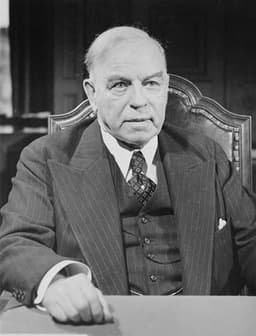
Arthur Meighen
Politician · Modern
43.0Total
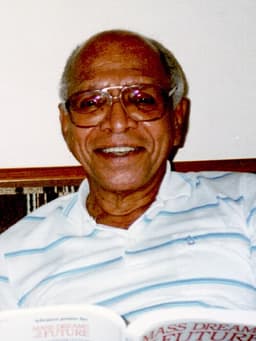
Devan Nair
Politician · Modern
37.7Total
Basic Information
Born
1874
1923
Died
1960
—
Era
Modern
Modern
Nationality
Canada
Singapore
Occupation
Politician
Politician
Civilization
Western
Eastern
Score Comparison
Military (10%)
49.8
11.4
Political (20%)
33.6
32.2
Influence (20%)
47.9
47.9
Legacy (20%)
38.3
35.8
Leadership (15%)
48.4
48.4
Strategy (15%)
41.4
35.9
TOTAL
43.0
37.7
Arthur Meighen — Complete Timeline
1917 AD
Led the Unionist Government During World War IPolitical Action◆ Major
As a senior minister in Borden's Unionist government, Meighen played a key role in implementing conscription and the War Measures Act. His actions were controversial and deeply divided the country along linguistic lines.
Canadian PoliticsWorld War IConscription
Impact: nationaldestructive
1920 AD
Elected Prime Minister of CanadaPolitical Action◆ Major
Meighen became Prime Minister of Canada after the resignation of Sir Robert Borden. His first term lasted only until 1921, as his Conservative government was defeated in the general election by Mackenzie King's Liberals.
Canadian PoliticsElectionGovernment
Impact: national
1923 AD
Passed the Chinese Immigration Act of 1923Political Action◆ Major
As Prime Minister, Meighen's government passed the Chinese Immigration Act, which effectively banned all Chinese immigration to Canada. The act was a major piece of discriminatory legislation that remained in force until 1947.
Canadian PoliticsImmigrationDiscrimination
Impact: nationaldestructive
1926 AD
Second Term as Prime MinisterPolitical Action◆ Major
Meighen served a second brief term as Prime Minister after the King-Byng Affair, when Governor General Lord Byng refused Prime Minister Mackenzie King's request for a dissolution of parliament. Meighen's government lasted only three months before being defeated in the House of Commons.
Canadian PoliticsConstitutional CrisisGovernment
Impact: national
Devan Nair — Complete Timeline
1961 AD
Co-founded the National Trades Union CongressPolitical Action◆ Major
Nair was a key figure in the labor movement and co-founded the National Trades Union Congress (NTUC) in 1961. He served as its secretary-general, advocating for workers' rights and industrial harmony.
Labor movementNTUC
Impact: nationalconstructive
1979 AD
Served as Member of Parliament for AnsonPolitical Action
Nair was elected as the Member of Parliament for Anson constituency in 1979 under the PAP. He served until his election as President, representing the constituency in Parliament.
MPPAP
1981 AD
Elected Third President of SingaporePolitical Action◆ Major
Devan Nair was elected as the third President of Singapore by Parliament in October 1981. He succeeded Benjamin Sheares and served as a ceremonial head of state until 1985.
PresidencyHead of state
Impact: national
1985 AD
Resigned as President Amid ScandalPolitical Action◆ Major
Nair resigned as President in March 1985 following allegations of alcoholism and inappropriate behavior. His resignation was accepted by Parliament, and he left Singapore shortly after, living in exile in the United States.
ResignationScandal
Impact: nationaltragic
This comparison has not been analyzed yet.
One-time AI generation (~1 minute). Scores and timeline are already available below.
Rankings
🥇
Arthur MeighenLeader
Mil: 49.8Pol: 33.6Inf: 47.9
43.0
🥈
Devan Nair
Mil: 11.4Pol: 32.2Inf: 47.9
37.7
+5.3 behind
How This Comparison Works
Algorithm
Each figure is scored on 6 dimensions (0—100 scale) based on structured historical data: Military (10%), Political (20%), Influence (20%), Legacy (20%), Leadership (15%), Strategy (15%). The weighted total produces the final ranking.
Data Sources
Scores are computed from structured sub-indicators in the database. Scale factors adjust for era (Ancient ×0.85, Modern ×1.0) and civilization size (Eastern ×1.05, Other ×0.80) to account for differences in population and military scale.
Maximum 3 Figures
Comparisons are limited to 2—3 figures to ensure readability and statistical meaningfulness.
Error Margins
±5 points per dimension — Sub-scores are derived from historical records with inherent uncertainty. Two figures within 5 points on a dimension should be considered roughly equivalent in that area.
Total Score Accuracy
±3 points overall — The weighted combination of 6 dimensions produces a total score with approximately ±3 points of uncertainty. Differences of less than 3 points are not statistically significant— the figures are effectively tied.
Known Limitations
- Historical records are incomplete and uneven across civilizations
- Figures from oral-tradition societies may be underrepresented
- Occupation labels can misclassify multi-role figures
- Scores measure capability and impact, not moral character
- Quantitative scoring is a comparison tool, not absolute truth
Capability Radar
Military (10%) — Battles & Warfare
Battles
30
14
Win Rate
33
18
Expansion
33
22
Political (20%) — Governance & Reform
Reform
20
20
Diplomacy
30
25
Economy
20
20
Influence (20%) — Cultural & Global Reach
Cultural
15
15
Global
10
10
Legacy (20%) — Historical Impact
Historical
20
10
Longevity
10
5
Leadership (15%) — Power & Stability
Tenure
25
30
Stability
15
10
Strategy (15%) — Tactics & Innovation
Strategy
36
22
Tactics
40
27
Reform
43
28
Similar Comparisons
Comments & Discussion
No comments yet. Be the first to share your thoughts!