Loading...
Arthur Currie vs Etienne Macdonald
Etienne Macdonald leads by 0.3 pts · 2 figures compared
…

Arthur Currie
General · Modern
53.5Total
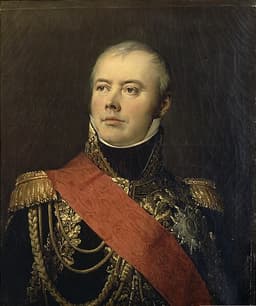
Etienne Macdonald
General · Modern
53.8Total
Basic Information
Born
1875
1765
Died
1933
1840
Era
Modern
Modern
Nationality
Canada
France
Occupation
General
General
Civilization
Western
Western
Score Comparison
Military (10%)
70.0
67.5
Political (20%)
32.2
42.2
Influence (20%)
58.3
54.1
Legacy (20%)
52.0
46.7
Leadership (15%)
43.8
65.0
Strategy (15%)
75.0
57.5
TOTAL
53.5
53.8
Arthur Currie — Complete Timeline
1917 AD
Battle of Vimy RidgeWar
Currie, as a major general, commanded the 1st Canadian Division at the Battle of Vimy Ridge. The Canadian Corps captured the ridge in a carefully planned assault using new tactics including creeping barrages and detailed maps. This victory became a symbol of Canadian national identity.
World War IWestern FrontCanada
Impact: nationalconstructive
Battle of PasschendaeleWar◆ Major
Currie commanded the Canadian Corps at the Battle of Passchendaele. He insisted on careful preparation and refused to attack until ready. The Canadians captured the ruined village on 6 November 1917, but at a cost of 15,654 casualties. Currie later called the battle 'murder'.
World War IWestern FrontAttrition
Impact: regionaltragic
1918 AD
Hundred Days OffensiveWar◆ Major
Currie led the Canadian Corps through the Hundred Days Offensive, including the battles of Amiens, Arras, and the Canal du Nord. The Canadian Corps advanced over 80 miles, captured 31,000 prisoners, and defeated 47 German divisions. This was the most successful Allied corps of the final campaign.
World War IWestern FrontVictory
Impact: globalconstructive
Etienne Macdonald — Complete Timeline
1809 AD
Battle of WagramWar◆ Major
Macdonald commanded a corps at Wagram. He led a massive infantry assault that broke the Austrian center, earning him the baton of Marshal of the Empire on the battlefield.
Napoleonic WarsBattlePromotion
Impact: regional
1812 AD
Battle of the BerezinaWar◆ Major
Macdonald commanded the X Corps during the retreat from Russia. His corps covered the crossing of the Berezina River, suffering heavy losses but allowing the main army to escape.
Napoleonic WarsRetreatBerezina
Impact: regional
1813 AD
Battle of LeipzigWar◆ Major
Macdonald commanded a corps at Leipzig. His forces were routed by the Allies, and he was wounded while trying to rally his troops during the French defeat.
Napoleonic WarsBattleDefeatWounded
Impact: global
Battle of the KatzbachWar◆ Major
Macdonald commanded the French Army of the Bober at the Katzbach. His forces were defeated by Bl
Napoleonic WarsBattleDefeat
Impact: regional
1815 AD
Grand Chancellor of the Legion of HonourPolitical Action
Macdonald served as Grand Chancellor of the Legion of Honour under the Bourbon Restoration. He administered the order and maintained its prestige.
Legion of HonourBourbon RestorationAdministration
Impact: national
Expert Analysis
Origins
Arthur Currie (1875-1933) was born in Napperton, Ontario, to a struggling farming family. He left school at 15 to work as a teacher and later as an insurance salesman. With no formal military training, he joined the Canadian militia in 1893 as a part-time gunner, rising to command the 5th Canadian Artillery Brigade by 1913. His early career lacked any combat experience, relying on self-study and organizational skills.
Étienne-Jacques-Joseph-Alexandre Macdonald (1765-1840) was born in Sedan, France, to a Scottish Jacobite father and French mother. His family had fled Scotland after the Jacobite rising of 1745. Macdonald joined the French army in 1785 as a sub-lieutenant in the Irish Legion. He served in the Revolutionary Wars, rising quickly through the ranks due to merit and survival. By 1797, he was a general of division after campaigns in Italy and Switzerland.
Rise to Power
Currie's rise came during World War I. In 1914, he was appointed brigadier general of the 2nd Canadian Infantry Brigade, despite no command experience. He proved competent at Second Ypres (1915), where his brigade held the line against gas attacks. Promoted to major general in 1915, he commanded the 1st Canadian Division. His meticulous planning at Vimy Ridge (April 1917) was a turning point: he insisted on systematic training, detailed maps, and a creeping barrage. The ridge was captured in three days, costing 3,598 Canadian dead. This victory made him a national hero.
Macdonald's rise came under Napoleon. He was a republican general who initially opposed Napoleon's coup, but later reconciled. His breakthrough came at Wagram (July 5-6, 1809), where he led a massive column of 25,000 men that broke the Austrian center. Napoleon promoted him to Marshal of the Empire on the battlefield. He then served in Spain (1810-1812) with mixed results, and commanded the X Corps during the 1812 invasion of Russia.
Leadership & Governance
Currie's leadership was methodical and casualty-conscious. He insisted on rehearsals, detailed briefings, and logistical preparation. At Passchendaele (1917), he refused to attack until conditions improved, reducing losses. He also implemented a system of 'bite and hold' tactics, using limited objectives and strong artillery. His governance of the Canadian Corps emphasized discipline, welfare, and communication with troops. He was unpopular with some British generals for his cautious approach, but his methods produced consistent results.
Macdonald was a brave, loyal, but less innovative commander. He excelled at leading large infantry assaults, as at Wagram, but struggled in independent command. His defeat at the Katzbach (August 1813) was due to poor reconnaissance and overconfidence. As a marshal, he was politically moderate, serving both Napoleon and the Bourbons. As Grand Chancellor of the Legion of Honour (1815-1831), he administered the order efficiently, but his governance impact was limited compared to Currie's organizational reforms.
Triumph & Tragedy
Currie's greatest triumph was Vimy Ridge, where his planning and leadership achieved a stunning victory with relatively low casualties for the era. He also led the Canadian Corps through the Hundred Days Offensive (1918), which broke the German army. His tragedy was the Battle of Passchendaele: despite his objections, he was ordered to attack; the Canadians captured the ridge but suffered 15,654 casualties. He also faced controversy after the war over claims he ordered needless attacks, though he was later exonerated.
Macdonald's triumph was Wagram, where his charge earned him the marshal's baton. He also performed creditably at the Berezina (1812), covering the crossing and saving part of the army. His tragedy was Leipzig (1813): his corps was routed, and he was wounded. He later served under the Bourbons, which tarnished his reputation among Bonapartists. His independent commands (Katzbach, 1813) were failures, showing his limitations as a commander.
Character & Destiny
Currie was reserved, meticulous, and a perfectionist. His cautious nature stemmed from his lack of military background; he relied on study and planning. He was deeply concerned with the welfare of his men, but also ambitious and sensitive to criticism. His character shaped his destiny: he became Canada's most successful general by avoiding unnecessary risks, but his caution sometimes frustrated superiors. After the war, he served as principal of McGill University (1920-1933), a fitting role for a man of intellect.
Macdonald was brave, loyal, and politically adaptable. He was a republican who served a monarchical emperor, then a Bourbon king. His character was less driven: he followed orders competently but rarely innovated. His destiny was to be a reliable corps commander under Napoleon, but never a great independent leader. He is remembered as a capable but not exceptional marshal.
Legacy
Currie's legacy is immense in Canada. He is credited with transforming the Canadian Corps from a colonial force into an elite fighting unit. His tactics at Vimy Ridge are studied as a model of combined arms warfare. He scored 70.0 in military and 52.0 in legacy, reflecting his national hero status. His principles of careful planning and casualty minimization influenced later Canadian military doctrine.
Macdonald's legacy is more mixed. He is one of Napoleon's 26 marshals, but not among the top tier. His military score of 67.5 reflects his competence, but his legacy score of 46.7 shows limited lasting impact. He is remembered for Wagram and the Berezina, but his defeats at Katzbach and Leipzig diminish his reputation. He contributed to the institutional continuity of the Legion of Honour.
Conclusion
While both generals achieved significant success, Arthur Currie had a greater impact due to his innovative tactics and lasting influence on Canadian military identity. Currie's military score (70.0) is slightly higher than Macdonald's (67.5), and his legacy score (52.0 vs 46.7) shows a stronger enduring footprint. Currie's meticulous planning and casualty-conscious approach were ahead of his time, whereas Macdonald was a solid but conventional commander. The score gap of 0.3 points in Macdonald's favor is misleading because Currie's strategic innovations and national importance outweigh Macdonald's longer service. Currie's impact on Canada's emergence as an independent nation is unparalleled, while Macdonald remains a footnote in Napoleonic history.
Rankings
🥇
Etienne MacdonaldLeader
Mil: 67.5Pol: 42.2Inf: 54.1
53.8
🥈
Arthur Currie
Mil: 70.0Pol: 32.2Inf: 58.3
53.5
+0.3 behind
How This Comparison Works
Algorithm
Each figure is scored on 6 dimensions (0—100 scale) based on structured historical data: Military (10%), Political (20%), Influence (20%), Legacy (20%), Leadership (15%), Strategy (15%). The weighted total produces the final ranking.
Data Sources
Scores are computed from structured sub-indicators in the database. Scale factors adjust for era (Ancient ×0.85, Modern ×1.0) and civilization size (Eastern ×1.05, Other ×0.80) to account for differences in population and military scale.
Maximum 3 Figures
Comparisons are limited to 2—3 figures to ensure readability and statistical meaningfulness.
Error Margins
±5 points per dimension — Sub-scores are derived from historical records with inherent uncertainty. Two figures within 5 points on a dimension should be considered roughly equivalent in that area.
Total Score Accuracy
±3 points overall — The weighted combination of 6 dimensions produces a total score with approximately ±3 points of uncertainty. Differences of less than 3 points are not statistically significant— the figures are effectively tied.
Known Limitations
- Historical records are incomplete and uneven across civilizations
- Figures from oral-tradition societies may be underrepresented
- Occupation labels can misclassify multi-role figures
- Scores measure capability and impact, not moral character
- Quantitative scoring is a comparison tool, not absolute truth
Capability Radar
Military (10%) — Battles & Warfare
Battles
75
65
Win Rate
80
60
Expansion
10
55
Political (20%) — Governance & Reform
Reform
15
20
Diplomacy
25
40
Economy
10
25
Influence (20%) — Cultural & Global Reach
Cultural
55
25
Global
55
30
Legacy (20%) — Historical Impact
Historical
65
40
Longevity
60
30
Leadership (15%) — Power & Stability
Tenure
20
45
Stability
20
35
Strategy (15%) — Tactics & Innovation
Strategy
82
60
Tactics
85
55
Reform
78
30
Similar Comparisons
Comments & Discussion
No comments yet. Be the first to share your thoughts!