Loading...
This comparison has not been analyzed yet.
One-time AI generation (~1 minute). Scores and timeline are already available below.
Ardashir II vs Midas of Phrygia
Midas of Phrygia leads by 8.1 pts · 2 figures compared
…
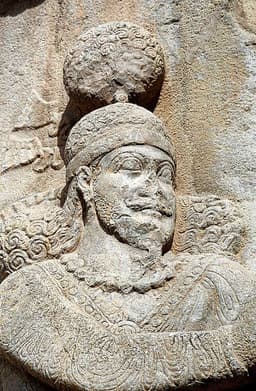
Ardashir II
Emperor · Ancient
35.5Total

Midas of Phrygia
Emperor · Ancient
43.6Total
Basic Information
Born
310
-738
Died
383
-696
Era
Ancient
Ancient
Nationality
Sasanian Empire
Phrygia
Occupation
Emperor
Emperor
Civilization
Middle Eastern
Middle Eastern
Score Comparison
Military (10%)
10.2
10.2
Political (20%)
32.1
29.3
Influence (20%)
42.4
60.0
Legacy (20%)
31.7
52.0
Leadership (15%)
44.5
38.1
Strategy (15%)
45.0
45.0
TOTAL
35.5
43.6
Ardashir II — Complete Timeline
379 AD
Accession to the Sasanian thronePolitical Action◆ Major
Ardashir II succeeded his brother Shapur II as Shahanshah of the Sasanian Empire. His reign was brief and marked by internal strife, as he faced opposition from the nobility and military.
SuccessionSasanian Empire
Impact: national
383 AD
Deposition and deathPolitical Action◆ Major
Ardashir II was deposed by the Sasanian nobility after a short reign. He was killed or died shortly after, and was succeeded by Shapur III.
DepositionDeath
Impact: nationaltragic
Midas of Phrygia — Complete Timeline
720 BC
Alliance with Assyria Against CimmeriansPolitical Action◆ Major
Midas formed an alliance with the Assyrian king Sargon II to counter the Cimmerian threat. This diplomatic move secured Phrygia's borders temporarily, but the alliance was fragile and did not prevent future Cimmerian invasions.
AllianceAssyriaCimmerians
Impact: regional
710 BC
Construction of the Midas MonumentCultural
Midas commissioned the Midas Monument (Midas City) in Yaz
MonumentArchitecturePhrygian Culture
Impact: nationalconstructive
700 BC
Legend of the Golden TouchCultural
The myth of Midas's golden touch, where everything he touched turned to gold, became a popular Greek legend. While not historical, this story reflects Midas's reputation for wealth and power in ancient literature, influencing later cultural narratives.
MythLegendGreek Mythology
Impact: global
696 BC
Defeat by Cimmerians and SuicideWar
Midas was defeated by the Cimmerians, who overran Phrygia and sacked the capital Gordion. According to historical accounts, Midas committed suicide by drinking bull's blood after the defeat, ending his reign and the Phrygian kingdom's independence.
Cimmerian InvasionSuicidePhrygia Fall
Impact: regionaltragic
This comparison has not been analyzed yet.
One-time AI generation (~1 minute). Scores and timeline are already available below.
Rankings
🥇
Midas of PhrygiaLeader
Mil: 10.2Pol: 29.3Inf: 60.0
43.6
🥈
Ardashir II
Mil: 10.2Pol: 32.1Inf: 42.4
35.5
+8.1 behind
How This Comparison Works
Algorithm
Each figure is scored on 6 dimensions (0—100 scale) based on structured historical data: Military (10%), Political (20%), Influence (20%), Legacy (20%), Leadership (15%), Strategy (15%). The weighted total produces the final ranking.
Data Sources
Scores are computed from structured sub-indicators in the database. Scale factors adjust for era (Ancient ×0.85, Modern ×1.0) and civilization size (Eastern ×1.05, Other ×0.80) to account for differences in population and military scale.
Maximum 3 Figures
Comparisons are limited to 2—3 figures to ensure readability and statistical meaningfulness.
Error Margins
±5 points per dimension — Sub-scores are derived from historical records with inherent uncertainty. Two figures within 5 points on a dimension should be considered roughly equivalent in that area.
Total Score Accuracy
±3 points overall — The weighted combination of 6 dimensions produces a total score with approximately ±3 points of uncertainty. Differences of less than 3 points are not statistically significant— the figures are effectively tied.
Known Limitations
- Historical records are incomplete and uneven across civilizations
- Figures from oral-tradition societies may be underrepresented
- Occupation labels can misclassify multi-role figures
- Scores measure capability and impact, not moral character
- Quantitative scoring is a comparison tool, not absolute truth
Capability Radar
Military (10%) — Battles & Warfare
Battles
5
5
Win Rate
5
5
Expansion
5
5
Political (20%) — Governance & Reform
Reform
10
10
Diplomacy
10
20
Economy
10
10
Influence (20%) — Cultural & Global Reach
Cultural
5
60
Global
5
60
Legacy (20%) — Historical Impact
Historical
5
70
Longevity
5
80
Leadership (15%) — Power & Stability
Tenure
10
30
Stability
10
15
Strategy (15%) — Tactics & Innovation
Strategy
5
5
Tactics
5
5
Reform
5
5
Similar Comparisons
Comments & Discussion
No comments yet. Be the first to share your thoughts!