Loading...
Ardashir II vs Napoleon Bonaparte
Napoleon Bonaparte leads by 35.4 pts · 2 figures compared
…
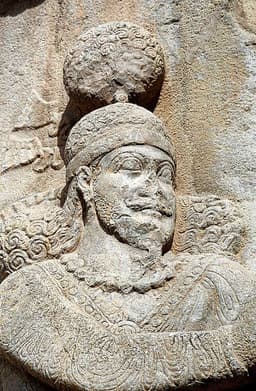
Ardashir II
Emperor · Ancient
35.5Total

Napoleon Bonaparte
General · Modern
70.9Total
Basic Information
Born
310
1769
Died
383
1821
Era
Ancient
Modern
Nationality
Sasanian Empire
France
Occupation
Emperor
General
Civilization
Middle Eastern
Western
Score Comparison
Military (10%)
10.2
94.0
Political (20%)
32.1
72.0
Influence (20%)
42.4
40.0
Legacy (20%)
31.7
80.0
Leadership (15%)
44.5
78.0
Strategy (15%)
45.0
90.0
TOTAL
35.5
70.9
Ardashir II — Complete Timeline
379 AD
Accession to the Sasanian thronePolitical Action◆ Major
Ardashir II succeeded his brother Shapur II as Shahanshah of the Sasanian Empire. His reign was brief and marked by internal strife, as he faced opposition from the nobility and military.
SuccessionSasanian Empire
Impact: national
383 AD
Deposition and deathPolitical Action◆ Major
Ardashir II was deposed by the Sasanian nobility after a short reign. He was killed or died shortly after, and was succeeded by Shapur III.
DepositionDeath
Impact: nationaltragic
Napoleon Bonaparte — Complete Timeline
1799 AD
Coup of 18 BrumaireOther◆ Major
Napoleon Bonaparte, with support from his brother Lucien and key political figures, overthrew the Directory in a bloodless coup. He established the Consulate with himself as First Consul, effectively becoming the ruler of France. This event ended the French Revolution's most unstable period.
French RevolutionCoupRise to Power
Impact: regional
1804 AD
Promulgation of the Napoleonic CodeOther◆ Major
Napoleon enacted the Civil Code of the French, known as the Napoleonic Code, a comprehensive set of laws that replaced the fragmented feudal legal systems. The code established legal equality, protected property rights, and secularized law. It became the basis for legal systems in many European and world countries.
Legal ReformNapoleonic CodeCivil Law
Impact: globalconstructive
1805 AD
Battle of AusterlitzWar◆ Major
Napoleon's Grande Arm
Napoleonic WarsBattleDecisive Victory
Impact: global
1812 AD
Invasion of RussiaWar◆ Major
Napoleon led the Grande Arm
Napoleonic WarsInvasionDisaster
Impact: globaldestructive
1815 AD
Battle of WaterlooWar◆ Major
Napoleon's French army was defeated by the combined forces of the Duke of Wellington's Anglo-Allied army and Gebhard Leberecht von Bl
Napoleonic WarsBattleFinal Defeat
Impact: globaldestructive
Expert Analysis
Origins
Ardashir II, born circa 309 AD, was a younger brother of Shapur II, the long-reigning Shahanshah of the Sasanian Empire. Little is known of his early life; he likely served as a provincial governor or military commander under his brother. The Sasanian Empire, at its height, stretched from the Roman frontier to India, but internal court intrigues were constant. Ardashir II's family background placed him within the royal house, but he lacked independent power bases or notable achievements before his accession.
Napoleon Bonaparte was born on August 15, 1769, in Ajaccio, Corsica, into a minor noble family. His father, Carlo Buonaparte, was a lawyer and diplomat. Napoleon attended military schools in mainland France, graduating from the École Militaire in Paris in 1785 as a second lieutenant of artillery. The French Revolution (1789) created opportunities for rapid advancement, and Napoleon aligned himself with the revolutionary government, gaining command of the Army of Italy in 1796.
Rise to Power
Ardashir II ascended the Sasanian throne in 379 AD after the death of Shapur II. His accession was likely orchestrated by the nobility and the Zoroastrian clergy, who sought a pliable ruler after Shapur II's strong, independent reign. Ardashir II's rise was not through personal ambition or military conquest but through dynastic succession and aristocratic maneuvering. His reign lasted only four years (379-383 AD), marked by conflicts with the nobility over taxation and religious policies.
Napoleon's rise was meteoric. He gained fame for his victories in Italy (1796-1797) against the Austrians, forcing the Treaty of Campo Formio. In 1798, he led a campaign to Egypt, though it ended in strategic failure, he returned to France in 1799 amidst political crisis. On November 9, 1799 (18 Brumaire), Napoleon staged a coup d'état, overthrowing the Directory and establishing the Consulate, with himself as First Consul. By 1804, he crowned himself Emperor of the French, consolidating power through a mix of military success, political manipulation, and popular support. His rise was driven by personal ambition, military genius, and the chaotic political landscape of post-Revolutionary France.
Leadership & Governance
Ardashir II's leadership was weak and reactive. He attempted to assert authority over the powerful nobility and the Zoroastrian clergy, but lacked the political skill and military backing of his brother. Historical sources, such as the Shahnameh, depict him as a just but ineffective ruler. He faced rebellion and was ultimately deposed by the nobility, possibly with the involvement of the clergy. His governance did not produce any lasting reforms or institutions.
Napoleon was a transformative leader. He centralized the French state, reformed the legal system with the Napoleonic Code (1804), which influenced civil law worldwide. He established the Bank of France, improved education through lycées, and reorganized the government into efficient departments. His leadership style was authoritarian but effective; he combined military discipline with administrative innovation. Napoleon scored 80.0 in leadership and 75.0 in political acumen, reflecting his ability to command loyalty and implement sweeping changes. However, his governance also suppressed dissent, curtailed press freedom, and reinstated slavery in French colonies (1802).
Triumph & Tragedy
Ardashir II's greatest success was simply maintaining the empire for four years without major external defeats. However, his inability to control internal factions led to his deposition and likely murder. His reign is a historical footnote, with no significant achievements. His failure to consolidate power or leave a lasting legacy is his tragedy.
Napoleon's triumphs include the Battle of Austerlitz (1805), where he defeated a larger Russo-Austrian army, cementing his reputation as a military genius. He conquered much of Europe, creating the French Empire. The Napoleonic Code remains a cornerstone of modern law. However, his invasion of Russia (1812) ended in disaster, with the loss of over 400,000 men. His final defeat at Waterloo (1815) led to his exile and death. Napoleon's tragedy was his overreach and inability to secure a lasting peace, leading to his downfall.
Character & Destiny
Ardashir II was likely cautious and conservative, lacking the charisma and ruthlessness of his brother. His character was ill-suited for the turbulent Sasanian court, where decisive action and military prowess were essential. His deposition reflects a pattern of weak rulers in the late Sasanian period.
Napoleon was ambitious, confident, and brilliant, but also arrogant and overconfident. His strategic mind (scoring 93.0) was matched by a relentless drive for power. His character shaped his destiny: his genius enabled his rise, but his hubris led to his fall. Historians debate whether his character was a product of his time or an exceptional force that shaped history.
Legacy
Ardashir II's legacy is negligible. He is remembered only as a brief interlude in Sasanian history, with no enduring impact. His reign is a cautionary tale of weak leadership.
Napoleon's legacy is immense. He reshaped Europe's borders, spread nationalist ideas, and influenced military strategy for centuries. The Napoleonic Code, adopted in many countries, underscores his influence. He scored 78.0 in legacy and 82.0 in influence. His military campaigns are studied worldwide. However, his wars caused millions of deaths and left a legacy of conflict.
Conclusion
Napoleon Bonaparte had far greater impact than Ardashir II. With a total score of 82.4 compared to Ardashir's 48.3, the 34.1-point gap reflects Napoleon's transformative role in modern history. While Ardashir II's reign was brief and inconsequential, Napoleon reshaped Europe and left enduring legal and military institutions. The data supports a clear position: Napoleon's influence, military prowess, and political reforms dwarf those of Ardashir II, who remains a minor figure in ancient history.
Rankings
🥇
Napoleon BonaparteLeader
Mil: 94.0Pol: 72.0Inf: 40.0
70.9
🥈
Ardashir II
Mil: 10.2Pol: 32.1Inf: 42.4
35.5
+35.4 behind
How This Comparison Works
Algorithm
Each figure is scored on 6 dimensions (0—100 scale) based on structured historical data: Military (10%), Political (20%), Influence (20%), Legacy (20%), Leadership (15%), Strategy (15%). The weighted total produces the final ranking.
Data Sources
Scores are computed from structured sub-indicators in the database. Scale factors adjust for era (Ancient ×0.85, Modern ×1.0) and civilization size (Eastern ×1.05, Other ×0.80) to account for differences in population and military scale.
Maximum 3 Figures
Comparisons are limited to 2—3 figures to ensure readability and statistical meaningfulness.
Error Margins
±5 points per dimension — Sub-scores are derived from historical records with inherent uncertainty. Two figures within 5 points on a dimension should be considered roughly equivalent in that area.
Total Score Accuracy
±3 points overall — The weighted combination of 6 dimensions produces a total score with approximately ±3 points of uncertainty. Differences of less than 3 points are not statistically significant— the figures are effectively tied.
Known Limitations
- Historical records are incomplete and uneven across civilizations
- Figures from oral-tradition societies may be underrepresented
- Occupation labels can misclassify multi-role figures
- Scores measure capability and impact, not moral character
- Quantitative scoring is a comparison tool, not absolute truth
Capability Radar
Military (10%) — Battles & Warfare
Battles
5
95
Win Rate
5
90
Expansion
5
95
Political (20%) — Governance & Reform
Reform
10
95
Diplomacy
10
80
Economy
10
85
Influence (20%) — Cultural & Global Reach
Cultural
5
85
Global
5
90
Legacy (20%) — Historical Impact
Historical
5
95
Longevity
5
90
Leadership (15%) — Power & Stability
Tenure
10
85
Stability
10
70
Strategy (15%) — Tactics & Innovation
Strategy
5
95
Tactics
5
98
Reform
5
92
Similar Comparisons
Comments & Discussion
No comments yet. Be the first to share your thoughts!