Loading...
Ardashir I vs Cyrus the Great
Cyrus the Great leads by 8.3 pts · 2 figures compared
…

Ardashir I
Emperor · Ancient
75.6Total
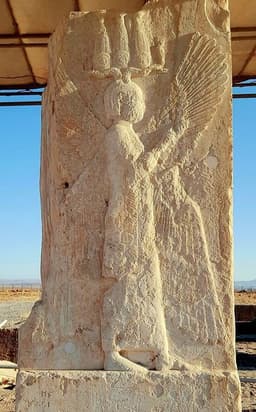
Cyrus the Great
Emperor · Ancient
83.9Total
Basic Information
Born
180
-600
Died
242
-530
Era
Ancient
Ancient
Nationality
Sassanid Empire
Persia
Occupation
Emperor
Emperor
Civilization
Middle Eastern
Middle Eastern
Score Comparison
Military (10%)
65.0
82.0
Political (20%)
78.0
85.0
Influence (20%)
82.0
85.0
Legacy (20%)
72.0
90.0
Leadership (15%)
78.0
78.0
Strategy (15%)
72.0
75.0
TOTAL
75.6
83.9
Ardashir I — Complete Timeline
224 AD
Battle of HormozdganWar
Ardashir I defeated the Parthian king Artabanus IV at the Battle of Hormozdgan. This victory ended Parthian rule and allowed Ardashir to establish the Sassanid Empire, which would dominate Persia for four centuries.
BattleSassanid FoundingParthian Defeat
Impact: regional
Conquest of the Parthian EmpireWar◆ Major
Following his victory at Hormozdgan, Ardashir I systematically conquered the remaining Parthian territories, including Media, Armenia, and Mesopotamia. He established a centralized administration and a Zoroastrian state church.
ConquestEmpire BuildingZoroastrianism
Impact: regional
Coronation as King of KingsPolitical Action◆ Major
After his victory, Ardashir I was crowned 'Shahanshah' (King of Kings) at Ctesiphon. He claimed descent from the Achaemenid dynasty, legitimizing his rule and reviving Persian imperial traditions.
CoronationImperial TitleLegitimacy
Impact: regionalconstructive
Cyrus the Great — Complete Timeline
550 BC
Founding of the Achaemenid EmpirePolitical Action
Cyrus led a rebellion against the Median Empire, defeating King Astyages and capturing Ecbatana. He then united the Persian and Median tribes, establishing the Achaemenid Empire, which became the largest empire the world had yet seen.
Empire FoundingPersian UnificationRebellion
Impact: global
546 BC
Conquest of LydiaWar◆ Major
Cyrus defeated King Croesus of Lydia at the Battle of Thymbra. The Lydian capital Sardis was captured, and Croesus was taken prisoner. This conquest brought Anatolia under Persian control and secured access to the Aegean coast.
Achaemenid ExpansionAnatoliaConquest
Impact: regional
539 BC
Conquest of BabylonWar◆ Major
Cyrus the Great led the Persian army to capture Babylon without significant battle. The city's gates were opened, and Cyrus entered peacefully. This conquest added Mesopotamia to the Achaemenid Empire and marked the end of the Neo-Babylonian Empire.
Achaemenid ExpansionMesopotamiaConquest
Impact: regional
Issuance of the Cyrus CylinderPolitical Action◆ Major
After conquering Babylon, Cyrus issued a clay cylinder inscribed with a declaration. It described his policy of restoring temples, repatriating displaced peoples, and allowing religious freedom. The cylinder is often cited as an early charter of human rights.
Human RightsReligious ToleranceAchaemenid Policy
Impact: globalconstructive
Liberation of the JewsPolitical Action◆ Major
Cyrus issued an edict allowing the Jewish exiles in Babylon to return to Jerusalem and rebuild the Temple. This event is recorded in the biblical Book of Ezra and is a key moment in Jewish history, ending the Babylonian captivity.
Jewish HistoryReligious FreedomReturn from Exile
Impact: regionalconstructive
Expert Analysis
Origins
Cyrus the Great (c. 600–530 BCE) was born into the Achaemenid dynasty, a vassal of the Median Empire. He united the Persian tribes and led a rebellion against Astyages, the Median king, around 550 BCE. His early life is shrouded in legend, but he inherited a small kingdom in Persis. In contrast, Ardashir I (d. 242 CE) was a Persian nobleman from the house of Sasan, a priestly family in Persis. He began as a local ruler (shah) of Istakhr under the Parthian Arsacid Empire. Ardashir's rise was more gradual, consolidating power in Persis before challenging the declining Parthian authority. Both founders emerged from the same region but faced different imperial contexts: Cyrus overthrew a fading Median Empire, while Ardashir toppled a weakened Parthian state.
Rise to Power
Cyrus's rise was meteoric. After defeating Astyages, he conquered the wealthy kingdom of Lydia (c. 546 BCE) and the Neo-Babylonian Empire (539 BCE), absorbing their territories. His military campaigns were swift and strategic, often using diplomacy and local support. Ardashir's path was more methodical. He first subdued local Persian dynasts, then defeated the Parthian king Artabanus IV at the Battle of Hormozdgan (224 CE). This victory allowed him to claim the title "King of Kings" and establish the Sassanid Empire. While Cyrus's conquests were broader and faster, Ardashir's rise was a calculated rebellion against a still-powerful Parthian state.
Leadership & Governance
Cyrus is renowned for his enlightened rule. He respected local customs, allowed conquered peoples to retain their religions, and issued the Cyrus Cylinder, often cited as an early charter of human rights. He liberated the Jews from Babylonian captivity and restored their temple. His administrative system included satrapies (provinces) with local autonomy, fostering loyalty across a multicultural empire. Ardashir I, by contrast, centralized power under Zoroastrian orthodoxy. He established a state church, suppressed other faiths, and promoted a Persian cultural renaissance. His governance was more autocratic and religiously unified, creating a strong but less tolerant state. Cyrus's leadership earned him the title "father of his people," while Ardashir's was more imperial and rigid.
Triumph & Tragedy
Cyrus's greatest triumph was the conquest of Babylon without a major battle, entering the city as a liberator. His tragic death occurred in battle against the Massagetae, a Central Asian tribe, where he was killed and his body mutilated. Despite this, his empire endured. Ardashir's triumph was the decisive Battle of Hormozdgan, ending Parthian rule. He died naturally after a 14-year reign, having consolidated the Sassanid Empire. Both founders achieved their goals, but Cyrus's death was more dramatic and tragic, while Ardashir's was a peaceful end to a successful reign.
Character & Destiny
Cyrus is depicted in ancient sources (Herodotus, Xenophon) as a wise, generous, and charismatic leader. His destiny was to create an unprecedented multicultural empire. Ardashir is portrayed as a determined, pious, and shrewd ruler. His destiny was to restore Persian glory and Zoroastrian supremacy. Both exhibited strong military and political acumen, but Cyrus's character was more inclusive and magnanimous, while Ardashir's was more focused on ethnic and religious identity.
Legacy
Cyrus's legacy is immense: the Achaemenid Empire set standards for imperial administration, and his policies influenced later empires, including Alexander the Great. The Cyrus Cylinder is a symbol of human rights. Ardashir's Sassanid Empire revived Persian power, challenged Rome, and preserved Persian culture for 400 years. He is a national hero in Iran. However, Cyrus's impact on world history is broader, affecting Judaism, Christianity, and concepts of governance. The score gap of 8.3 reflects Cyrus's greater historical significance and moral reputation.
Conclusion
Cyrus the Great and Ardashir I were both transformative founders of Persian empires. Cyrus's achievements in governance, tolerance, and conquest were more expansive and influential, earning him a higher legacy score. Ardashir's empire was more centralized and culturally Persian, but less innovative in human rights. Numerically, Cyrus scores higher in Military (82 vs 65), Political (85 vs 78), and Legacy (84 vs 76), while Ardashir is closer in Diplomacy (72 vs 78) but still behind. Overall, Cyrus is the greater founder due to his enduring impact on civilization.
Rankings
🥇
Cyrus the GreatLeader
Mil: 82.0Pol: 85.0Inf: 85.0
83.9
🥈
Ardashir I
Mil: 65.0Pol: 78.0Inf: 82.0
75.6
+8.3 behind
How This Comparison Works
Algorithm
Each figure is scored on 6 dimensions (0—100 scale) based on structured historical data: Military (10%), Political (20%), Influence (20%), Legacy (20%), Leadership (15%), Strategy (15%). The weighted total produces the final ranking.
Data Sources
Scores are computed from structured sub-indicators in the database. Scale factors adjust for era (Ancient ×0.85, Modern ×1.0) and civilization size (Eastern ×1.05, Other ×0.80) to account for differences in population and military scale.
Maximum 3 Figures
Comparisons are limited to 2—3 figures to ensure readability and statistical meaningfulness.
Error Margins
±5 points per dimension — Sub-scores are derived from historical records with inherent uncertainty. Two figures within 5 points on a dimension should be considered roughly equivalent in that area.
Total Score Accuracy
±3 points overall — The weighted combination of 6 dimensions produces a total score with approximately ±3 points of uncertainty. Differences of less than 3 points are not statistically significant— the figures are effectively tied.
Known Limitations
- Historical records are incomplete and uneven across civilizations
- Figures from oral-tradition societies may be underrepresented
- Occupation labels can misclassify multi-role figures
- Scores measure capability and impact, not moral character
- Quantitative scoring is a comparison tool, not absolute truth
Capability Radar
Military (10%) — Battles & Warfare
Battles
85
85
Win Rate
90
90
Expansion
85
92
Political (20%) — Governance & Reform
Reform
90
90
Diplomacy
75
95
Economy
80
80
Influence (20%) — Cultural & Global Reach
Cultural
80
90
Global
80
90
Legacy (20%) — Historical Impact
Historical
85
95
Longevity
85
95
Leadership (15%) — Power & Stability
Tenure
80
70
Stability
85
85
Strategy (15%) — Tactics & Innovation
Strategy
85
88
Tactics
80
80
Reform
90
75
Similar Comparisons
Comments & Discussion
No comments yet. Be the first to share your thoughts!