Loading...
Ardashir I vs Cao Cao
Cao Cao leads by 1.9 pts · 2 figures compared
…

Ardashir I
Emperor · Ancient
75.6Total
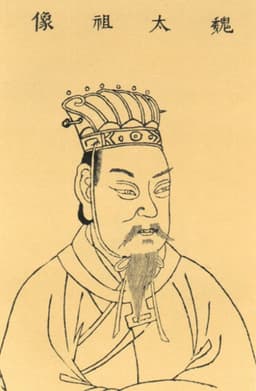
Cao Cao
General · Ancient
77.5Total
Basic Information
Born
180
155
Died
242
220
Era
Ancient
Ancient
Nationality
Sassanid Empire
China
Occupation
Emperor
General
Civilization
Middle Eastern
Eastern
Score Comparison
Military (10%)
65.0
88.0
Political (20%)
78.0
59.0
Influence (20%)
82.0
82.0
Legacy (20%)
72.0
83.0
Leadership (15%)
78.0
64.4
Strategy (15%)
72.0
89.4
TOTAL
75.6
77.5
Ardashir I — Complete Timeline
224 AD
Battle of HormozdganWar
Ardashir I defeated the Parthian king Artabanus IV at the Battle of Hormozdgan. This victory ended Parthian rule and allowed Ardashir to establish the Sassanid Empire, which would dominate Persia for four centuries.
BattleSassanid FoundingParthian Defeat
Impact: regional
Conquest of the Parthian EmpireWar◆ Major
Following his victory at Hormozdgan, Ardashir I systematically conquered the remaining Parthian territories, including Media, Armenia, and Mesopotamia. He established a centralized administration and a Zoroastrian state church.
ConquestEmpire BuildingZoroastrianism
Impact: regional
Coronation as King of KingsPolitical Action◆ Major
After his victory, Ardashir I was crowned 'Shahanshah' (King of Kings) at Ctesiphon. He claimed descent from the Achaemenid dynasty, legitimizing his rule and reviving Persian imperial traditions.
CoronationImperial TitleLegitimacy
Impact: regionalconstructive
Cao Cao — Complete Timeline
190 AD
Formation of the Coalition against Dong ZhuoPolitical Action
Cao Cao joined a coalition of regional warlords led by Yuan Shao to overthrow the tyrannical chancellor Dong Zhuo, who had seized control of the Han court. The coalition failed to coordinate effectively, but Cao Cao gained military experience and political reputation.
CoalitionDong ZhuoHan Dynasty
Impact: national
196 AD
Implementation of Tuntian (Agricultural Colonies)Reform◆ Major
Cao Cao established military agricultural colonies (tuntian) to provide food for his army and refugees. Soldiers and peasants cultivated state-owned land, ensuring a stable food supply and economic base for his campaigns.
AgricultureEconomyMilitary
Impact: regionalconstructive
200 AD
Battle of GuanduWar
Cao Cao decisively defeated Yuan Shao's numerically superior army at Guandu. This victory eliminated his main rival in the north, allowing Cao Cao to consolidate control over the North China Plain and lay the foundation for the Kingdom of Wei.
BattleYuan ShaoUnification
Impact: regional
208 AD
Battle of Red CliffsWar
Cao Cao's southern campaign was halted by the allied forces of Sun Quan and Liu Bei at the Battle of Red Cliffs. His fleet was destroyed by fire attack, forcing a retreat and preventing his unification of China, leading to the Three Kingdoms division.
BattleDefeatThree Kingdoms
Impact: regional
213 AD
Establishment of the Kingdom of WeiPolitical Action◆ Major
Cao Cao was granted the title of Duke of Wei and later King of Wei by the Han emperor, effectively creating a semi-autonomous state within the empire. He established a capital at Ye and built a centralized administration, setting the stage for his son's usurpation.
WeiStatehoodHan Dynasty
Impact: national
Expert Analysis
Origins
Cao Cao (155–220 CE) was born into a turbulent period in Chinese history, the late Eastern Han dynasty. His father was a high-ranking official, but Cao Cao's rise came from his own cunning and military prowess. He emerged as a key figure in the coalition against the tyrannical warlord Dong Zhuo, showcasing early leadership. In contrast, Ardashir I (180–242 CE) was a Persian ruler who rose from a vassal king under the Parthian Empire. He rebelled against Artabanus IV, leveraging local support and military skill to overthrow the declining Arsacid dynasty. Both men came from noble backgrounds, but Ardashir's path was more directly revolutionary, while Cao Cao navigated a complex web of alliances and betrayals.
Rise to Power
Cao Cao's rise was marked by strategic brilliance at the Battle of Guandu (200 CE), where he decisively defeated his rival Yuan Shao, securing dominance over northern China. He then established the Kingdom of Wei, implementing the Tuntian agricultural colonies to ensure food supply for his armies. Ardashir I's pivotal moment was the Battle of Hormozdgan (224 CE), where he defeated Artabanus IV, leading to the conquest of the Parthian Empire. He crowned himself King of Kings, founding the Sassanid Empire. Both men used military victories as springboards, but Cao Cao's power was more gradual and built on political maneuvering, while Ardashir's was a swift overthrow of an established empire.
Leadership & Governance
Cao Cao was a brilliant administrator and military strategist, with a score of 88 in military and 82 in intelligence. He implemented the Tuntian system, which boosted agricultural output and reduced reliance on taxing peasants. He also promoted talent based on merit, not birth, attracting many capable advisors. However, his political score (59) reflects his reputation for ruthlessness and manipulation. Ardashir I (military 65, political 78) centralized the Persian state, established Zoroastrianism as the state religion, and created a feudal system that balanced power between the king and nobles. His governance was more ideological and structured, while Cao Cao's was pragmatic and adaptable.
Triumph & Tragedy
Cao Cao's greatest triumph was unifying northern China, but his tragic flaw was overconfidence, leading to the disastrous Battle of Red Cliffs (208 CE) where his southern campaign was crushed by Sun Quan and Liu Bei. This defeat prevented him from conquering all of China. Ardashir I's triumph was founding the Sassanid Empire, which revived Persian glory. His tragedy was less personal; his empire faced continuous Roman threats, but he successfully established a dynasty that lasted four centuries. Both men achieved great successes but faced limitations: Cao Cao's ambition was thwarted by coalition forces, while Ardashir's empire was born into a world of geopolitical rivalry.
Character & Destiny
Cao Cao was a complex figure—a poet, strategist, and ruthless leader. His character scores (strength 89, charisma 78) show a commanding presence, but his low political score (59) suggests he was often seen as a tyrant. His destiny was to be a kingmaker rather than a king, as he never claimed the imperial throne himself. Ardashir I (charisma 82, strength 72) was a determined founder, driven by a vision of Persian restoration. His destiny was to create a new empire that would rival Rome. Both men were shaped by their times: Cao Cao by the chaos of the Han collapse, Ardashir by the decline of Parthia. Cao Cao's legacy is more mixed, while Ardashir's is celebrated as a national founder in Iran.
Legacy
Cao Cao's legacy is immense in Chinese history. He is remembered as a brilliant strategist, the subject of the classic novel "Romance of the Three Kingdoms," and a symbol of cunning and ambition. His military innovations and administrative reforms influenced later dynasties. Ardashir I's legacy is the Sassanid Empire, which revived Persian culture and Zoroastrianism, and became a major power for over 400 years. He is revered as the founder of the second Persian Empire. In a direct comparison, Cao Cao's impact is more literary and cultural, while Ardashir's is more foundational and political.
Conclusion
While both rulers were exceptional, Cao Cao's military genius (score 88 vs. 65) and strategic reforms give him a slight edge over Ardashir I. However, Ardashir's political acumen (78 vs. 59) and empire-building success cannot be ignored. Ultimately, Cao Cao's higher overall score (1.9 gap) reflects his greater complexity and enduring influence. He is the more significant historical figure due to his profound impact on Chinese civilization and the rich narrative surrounding his life. Ardashir I remains a crucial but more straightforward founder. The verdict: Cao Cao triumphs by a narrow margin.
Rankings
🥇
Cao CaoLeader
Mil: 88.0Pol: 59.0Inf: 82.0
77.5
🥈
Ardashir I
Mil: 65.0Pol: 78.0Inf: 82.0
75.6
+1.9 behind
How This Comparison Works
Algorithm
Each figure is scored on 6 dimensions (0—100 scale) based on structured historical data: Military (10%), Political (20%), Influence (20%), Legacy (20%), Leadership (15%), Strategy (15%). The weighted total produces the final ranking.
Data Sources
Scores are computed from structured sub-indicators in the database. Scale factors adjust for era (Ancient ×0.85, Modern ×1.0) and civilization size (Eastern ×1.05, Other ×0.80) to account for differences in population and military scale.
Maximum 3 Figures
Comparisons are limited to 2—3 figures to ensure readability and statistical meaningfulness.
Error Margins
±5 points per dimension — Sub-scores are derived from historical records with inherent uncertainty. Two figures within 5 points on a dimension should be considered roughly equivalent in that area.
Total Score Accuracy
±3 points overall — The weighted combination of 6 dimensions produces a total score with approximately ±3 points of uncertainty. Differences of less than 3 points are not statistically significant— the figures are effectively tied.
Known Limitations
- Historical records are incomplete and uneven across civilizations
- Figures from oral-tradition societies may be underrepresented
- Occupation labels can misclassify multi-role figures
- Scores measure capability and impact, not moral character
- Quantitative scoring is a comparison tool, not absolute truth
Capability Radar
Military (10%) — Battles & Warfare
Battles
85
95
Win Rate
90
88
Expansion
85
92
Political (20%) — Governance & Reform
Reform
90
88
Diplomacy
75
82
Economy
80
86
Influence (20%) — Cultural & Global Reach
Cultural
80
85
Global
80
75
Legacy (20%) — Historical Impact
Historical
85
92
Longevity
85
90
Leadership (15%) — Power & Stability
Tenure
80
85
Stability
85
78
Strategy (15%) — Tactics & Innovation
Strategy
85
96
Tactics
80
97
Reform
90
90
Similar Comparisons
Comments & Discussion
No comments yet. Be the first to share your thoughts!