Loading...
This comparison has not been analyzed yet.
One-time AI generation (~1 minute). Scores and timeline are already available below.
Apries vs Jungcheon of Goguryeo
Jungcheon of Goguryeo leads by 6.5 pts · 2 figures compared
…

Apries
Emperor · Ancient
42.0Total
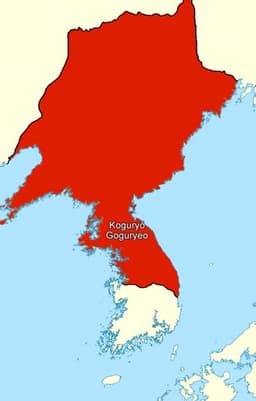
Jungcheon of Goguryeo
Emperor · Ancient
48.5Total
Basic Information
Born
-589
248
Died
-570
270
Era
Ancient
Ancient
Nationality
Late Period Egypt
Goguryeo
Occupation
Emperor
Emperor
Civilization
Middle Eastern
Eastern
Score Comparison
Military (10%)
45.0
20.0
Political (20%)
30.8
68.0
Influence (20%)
44.8
48.6
Legacy (20%)
37.5
40.8
Leadership (15%)
48.4
53.2
Strategy (15%)
50.0
60.0
TOTAL
42.0
48.5
Apries — Complete Timeline
589 BC
Accession to the thronePolitical Action◆ Major
Apries became pharaoh of the 26th Dynasty, succeeding his father Psamtik II. He inherited a stable kingdom and pursued an aggressive foreign policy in the Levant and against Babylon.
Accession26th DynastySaite
Impact: national
588 BC
Intervention in JudahWar◆ Major
Apries sent an army to support King Zedekiah of Judah against the Babylonian siege of Jerusalem. The Egyptian force temporarily lifted the siege, but the Babylonians under Nebuchadnezzar II returned and destroyed Jerusalem in 587 BC.
JudahBabylonJerusalem
Impact: regional
Mention in the Bible as HophraCultural
Apries is mentioned in the Hebrew Bible (Jeremiah 44:30) as 'Hophra, king of Egypt,' whom God would deliver into the hands of his enemies. This reference reflects his role in the geopolitics of the Levant.
BiblicalHophraJeremiah
Impact: regional
570 BC
Defeat at the Battle of CyreneWar◆ Major
Apries sent an expedition to support the Libyan city of Cyrene against Greek colonists, but his forces were decisively defeated. This military failure led to unrest among the Egyptian army.
CyreneLibyaMilitary Defeat
Impact: regionaldestructive
Overthrow by AmasisPolitical Action
After the defeat at Cyrene, the Egyptian army rebelled and proclaimed the general Amasis as pharaoh. Apries fled to Babylon, but later returned with a Babylonian force and was killed in battle at Memphis.
OverthrowAmasisCivil War
Impact: nationaltragic
Jungcheon of Goguryeo — Complete Timeline
248 AD
Stabilization after Wei invasionPolitical Action◆ Major
Jungcheon ascended the throne following the devastating Wei invasion of Goguryeo in 244. He focused on rebuilding the state structure, restoring the capital, and consolidating royal authority to prevent future collapses.
RebuildingPost-war recovery
Impact: nationalconstructive
250 AD
Internal reforms and centralizationReform◆ Major
Jungcheon implemented administrative reforms to strengthen central control over the aristocracy and local clans. He reorganized the bureaucracy and tax system to stabilize the kingdom after the war.
Administrative reformCentralization
Impact: nationalconstructive
255 AD
Defensive consolidation against WeiWar
Jungcheon fortified Goguryeo's borders and rebuilt its military to deter further Wei incursions. He established defensive alliances with neighboring tribes, ensuring a period of relative peace.
DefenseMilitary rebuilding
Impact: regionalconstructive
This comparison has not been analyzed yet.
One-time AI generation (~1 minute). Scores and timeline are already available below.
Rankings
🥇
Jungcheon of GoguryeoLeader
Mil: 20.0Pol: 68.0Inf: 48.6
48.5
🥈
Apries
Mil: 45.0Pol: 30.8Inf: 44.8
42.0
+6.5 behind
How This Comparison Works
Algorithm
Each figure is scored on 6 dimensions (0—100 scale) based on structured historical data: Military (10%), Political (20%), Influence (20%), Legacy (20%), Leadership (15%), Strategy (15%). The weighted total produces the final ranking.
Data Sources
Scores are computed from structured sub-indicators in the database. Scale factors adjust for era (Ancient ×0.85, Modern ×1.0) and civilization size (Eastern ×1.05, Other ×0.80) to account for differences in population and military scale.
Maximum 3 Figures
Comparisons are limited to 2—3 figures to ensure readability and statistical meaningfulness.
Error Margins
±5 points per dimension — Sub-scores are derived from historical records with inherent uncertainty. Two figures within 5 points on a dimension should be considered roughly equivalent in that area.
Total Score Accuracy
±3 points overall — The weighted combination of 6 dimensions produces a total score with approximately ±3 points of uncertainty. Differences of less than 3 points are not statistically significant— the figures are effectively tied.
Known Limitations
- Historical records are incomplete and uneven across civilizations
- Figures from oral-tradition societies may be underrepresented
- Occupation labels can misclassify multi-role figures
- Scores measure capability and impact, not moral character
- Quantitative scoring is a comparison tool, not absolute truth
Capability Radar
Military (10%) — Battles & Warfare
Battles
30
40
Win Rate
25
45
Expansion
20
30
Political (20%) — Governance & Reform
Reform
20
55
Diplomacy
25
50
Economy
30
45
Influence (20%) — Cultural & Global Reach
Cultural
20
30
Global
15
20
Legacy (20%) — Historical Impact
Historical
25
35
Longevity
20
30
Leadership (15%) — Power & Stability
Tenure
40
60
Stability
20
60
Strategy (15%) — Tactics & Innovation
Strategy
30
40
Tactics
30
35
Reform
10
50
Similar Comparisons
Comments & Discussion
No comments yet. Be the first to share your thoughts!