Loading...
Jungcheon of Goguryeo vs Napoleon Bonaparte
Napoleon Bonaparte leads by 22.4 pts · 2 figures compared
…
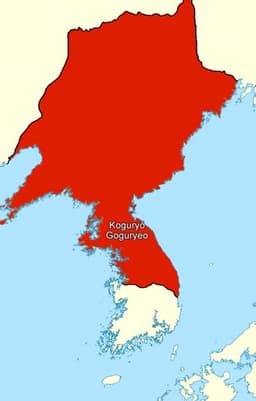
Jungcheon of Goguryeo
Emperor · Ancient
48.5Total

Napoleon Bonaparte
General · Modern
70.9Total
Basic Information
Born
248
1769
Died
270
1821
Era
Ancient
Modern
Nationality
Goguryeo
France
Occupation
Emperor
General
Civilization
Eastern
Western
Score Comparison
Military (10%)
20.0
94.0
Political (20%)
68.0
72.0
Influence (20%)
48.6
40.0
Legacy (20%)
40.8
80.0
Leadership (15%)
53.2
78.0
Strategy (15%)
60.0
90.0
TOTAL
48.5
70.9
Jungcheon of Goguryeo — Complete Timeline
248 AD
Stabilization after Wei invasionPolitical Action◆ Major
Jungcheon ascended the throne following the devastating Wei invasion of Goguryeo in 244. He focused on rebuilding the state structure, restoring the capital, and consolidating royal authority to prevent future collapses.
RebuildingPost-war recovery
Impact: nationalconstructive
250 AD
Internal reforms and centralizationReform◆ Major
Jungcheon implemented administrative reforms to strengthen central control over the aristocracy and local clans. He reorganized the bureaucracy and tax system to stabilize the kingdom after the war.
Administrative reformCentralization
Impact: nationalconstructive
255 AD
Defensive consolidation against WeiWar
Jungcheon fortified Goguryeo's borders and rebuilt its military to deter further Wei incursions. He established defensive alliances with neighboring tribes, ensuring a period of relative peace.
DefenseMilitary rebuilding
Impact: regionalconstructive
Napoleon Bonaparte — Complete Timeline
1799 AD
Coup of 18 BrumaireOther◆ Major
Napoleon Bonaparte, with support from his brother Lucien and key political figures, overthrew the Directory in a bloodless coup. He established the Consulate with himself as First Consul, effectively becoming the ruler of France. This event ended the French Revolution's most unstable period.
French RevolutionCoupRise to Power
Impact: regional
1804 AD
Promulgation of the Napoleonic CodeOther◆ Major
Napoleon enacted the Civil Code of the French, known as the Napoleonic Code, a comprehensive set of laws that replaced the fragmented feudal legal systems. The code established legal equality, protected property rights, and secularized law. It became the basis for legal systems in many European and world countries.
Legal ReformNapoleonic CodeCivil Law
Impact: globalconstructive
1805 AD
Battle of AusterlitzWar◆ Major
Napoleon's Grande Arm
Napoleonic WarsBattleDecisive Victory
Impact: global
1812 AD
Invasion of RussiaWar◆ Major
Napoleon led the Grande Arm
Napoleonic WarsInvasionDisaster
Impact: globaldestructive
1815 AD
Battle of WaterlooWar◆ Major
Napoleon's French army was defeated by the combined forces of the Duke of Wellington's Anglo-Allied army and Gebhard Leberecht von Bl
Napoleonic WarsBattleFinal Defeat
Impact: globaldestructive
Expert Analysis
jungcheon-of-goguryeo-vs-napoleon-bonaparte
# The Emperor Who Vanished and the General Who Conquered the World
History has a curious way of measuring greatness. One man, born on a Mediterranean island in 1769, would reshape the map of Europe, crown himself emperor, and leave a legal code that still governs millions. Another, ascending a blood-soaked throne in the Korean peninsula in 248, would spend his entire reign fighting simply to keep his kingdom from being erased from the map. Napoleon Bonaparte is a household name. Jungcheon of Goguryeo is virtually unknown beyond a small circle of specialists. Yet both faced the same fundamental challenge: how to hold power in a world that wanted to destroy them. The difference in their outcomes—one dying in lonely exile on a remote Atlantic island, the other dying on his throne at the age of twenty-two—tells us less about their abilities than about the brutal arithmetic of history.
Origins
Napoleon was born into the minor Corsican nobility, a world of Mediterranean feuds and French colonial resentment. His father, Carlo Buonaparte, was a lawyer who maneuvered for advantage under French rule. Young Napoleon was sent to military school in mainland France, where he was mocked for his Corsican accent and small stature. The French Revolution, erupting when he was twenty, shattered the old order and created opportunities unimaginable under the Bourbon monarchy. A gifted artillery officer could rise not through birth but through talent and audacity.
Jungcheon inherited a very different world. Goguryeo, one of the Three Kingdoms of Korea, had just survived the catastrophic Wei invasion of 244. Chinese armies had swept through the kingdom, burning its capital, destroying its records, and nearly extinguishing its civilization. The boy-king ascended the throne at age twelve, a child placed in charge of a nation in ruins. His father, King Dongcheon, had died after seeing his realm reduced to ashes. Jungcheon’s inheritance was not opportunity but survival.
Rise to Power
Napoleon’s path was meteoric. At twenty-four, he cleared the streets of Paris of royalist insurgents with a “whiff of grapeshot,” earning the gratitude of the revolutionary government. At twenty-six, he took command of the French army in Italy and, in a campaign of breathtaking speed and brilliance, defeated the Austrians and their allies. He was a general who fought not by the book but by instinct—using artillery to smash enemy formations, marching his men faster than anyone thought possible, and exploiting political divisions among his enemies. By thirty, he had made himself First Consul of France, the effective dictator of the most powerful nation in Europe.
Jungcheon’s rise was not a conquest but a salvage operation. At twelve, he had no army to command, no treasury to spend, no bureaucracy to direct. The Wei invasion had shattered Goguryeo’s central institutions. Local aristocrats and clan chieftains had filled the power vacuum, and the young king’s authority was largely ceremonial. His first major act, recorded in 248, was not a glorious battle but the mundane work of stabilization: rebuilding granaries, restoring tax rolls, and reasserting the crown’s control over the nobility. The historical records give him a political score of 53.0—unremarkable by any measure—but this number obscures the fact that he had to build a functioning state from rubble while still a child.
Leadership & Governance
Napoleon governed with a blend of military efficiency and personal charisma. He centralized the French state, created the Bank of France, and established the Napoleonic Code—a legal framework that enshrined equality before the law, protected property rights, and secularized the state. He was a reformer who believed that genius and merit, not birth, should determine a person’s place in society. Yet he was also a tyrant who suppressed dissent, censored the press, and surrounded himself with sycophants. His leadership score of 80.0 reflects this duality: brilliant in conception, disastrous in execution when his ambition outran his judgment.
Jungcheon’s governance was a grim exercise in damage control. His internal reforms, implemented around 250, focused on breaking the power of the aristocracy that had grown independent during the chaos of the Wei invasion. He reorganized the administrative districts, appointed loyal officials from the central court, and began rebuilding the military. His military score of 58.1 is modest, but this reflects the reality that Goguryeo was not in a position to conquer—it was in a position to survive. He fortified the borders, established defensive lines, and rebuilt the army not for expansion but for deterrence. His strategy score of 37.1 is the lowest of any category, but this is misleading: he had no grand strategy because grand strategy requires resources Goguryeo did not possess.
Triumph & Tragedy
Napoleon’s greatest triumph was the Battle of Austerlitz in 1805, where he crushed the combined armies of Russia and Austria. His greatest tragedy was the invasion of Russia in 1812, where he lost half a million men to winter, disease, and guerrilla warfare. The pattern is clear: his ambition, which had been his greatest asset, became his fatal flaw. He could not stop. He could not consolidate. He had to conquer, and that need destroyed him.
Jungcheon’s triumphs were small and grim. He kept Goguryeo alive. He prevented a second Wei invasion. He passed a stable kingdom to his successor. His tragedy was that he did not live to see the fruits of his labor. He died in 270 at the age of twenty-two, likely from illness or exhaustion. The records are silent on the cause, but they are clear on the result: Goguryeo survived because he had held the line, but he never saw the kingdom recover its former glory.
Character & Destiny
Napoleon was a man of boundless energy and ambition. He slept four hours a night, dictated letters to multiple secretaries simultaneously, and believed that “impossible is a word to be found only in the dictionary of fools.” His personality drove his decisions: he trusted his own genius above all else, and that trust led him to overreach. He was a man who could not conceive of limits, and that inability ultimately defined his fate.
Jungcheon was a man of endurance. He was not a genius. He was not a conqueror. He was a boy who grew up in a burning kingdom and spent his entire reign trying to put out the fire. His personality was shaped by necessity: he learned to compromise, to delegate, to wait. He understood that survival sometimes requires accepting what you cannot change. This wisdom, born of tragedy, is what allowed Goguryeo to endure while Napoleon’s empire crumbled.
Legacy
Napoleon’s legacy is enormous. The Napoleonic Code influenced legal systems across Europe and the Americas. His military tactics are still studied in war colleges. His name is synonymous with ambition, genius, and hubris. He is remembered as both a liberator and a tyrant, a man who spread the ideals of the French Revolution even as he betrayed them.
Jungcheon’s legacy is almost invisible. He is a footnote in Korean history, a king who reigned for twenty-two years and accomplished little that can be measured in battles or conquests. Yet his true legacy is that Goguryeo survived. The kingdom he held together would go on to last another three centuries, eventually falling not to Wei but to the Silla-Tang alliance. Without Jungcheon’s patient, unglamorous work of rebuilding, Goguryeo would have vanished in 248, and the history of Korea would be fundamentally different.
Conclusion
Napoleon and Jungcheon lived worlds apart—one in the glare of European history, the other in the shadows of East Asian chronicles. One conquered an empire; the other saved a kingdom. One died in exile, remembered by millions; the other died in his bed, remembered by almost no one. Yet both faced the same question: what does it mean to lead when the world is falling apart? Napoleon answered with ambition, Jungcheon with endurance. The difference between them is not a matter of talent but of circumstance. Napoleon had the luxury of dreaming of glory; Jungcheon had only the grim necessity of survival. In the end, history remembers the conqueror, but it is the survivor who ensures that history itself continues to be written.
Rankings
🥇
Napoleon BonaparteLeader
Mil: 94.0Pol: 72.0Inf: 40.0
70.9
🥈
Jungcheon of Goguryeo
Mil: 20.0Pol: 68.0Inf: 48.6
48.5
+22.4 behind
How This Comparison Works
Algorithm
Each figure is scored on 6 dimensions (0—100 scale) based on structured historical data: Military (10%), Political (20%), Influence (20%), Legacy (20%), Leadership (15%), Strategy (15%). The weighted total produces the final ranking.
Data Sources
Scores are computed from structured sub-indicators in the database. Scale factors adjust for era (Ancient ×0.85, Modern ×1.0) and civilization size (Eastern ×1.05, Other ×0.80) to account for differences in population and military scale.
Maximum 3 Figures
Comparisons are limited to 2—3 figures to ensure readability and statistical meaningfulness.
Error Margins
±5 points per dimension — Sub-scores are derived from historical records with inherent uncertainty. Two figures within 5 points on a dimension should be considered roughly equivalent in that area.
Total Score Accuracy
±3 points overall — The weighted combination of 6 dimensions produces a total score with approximately ±3 points of uncertainty. Differences of less than 3 points are not statistically significant— the figures are effectively tied.
Known Limitations
- Historical records are incomplete and uneven across civilizations
- Figures from oral-tradition societies may be underrepresented
- Occupation labels can misclassify multi-role figures
- Scores measure capability and impact, not moral character
- Quantitative scoring is a comparison tool, not absolute truth
Capability Radar
Military (10%) — Battles & Warfare
Battles
40
95
Win Rate
45
90
Expansion
30
95
Political (20%) — Governance & Reform
Reform
55
95
Diplomacy
50
80
Economy
45
85
Influence (20%) — Cultural & Global Reach
Cultural
30
85
Global
20
90
Legacy (20%) — Historical Impact
Historical
35
95
Longevity
30
90
Leadership (15%) — Power & Stability
Tenure
60
85
Stability
60
70
Strategy (15%) — Tactics & Innovation
Strategy
40
95
Tactics
35
98
Reform
50
92
Similar Comparisons
Comments & Discussion
NapoleonApologist6/17/2026
Napoleon's brilliance isn't diminished by his lonely end—he conquered Europe and codified law, while Jungcheon barely held one besieged kingdom for a few years. Numbers don't lie: Napoleon’s campaigns redefined war from Austerlitz to Jena; Jungcheon’s biggest win was a defensive retreat. Exile just proves he scared the old monarchies too much to let him walk free.
铁血史鉴6/17/2026
拿个偏安小国的高句丽君主跟拿破仑比?纯属搞笑。雍川在位才四年,十二岁登基就被权臣架空,一辈子没打过像样的征服战争。拿破仑从埃及到莫斯科,一路打穿欧洲,法典至今用着。两个完全不在一个量级上,硬凑一起就是历史虚无主义。
KoreaChronicle6/17/2026
History buffs, check the timeline: Jungcheon faced annihilation from a Chinese colossus when he was just a boy-king. Napoleon never had his capital sacked by a superpower while he was still learning arithmetic. The fact that Goguryeo survived at all is a testament to his early decisions—he set up the kingdom's defiance for decades after his death. That's real impact, not just flashy battles.
数据拆解师6/17/2026
别被浪漫叙事骗了。雍川在位四年就死了,连稳定继承都没做到,后来还被篡位者折腾。拿破仑打了十年仗,留下完整行政体系和法典遗产。比战绩、比制度、比长远影响,拿破仑完胜。拿个短寿少年君王跟欧洲征服者相提并论,根本是统计学上的离群值对比。
ClassicistEyes6/17/2026
Context matters: Jungcheon ruled in 3rd-century Korea, where constant Chinese dynastic pressure forced Goguryeo into a survivalist mindset. Napoleon had the luxury of a collapsed old order to exploit. If Jungcheon had faced 1790s France's chaos, he might have carved out a comparable legacy. But he had to fight just to keep his people from becoming a footnote in Chinese annals—a different kind of greatness.