Loading...
Antonio Ramalho Eanes vs Manuel Odria
Antonio Ramalho Eanes leads by 0.3 pts · 2 figures compared
…

Antonio Ramalho Eanes
General · Modern
52.9Total
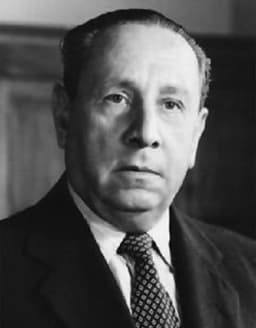
Manuel Odria
General · Modern
52.6Total
Basic Information
Born
1935
1897
Died
—
1974
Era
Modern
Modern
Nationality
Portugal
Peru
Occupation
General
General
Civilization
Western
Western
Score Comparison
Military (10%)
22.6
50.0
Political (20%)
72.0
53.8
Influence (20%)
54.9
53.3
Legacy (20%)
46.7
45.0
Leadership (15%)
79.8
72.0
Strategy (15%)
25.0
41.7
TOTAL
52.9
52.6
Antonio Ramalho Eanes — Complete Timeline
1974 AD
Led the Military During the Carnation RevolutionPolitical Action◆ Major
Eanes was a key military figure in the Carnation Revolution, commanding the forces that overthrew the Estado Novo. He later became the first Chief of Staff of the Army under the new democratic regime.
RevolutionMilitaryDemocracy
Impact: nationalconstructive
1976 AD
Elected President of PortugalPolitical Action◆ Major
Eanes was elected as the first constitutional President of Portugal after the Carnation Revolution, winning 61% of the vote. He was a general who had played a key role in the revolution and the transition to democracy.
PresidencyDemocracyTransition
Impact: nationalconstructive
1980 AD
Re-elected as President of PortugalPolitical Action◆ Major
Eanes was re-elected as President with 56% of the vote, defeating conservative candidate Ant
PresidencyRe-electionStability
Impact: nationalconstructive
1985 AD
Founded the Democratic Renewal PartyPolitical Action
After his presidency, Eanes founded the Democratic Renewal Party, a centrist political party. The party won seats in the 1985 election but later declined, and Eanes retired from active politics.
Party FoundationCentrismPost-Presidency
Impact: national
Manuel Odria — Complete Timeline
1948 AD
Led the 1948 Peruvian coup d'étatPolitical Action
General Manuel Odria led a military coup that overthrew President Jos
CoupMilitaryDictatorship
Impact: nationaldestructive
Repressed political oppositionPolitical Action◆ Major
Odria's regime was characterized by the suppression of political dissent. He outlawed the APRA party, imprisoned and exiled opponents, and censored the press. This period is remembered for its human rights abuses, despite the economic gains.
RepressionHuman RightsDictatorship
Impact: nationaldestructive
1950 AD
Implemented economic development policiesReform◆ Major
Odria's government pursued a policy of economic development and modernization, including public works projects, road construction, and the expansion of the fishing and mining industries. This period saw significant economic growth, but also increased foreign debt and inequality.
Economic PolicyDevelopmentPublic Works
Impact: nationalconstructive
Became President of PeruPolitical Action◆ Major
After ruling as head of the military junta, Odria staged a single-candidate election in 1950 and was formally elected President of Peru. He then established a personalist dictatorship known as the Ochenio.
ElectionDictatorshipOchenio
Impact: national
1956 AD
Granted amnesty and allowed electionsPolitical Action
Facing growing pressure, Odria granted amnesty to political exiles and allowed free elections in 1956. He did not run for re-election, and his chosen successor lost to Manuel Prado Ugarteche, marking a transition back to civilian rule.
TransitionElectionAmnesty
Impact: nationalconstructive
Expert Analysis
Origins
Antonio Ramalho Eanes was born on January 25, 1935, in Alcains, Portugal, into a modest family. He attended the Military Academy and served in the Portuguese Colonial War in Angola and Mozambique, experiences that shaped his views on military intervention in politics. Manuel Odria Amoretti was born on November 26, 1896, in Tarma, Peru, to a middle-class family. He entered the Chorrillos Military School and later served in the Peruvian Army, rising through ranks during the Peru–Ecuador conflict of 1941.
Rise to Power
Eanes rose to prominence during the Carnation Revolution of April 25, 1974, when he commanded the military forces that overthrew the Estado Novo regime. He played a crucial role in ensuring a peaceful transition and was appointed Chief of Staff of the Armed Forces. In 1976, he was elected President with 61% of the vote, becoming the first constitutional president after the revolution. Odria rose to power through a military coup on October 27, 1948, overthrowing President José Luis Bustamante y Rivero. He justified the coup by citing corruption and the government's failure to control inflation. He then assumed leadership of a military junta and later staged a single-candidate election in 1950 to become constitutional president.
Leadership & Governance
Eanes governed as a democratic stabilizer, prioritizing the consolidation of democratic institutions and civilian control over the military. He served two terms (1976-1986), focusing on economic stabilization and integration into Europe. His leadership style was reserved and institutional, scoring 79.8 in leadership metrics. Odria, by contrast, ruled as an authoritarian modernizer. His regime suppressed political opposition, outlawing the APRA party, imprisoning and exiling opponents, and censoring the press. Simultaneously, he pursued economic development through public works, road construction, and expansion of education. His regime was known as the 'Happy General' era due to economic growth, but at the cost of political freedoms. His leadership score of 72.0 reflects his effectiveness but also his authoritarian methods.
Triumph & Tragedy
Eanes's greatest success was guiding Portugal through a turbulent post-revolution period, preventing a communist takeover and establishing a stable democracy. He also oversaw Portugal's entry into the European Economic Community in 1986. His failures include the rise of the Democratic Renewal Party, which he founded after his presidency, which failed to become a lasting force, and his inability to prevent economic stagnation in the early 1980s. Odria's triumphs include significant economic growth, with GDP averaging 5.6% annually during his rule, and infrastructure projects like the Carretera Central highway. His tragedies are the suppression of human rights, with hundreds exiled and imprisoned, and the legacy of authoritarianism that undermined democratic development. His political score of 53.8 reflects the mixed outcomes of his rule.
Character & Destiny
Eanes was a disciplined, principled general who believed in the rule of law. His decision to step down after two terms, despite popularity, underscored his commitment to democratic norms. Historians often characterize him as a 'soldier of democracy.' Odria was pragmatic and ambitious, willing to use repression to achieve economic goals. His decision to grant amnesty and allow elections in 1956, though pressured, showed a degree of political calculation. His character is assessed as a classic Latin American caudillo, with a mix of populism and authoritarianism.
Legacy
Eanes's legacy is that of a founding father of Portuguese democracy. His influence is seen in the stable political system that followed, with Portugal consistently ranking high in democratic indices. He scored 46.7 in legacy. Odria's legacy is more contested: he is remembered for economic modernization but also for authoritarian rule. His policies influenced later leaders like Alberto Fujimori. He scored 45.0 in legacy. In terms of overall scores, Eanes edges Odria with a total of 52.9 vs 52.6, a gap of 0.3 points.
Conclusion
While Eanes and Odria both emerged from military backgrounds and led their nations after coups, their impacts diverged sharply. Eanes's commitment to democracy created lasting institutions, while Odria's authoritarian development left a mixed legacy. Eanes's higher leadership score (79.8 vs 72.0) and political score (72.0 vs 53.8) reflect a more positive governance outcome. Although Odria achieved economic growth, the human cost and lack of democratic consolidation make Eanes the figure with greater positive impact. Therefore, on balance, Antonio Ramalho Eanes had a more enduring and beneficial influence on his country's trajectory.
Rankings
🥇
Antonio Ramalho EanesLeader
Mil: 22.6Pol: 72.0Inf: 54.9
52.9
🥈
Manuel Odria
Mil: 50.0Pol: 53.8Inf: 53.3
52.6
+0.3 behind
How This Comparison Works
Algorithm
Each figure is scored on 6 dimensions (0—100 scale) based on structured historical data: Military (10%), Political (20%), Influence (20%), Legacy (20%), Leadership (15%), Strategy (15%). The weighted total produces the final ranking.
Data Sources
Scores are computed from structured sub-indicators in the database. Scale factors adjust for era (Ancient ×0.85, Modern ×1.0) and civilization size (Eastern ×1.05, Other ×0.80) to account for differences in population and military scale.
Maximum 3 Figures
Comparisons are limited to 2—3 figures to ensure readability and statistical meaningfulness.
Error Margins
±5 points per dimension — Sub-scores are derived from historical records with inherent uncertainty. Two figures within 5 points on a dimension should be considered roughly equivalent in that area.
Total Score Accuracy
±3 points overall — The weighted combination of 6 dimensions produces a total score with approximately ±3 points of uncertainty. Differences of less than 3 points are not statistically significant— the figures are effectively tied.
Known Limitations
- Historical records are incomplete and uneven across civilizations
- Figures from oral-tradition societies may be underrepresented
- Occupation labels can misclassify multi-role figures
- Scores measure capability and impact, not moral character
- Quantitative scoring is a comparison tool, not absolute truth
Capability Radar
Military (10%) — Battles & Warfare
Battles
10
15
Win Rate
10
20
Expansion
5
10
Political (20%) — Governance & Reform
Reform
65
55
Diplomacy
60
50
Economy
50
55
Influence (20%) — Cultural & Global Reach
Cultural
30
30
Global
30
20
Legacy (20%) — Historical Impact
Historical
40
35
Longevity
30
25
Leadership (15%) — Power & Stability
Tenure
60
60
Stability
70
40
Strategy (15%) — Tactics & Innovation
Strategy
10
25
Tactics
10
20
Reform
15
30
Similar Comparisons
Comments & Discussion
No comments yet. Be the first to share your thoughts!