Loading...
Manuel Odria vs Napoleon Bonaparte
Napoleon Bonaparte leads by 18.3 pts · 2 figures compared
…
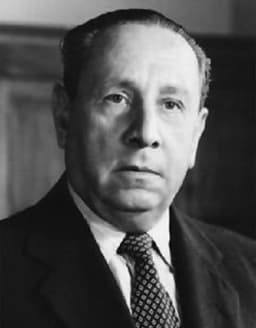
Manuel Odria
General · Modern
52.6Total

Napoleon Bonaparte
General · Modern
70.9Total
Basic Information
Born
1897
1769
Died
1974
1821
Era
Modern
Modern
Nationality
Peru
France
Occupation
General
General
Civilization
Western
Western
Score Comparison
Military (10%)
50.0
94.0
Political (20%)
53.8
72.0
Influence (20%)
53.3
40.0
Legacy (20%)
45.0
80.0
Leadership (15%)
72.0
78.0
Strategy (15%)
41.7
90.0
TOTAL
52.6
70.9
Manuel Odria — Complete Timeline
1948 AD
Led the 1948 Peruvian coup d'étatPolitical Action
General Manuel Odria led a military coup that overthrew President Jos
CoupMilitaryDictatorship
Impact: nationaldestructive
Repressed political oppositionPolitical Action◆ Major
Odria's regime was characterized by the suppression of political dissent. He outlawed the APRA party, imprisoned and exiled opponents, and censored the press. This period is remembered for its human rights abuses, despite the economic gains.
RepressionHuman RightsDictatorship
Impact: nationaldestructive
1950 AD
Implemented economic development policiesReform◆ Major
Odria's government pursued a policy of economic development and modernization, including public works projects, road construction, and the expansion of the fishing and mining industries. This period saw significant economic growth, but also increased foreign debt and inequality.
Economic PolicyDevelopmentPublic Works
Impact: nationalconstructive
Became President of PeruPolitical Action◆ Major
After ruling as head of the military junta, Odria staged a single-candidate election in 1950 and was formally elected President of Peru. He then established a personalist dictatorship known as the Ochenio.
ElectionDictatorshipOchenio
Impact: national
1956 AD
Granted amnesty and allowed electionsPolitical Action
Facing growing pressure, Odria granted amnesty to political exiles and allowed free elections in 1956. He did not run for re-election, and his chosen successor lost to Manuel Prado Ugarteche, marking a transition back to civilian rule.
TransitionElectionAmnesty
Impact: nationalconstructive
Napoleon Bonaparte — Complete Timeline
1799 AD
Coup of 18 BrumaireOther◆ Major
Napoleon Bonaparte, with support from his brother Lucien and key political figures, overthrew the Directory in a bloodless coup. He established the Consulate with himself as First Consul, effectively becoming the ruler of France. This event ended the French Revolution's most unstable period.
French RevolutionCoupRise to Power
Impact: regional
1804 AD
Promulgation of the Napoleonic CodeOther◆ Major
Napoleon enacted the Civil Code of the French, known as the Napoleonic Code, a comprehensive set of laws that replaced the fragmented feudal legal systems. The code established legal equality, protected property rights, and secularized law. It became the basis for legal systems in many European and world countries.
Legal ReformNapoleonic CodeCivil Law
Impact: globalconstructive
1805 AD
Battle of AusterlitzWar◆ Major
Napoleon's Grande Arm
Napoleonic WarsBattleDecisive Victory
Impact: global
1812 AD
Invasion of RussiaWar◆ Major
Napoleon led the Grande Arm
Napoleonic WarsInvasionDisaster
Impact: globaldestructive
1815 AD
Battle of WaterlooWar◆ Major
Napoleon's French army was defeated by the combined forces of the Duke of Wellington's Anglo-Allied army and Gebhard Leberecht von Bl
Napoleonic WarsBattleFinal Defeat
Impact: globaldestructive
Expert Analysis
Origins
Manuel Odria was born in 1897 in Tarma, Peru, to a middle-class family. He attended the Military School of Chorrillos and rose through the ranks, serving as a colonel and later general. His early career was marked by loyalty to the state and involvement in military politics.
Napoleon Bonaparte was born in 1769 in Ajaccio, Corsica, to a minor noble family. He studied at military academies in Brienne and Paris, graduating as an artillery officer. His Corsican background shaped his early identity, but he quickly embraced French revolutionary ideals.
Rise to Power
Odria came to power through the 1948 Peruvian coup d'état, overthrowing President José Luis Bustamante y Rivero. He cited corruption and government failure, leading a swift military takeover. In 1950, he staged a single-candidate election and formally became President, ruling as a dictator.
Napoleon rose via the Coup of 18 Brumaire in 1799, overthrowing the Directory. He established the Consulate and named himself First Consul, then Emperor in 1804. His rise was fueled by military victories in Italy and Egypt, political maneuvering, and popular support for stability.
Leadership & Governance
Odria's leadership score is 72.0, reflecting a firm grip on power. He implemented economic development policies, including public works and road construction, and expanded education. However, he repressed political opposition, outlawing the APRA party, censoring the press, and exiling critics. His regime was authoritarian but focused on modernization.
Napoleon's leadership score is 78.0, with a strategic score of 90.0. He centralized government, reformed education, and established the Napoleonic Code, which standardized laws across Europe. He promoted meritocracy but also suppressed dissent and curtailed women's rights. His governance was efficient but autocratic.
Triumph & Tragedy
Odria's triumphs include economic growth and infrastructure development, such as the Carretera Central highway. His tragedy was the suppression of democratic freedoms, leading to long-term political instability. He granted amnesty in 1956 and allowed elections, but his legacy is marred by human rights abuses.
Napoleon's triumphs are vast: the Napoleonic Code, the Battle of Austerlitz (scoring 94.0 military), and spreading revolutionary ideals. His tragedies include the disastrous Invasion of Russia (1812), where his Grande Armée was decimated, and the final defeat at Waterloo in 1815. He died in exile on Saint Helena.
Character & Destiny
Odria was pragmatic and cautious, focusing on order and development. His decision to step down in 1956 shows a degree of political realism. However, his authoritarianism limited Peru's democratic evolution.
Napoleon was ambitious and brilliant, with an unmatched strategic mind. His overconfidence led to catastrophic overreach, as seen in Russia and Spain. Historians note his complex legacy: a reformer who also restored monarchy and waged endless wars.
Legacy
Odria's legacy is mixed: he is remembered as the "Happy General" for economic progress, but also as a dictator who stifled democracy. His impact on Peru is moderate, with a legacy score of 45.0. His policies influenced later governments but did not transform the country.
Napoleon's legacy is immense: the Napoleonic Code influenced civil law worldwide, and his military tactics are studied today. He reshaped Europe's borders and spread nationalism. His legacy score is 80.0, reflecting enduring impact.
Conclusion
Napoleon Bonaparte had a far greater impact, with a total score of 70.9 versus Odria's 52.6. While Odria achieved stability in Peru, Napoleon transformed Europe and left a lasting legal and military legacy. Odria's influence was regional and temporary; Napoleon's was continental and enduring. Thus, Napoleon is the more significant figure by any measure.
Rankings
🥇
Napoleon BonaparteLeader
Mil: 94.0Pol: 72.0Inf: 40.0
70.9
🥈
Manuel Odria
Mil: 50.0Pol: 53.8Inf: 53.3
52.6
+18.3 behind
How This Comparison Works
Algorithm
Each figure is scored on 6 dimensions (0—100 scale) based on structured historical data: Military (10%), Political (20%), Influence (20%), Legacy (20%), Leadership (15%), Strategy (15%). The weighted total produces the final ranking.
Data Sources
Scores are computed from structured sub-indicators in the database. Scale factors adjust for era (Ancient ×0.85, Modern ×1.0) and civilization size (Eastern ×1.05, Other ×0.80) to account for differences in population and military scale.
Maximum 3 Figures
Comparisons are limited to 2—3 figures to ensure readability and statistical meaningfulness.
Error Margins
±5 points per dimension — Sub-scores are derived from historical records with inherent uncertainty. Two figures within 5 points on a dimension should be considered roughly equivalent in that area.
Total Score Accuracy
±3 points overall — The weighted combination of 6 dimensions produces a total score with approximately ±3 points of uncertainty. Differences of less than 3 points are not statistically significant— the figures are effectively tied.
Known Limitations
- Historical records are incomplete and uneven across civilizations
- Figures from oral-tradition societies may be underrepresented
- Occupation labels can misclassify multi-role figures
- Scores measure capability and impact, not moral character
- Quantitative scoring is a comparison tool, not absolute truth
Capability Radar
Military (10%) — Battles & Warfare
Battles
15
95
Win Rate
20
90
Expansion
10
95
Political (20%) — Governance & Reform
Reform
55
95
Diplomacy
50
80
Economy
55
85
Influence (20%) — Cultural & Global Reach
Cultural
30
85
Global
20
90
Legacy (20%) — Historical Impact
Historical
35
95
Longevity
25
90
Leadership (15%) — Power & Stability
Tenure
60
85
Stability
40
70
Strategy (15%) — Tactics & Innovation
Strategy
25
95
Tactics
20
98
Reform
30
92
Similar Comparisons
Comments & Discussion
No comments yet. Be the first to share your thoughts!