Loading...
Antigonus I Monophthalmus vs King Sosurim of Goguryeo
Antigonus I Monophthalmus leads by 8.1 pts · 2 figures compared
…

Antigonus I Monophthalmus
Emperor · Ancient
63.4Total
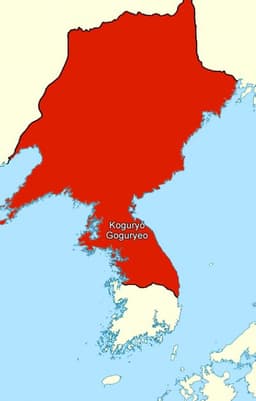
King Sosurim of Goguryeo
Emperor · Ancient
55.3Total
Basic Information
Born
-382
350
Died
-301
384
Era
Ancient
Ancient
Nationality
Macedon
Korea
Occupation
Emperor
Emperor
Civilization
Western
Eastern
Score Comparison
Military (10%)
78.5
47.5
Political (20%)
55.8
68.0
Influence (20%)
62.0
58.0
Legacy (20%)
56.0
56.0
Leadership (15%)
68.0
53.2
Strategy (15%)
75.0
38.6
TOTAL
63.4
55.3
Antigonus I Monophthalmus — Complete Timeline
316 BC
Battle of GabieneWar◆ Major
Antigonus I defeated Eumenes, a former general of Alexander, at Gabiene in Persia. This victory eliminated a major rival and gave Antigonus control over the eastern satrapies, making him the most powerful of the Diadochi at that time.
DiadochiBattlePersia
Impact: regional
315 BC
Siege of TyreWar
Antigonus I besieged and captured the city of Tyre from Ptolemy I's forces. The siege demonstrated his military capabilities and expanded his control over Phoenicia and Syria, strengthening his position in the Diadochi conflicts.
DiadochiSiegePhoenicia
Impact: regional
306 BC
Proclamation as King of AsiaPolitical Action◆ Major
Antigonus I declared himself king of Asia, claiming authority over the entire former empire of Alexander. This act prompted other Diadochi to also assume royal titles, formalizing the breakup of Alexander's empire into separate Hellenistic kingdoms.
DiadochiKingshipHellenistic
Impact: regional
301 BC
Battle of IpsusWar
Antigonus I Monophthalmus commanded his army against the allied forces of Seleucus, Lysimachus, and Cassander at Ipsus. He was defeated and killed in battle, ending his ambition to reunite Alexander's empire. His death solidified the division of the empire among the other Diadochi.
DiadochiBattleAntigonid
Impact: regionaltragic
King Sosurim of Goguryeo — Complete Timeline
372 AD
Introduction of Buddhism to GoguryeoCultural
King Sosurim officially introduced Buddhism to Goguryeo after receiving Buddhist scriptures and a statue from the Former Qin dynasty of China. He established temples and promoted the religion, which became a major cultural and spiritual force in the kingdom.
BuddhismReligionCultural Exchange
Impact: regionalprogressive
Establishment of the National Confucian AcademyCultural◆ Major
King Sosurim founded the Taehak, a national Confucian academy, to educate the aristocracy in Confucian classics and Chinese literature. This institution promoted Confucian values in governance and administration, shaping Goguryeo's bureaucratic system.
ConfucianismEducationBureaucracy
Impact: nationalprogressive
Diplomatic Relations with Former QinPolitical Action
King Sosurim established formal diplomatic relations with the Former Qin dynasty of China, sending tribute missions and receiving cultural and religious gifts. This alliance strengthened Goguryeo's international standing and facilitated the introduction of Buddhism.
DiplomacyChina RelationsCultural Exchange
Impact: regionalconstructive
373 AD
Promulgation of the First Written Law CodeReform◆ Major
King Sosurim issued Goguryeo's first written legal code, based on Confucian principles and Chinese legal models. The code standardized punishments, property rights, and social hierarchies, strengthening central authority and legal uniformity.
Legal ReformLaw CodeGovernance
Impact: nationalconstructive
Expert Analysis
Origins
Antigonus I Monophthalmus (382–301 BCE) was born in Macedonia, likely of noble but not royal lineage. He served under Philip II and Alexander the Great, gaining military experience. His son Demetrius Poliorcetes was also a prominent general. Antigonus was known for his one-eyed appearance (Monophthalmus means 'one-eyed'), having lost an eye at the siege of Perinthus in 340 BCE.
King Sosurim of Goguryeo (r. 371–384 CE) was born into the ruling house of Goguryeo, one of the Three Kingdoms of Korea. His father was King Gogugwon, who died in battle against the Xianbei. Sosurim's early life was shaped by military threats from China and neighboring states. He ascended the throne after his father's death.
Rise to Power
Antigonus rose to prominence as a general under Alexander, governing Phrygia. After Alexander's death in 323 BCE, he initially supported the regent Perdiccas but later opposed him. In 321 BCE, he defeated Eumenes, a loyalist, at the Battle of Orcynia. His major breakthrough came in 316 BCE at the Battle of Gabiene, where he captured and executed Eumenes. This victory gave him control over Asia Minor and Syria. In 306 BCE, after his son Demetrius defeated Ptolemy's fleet at Salamis, Antigonus declared himself king of Asia, prompting other Diadochi to follow suit.
King Sosurim came to power in 371 BCE after his father's death. Goguryeo was under pressure from the Former Qin dynasty and the Xianbei. Sosurim focused on internal consolidation rather than expansion. He established diplomatic relations with the Former Qin in 372 CE, receiving Buddhist scriptures and a statue. This move aligned Goguryeo with Chinese cultural influences and helped stabilize the kingdom.
Leadership & Governance
Antigonus was a military commander first, scoring 78.5 in military and 75.0 in strategy. He governed through a combination of personal authority and alliances with Greek cities. He imposed tribute and appointed governors, but his rule was often challenged. He attempted to reunify Alexander's empire by force, leading to constant warfare. His political score of 55.8 reflects his inability to build lasting institutions.
King Sosurim scored 68.0 in political leadership, reflecting his successful state-building. He introduced Buddhism (turning point), established the National Confucian Academy (Taehak) in 372 CE, and promulgated the first written law code. These reforms centralized authority and standardized governance. He prioritized cultural and legal integration over military expansion, scoring only 47.5 in military.
Triumph & Tragedy
Antigonus's greatest triumph was his victory at Gabiene, eliminating Eumenes. He also captured Tyre from Ptolemy in 314 BCE. However, his tragedy came at the Battle of Ipsus in 301 BCE, where he was defeated and killed by a coalition of Seleucus, Lysimachus, and Cassander. His dream of reuniting the empire died with him.
King Sosurim's triumphs were cultural: Buddhism took root, the Confucian academy educated elites, and the law code brought stability. His tragedy was that Goguryeo remained militarily vulnerable; the Xianbei continued to raid, and his reforms did not prevent future conflicts. His legacy, however, outlasted his reign.
Character & Destiny
Antigonus was ambitious and relentless, but his aggression united his enemies. He trusted his son Demetrius as a capable commander, but their combined forces were not enough at Ipsus. Historians note his military skill but political shortsightedness.
King Sosurim was pragmatic and visionary, focusing on long-term cultural foundations. His adoption of Buddhism and Confucianism was a strategic move to strengthen the state. He avoided risky military campaigns, which preserved his kingdom but limited his immediate impact.
Legacy
Antigonus's legacy is as a major Diadochi: his kingdom, though short-lived, set the stage for the Seleucid and Antigonid dynasties. His son Demetrius later became king of Macedon. Antigonus's fighting style influenced Hellenistic warfare. He scores 62.0 in influence and 56.0 in legacy.
King Sosurim's legacy is foundational for Korean civilization. Buddhism and Confucianism became central to Korean culture. The Taehak was a model for later educational institutions. His law code influenced subsequent Korean legal systems. His influence score is 58.0 and legacy 56.0, but his impact on Korean identity is profound.
Conclusion
While Antigonus I scored higher overall (63.4 vs. 55.3), his achievements were largely military and temporary. King Sosurim's cultural and political reforms had a more enduring impact on a specific civilization. However, in terms of historical scale and influence on the Hellenistic world, Antigonus's role as a major Diadochi gives him broader significance. Antigonus had greater impact on the course of Mediterranean history, even if his empire collapsed. Therefore, Antigonus I Monophthalmus is the more historically significant figure.
Rankings
🥇
Antigonus I MonophthalmusLeader
Mil: 78.5Pol: 55.8Inf: 62.0
63.4
🥈
King Sosurim of Goguryeo
Mil: 47.5Pol: 68.0Inf: 58.0
55.3
+8.1 behind
How This Comparison Works
Algorithm
Each figure is scored on 6 dimensions (0—100 scale) based on structured historical data: Military (10%), Political (20%), Influence (20%), Legacy (20%), Leadership (15%), Strategy (15%). The weighted total produces the final ranking.
Data Sources
Scores are computed from structured sub-indicators in the database. Scale factors adjust for era (Ancient ×0.85, Modern ×1.0) and civilization size (Eastern ×1.05, Other ×0.80) to account for differences in population and military scale.
Maximum 3 Figures
Comparisons are limited to 2—3 figures to ensure readability and statistical meaningfulness.
Error Margins
±5 points per dimension — Sub-scores are derived from historical records with inherent uncertainty. Two figures within 5 points on a dimension should be considered roughly equivalent in that area.
Total Score Accuracy
±3 points overall — The weighted combination of 6 dimensions produces a total score with approximately ±3 points of uncertainty. Differences of less than 3 points are not statistically significant— the figures are effectively tied.
Known Limitations
- Historical records are incomplete and uneven across civilizations
- Figures from oral-tradition societies may be underrepresented
- Occupation labels can misclassify multi-role figures
- Scores measure capability and impact, not moral character
- Quantitative scoring is a comparison tool, not absolute truth
Capability Radar
Military (10%) — Battles & Warfare
Battles
85
20
Win Rate
80
20
Expansion
90
20
Political (20%) — Governance & Reform
Reform
65
70
Diplomacy
72
60
Economy
60
50
Influence (20%) — Cultural & Global Reach
Cultural
60
70
Global
70
40
Legacy (20%) — Historical Impact
Historical
75
70
Longevity
65
70
Leadership (15%) — Power & Stability
Tenure
70
60
Stability
55
60
Strategy (15%) — Tactics & Innovation
Strategy
88
20
Tactics
82
20
Reform
75
20
Similar Comparisons
Comments & Discussion
No comments yet. Be the first to share your thoughts!