Loading...
Anote Tong vs Istvan Szechenyi
Istvan Szechenyi leads by 3.0 pts · 2 figures compared
…

Anote Tong
Politician · Modern
55.2Total
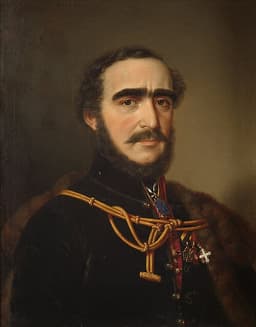
Istvan Szechenyi
Politician · Modern
58.2Total
Basic Information
Born
1952
1791
Died
—
1860
Era
Modern
Modern
Nationality
Kiribati
Hungary
Occupation
Politician
Politician
Civilization
Other
Western
Score Comparison
Military (10%)
31.7
49.7
Political (20%)
68.0
72.0
Influence (20%)
59.0
56.7
Legacy (20%)
46.7
55.0
Leadership (15%)
74.0
68.0
Strategy (15%)
43.0
43.2
TOTAL
55.2
58.2
Anote Tong — Complete Timeline
2003 AD
Elected President of KiribatiPolitical Action◆ Major
Anote Tong was elected President of Kiribati, succeeding his brother. His presidency focused on climate change advocacy and sustainable development, as Kiribati faced existential threats from rising sea levels.
ElectionLeadershipKiribati
Impact: nationalconstructive
2008 AD
Established Phoenix Islands Protected AreaReform◆ Major
Tong established the Phoenix Islands Protected Area, one of the world's largest marine reserves, covering 408,250 square kilometers. The area was designated a UNESCO World Heritage site, preserving biodiversity and supporting sustainable fishing.
ConservationMarine ReserveUNESCO
Impact: globalconstructive
2014 AD
Purchased land in Fiji for potential relocationPolitical Action◆ Major
Tong's government purchased 2,000 hectares of land in Fiji as a potential site for relocating Kiribati's population if rising sea levels made the islands uninhabitable. This proactive measure drew international attention to climate-induced migration.
Climate ChangeMigrationAdaptation
Impact: globalconstructive
Addressed UN General Assembly on climate changePolitical Action◆ Major
Tong delivered a speech at the UN General Assembly highlighting the existential threat of climate change to Kiribati. He called for global action to reduce emissions and support vulnerable nations, becoming a prominent voice for Pacific island states.
Climate AdvocacyUNDiplomacy
Impact: globalconstructive
2016 AD
Lost re-election bidPolitical Action◆ Major
Tong was defeated in the presidential election by Taneti Maamau, ending his 13-year presidency. His loss was attributed to economic concerns and internal political divisions, despite his international climate advocacy.
ElectionTransitionKiribati
Impact: national
Istvan Szechenyi — Complete Timeline
1825 AD
Founding of the Hungarian Academy of SciencesCultural◆ Major
Istvan Szechenyi donated a year's income to found the Hungarian Academy of Sciences. The institution promoted scientific and cultural development in Hungary.
AcademyScienceCulture
Impact: nationalconstructive
1830 AD
Publication of 'Credit'Cultural◆ Major
Istvan Szechenyi published 'Credit', a book advocating for economic reforms in Hungary. The work argued for the abolition of serfdom and the modernization of agriculture.
PublicationReformEconomy
Impact: nationalconstructive
1849 AD
Chain Bridge ConstructionOther◆ Major
Istvan Szechenyi oversaw the construction of the Chain Bridge across the Danube in Budapest. The bridge connected Buda and Pest, symbolizing modernization and national unity.
InfrastructureBridgeModernization
Impact: nationalconstructive
1860 AD
SuicideOther◆ Major
Istvan Szechenyi died by suicide at the D
SuicideDeath
Impact: nationaltragic
Expert Analysis
Origins
Anote Tong was born in 1952 on the atoll of Fanning in the Gilbert and Ellice Islands (now Kiribati). He studied at the University of Canterbury in New Zealand and later worked in public service. His brother, Ieremia Tabai, was Kiribati's first president, giving Tong early exposure to politics. István Széchenyi was born in 1791 into one of Hungary's wealthiest noble families. He traveled widely across Europe, absorbing Enlightenment ideas and witnessing the Industrial Revolution. His education was informal but extensive, shaped by military service and grand tours. While Tong's background was rooted in a small Pacific island nation facing existential threat, Széchenyi's was grounded in feudal Hungary's struggle for modernization.
Rise to Power
Tong entered politics in the 1990s, serving as a member of parliament and minister. He was elected president in 2003, succeeding his brother after a tight race. His presidency was defined by climate change advocacy from the start. Széchenyi rose to prominence through his writings and public works. In 1825, he donated a year's income to found the Hungarian Academy of Sciences, a move that galvanized reformist sentiment. His 1830 book 'Credit' argued for the abolition of serfdom and modernization of agriculture, making him a leading voice for change. Unlike Tong's electoral path, Széchenyi's influence came from aristocratic prestige and intellectual persuasion.
Leadership & Governance
Tong governed a fragile democracy of 110,000 people spread across 33 atolls. His leadership focused on climate diplomacy: he addressed the UN General Assembly multiple times, warning that Kiribati could become uninhabitable. He established the Phoenix Islands Protected Area (PIPA) in 2008, one of the world's largest marine reserves at 408,250 km², to promote sustainable fishing. However, his emphasis on climate issues sometimes overshadowed domestic economic concerns, leading to criticism. Széchenyi was a reformer within the Habsburg Empire. He championed infrastructure projects like the Chain Bridge (opened 1849) connecting Buda and Pest, and the regulation of the Danube. He also promoted credit institutions and agricultural improvements. Both leaders used policy tools to address existential challenges: Tong faced rising seas; Széchenyi faced backward feudalism. Tong scored 74.0 in leadership vs Széchenyi's 68.0, though Széchenyi's political score of 72.0 edged Tong's 68.0.
Triumph & Tragedy
Tong's greatest triumph was the establishment of PIPA, a UNESCO World Heritage site that protects marine biodiversity and serves as a climate refuge. He also purchased 2,000 hectares of land in Fiji for potential relocation, a visionary move for climate adaptation. His tragedy was losing re-election in 2016, as voters prioritized immediate economic issues over long-term climate planning. Széchenyi's triumph was the Chain Bridge and Academy, symbols of Hungarian modernization. His tragedy came in 1860 when, after a failed search for compromising documents, he suffered a mental breakdown and died by suicide. Both men saw their greatest projects outlast them, but Széchenyi's death was more personally tragic.
Character & Destiny
Tong was pragmatic and persistent, using his platform to amplify Kiribati's voice. His character was shaped by the urgency of climate change, making him a global advocate but a sometimes divisive domestic leader. Széchenyi was idealistic and impatient, pushing for rapid change within a conservative empire. His mental health deteriorated under political pressure and personal disappointment. Historical assessments note that Tong's destiny was tied to geography: a low-lying nation's fate. Széchenyi's was tied to timing: he lived in an era of rising nationalism that eventually surpassed his gradual reformism.
Legacy
Tong's legacy is as a climate martyr: his advocacy helped frame climate change as a human rights issue. PIPA remains a model for marine conservation. However, Kiribati's long-term prospects remain uncertain. Széchenyi is remembered as 'the greatest Hungarian' for modernizing the nation. The Academy and Chain Bridge endure as symbols. His political score of 72.0 and legacy score of 55.0 reflect his lasting institutional impact, while Tong's legacy score of 46.7 is lower due to the precariousness of his nation's future.
Conclusion
While both leaders tackled monumental challenges, Széchenyi's impact is more tangible and enduring. His infrastructure, institutions, and ideas transformed Hungary from a feudal backwater into a modern state. Tong's work, though vital, is still a work in progress: Kiribati's survival is uncertain. Széchenyi's total score of 58.2 surpasses Tong's 55.2, reflecting his broader influence. Therefore, István Széchenyi had greater historical impact.
Rankings
🥇
Istvan SzechenyiLeader
Mil: 49.7Pol: 72.0Inf: 56.7
58.2
🥈
Anote Tong
Mil: 31.7Pol: 68.0Inf: 59.0
55.2
+3.0 behind
How This Comparison Works
Algorithm
Each figure is scored on 6 dimensions (0—100 scale) based on structured historical data: Military (10%), Political (20%), Influence (20%), Legacy (20%), Leadership (15%), Strategy (15%). The weighted total produces the final ranking.
Data Sources
Scores are computed from structured sub-indicators in the database. Scale factors adjust for era (Ancient ×0.85, Modern ×1.0) and civilization size (Eastern ×1.05, Other ×0.80) to account for differences in population and military scale.
Maximum 3 Figures
Comparisons are limited to 2—3 figures to ensure readability and statistical meaningfulness.
Error Margins
±5 points per dimension — Sub-scores are derived from historical records with inherent uncertainty. Two figures within 5 points on a dimension should be considered roughly equivalent in that area.
Total Score Accuracy
±3 points overall — The weighted combination of 6 dimensions produces a total score with approximately ±3 points of uncertainty. Differences of less than 3 points are not statistically significant— the figures are effectively tied.
Known Limitations
- Historical records are incomplete and uneven across civilizations
- Figures from oral-tradition societies may be underrepresented
- Occupation labels can misclassify multi-role figures
- Scores measure capability and impact, not moral character
- Quantitative scoring is a comparison tool, not absolute truth
Capability Radar
Military (10%) — Battles & Warfare
Battles
19
31
Win Rate
22
32
Expansion
31
33
Political (20%) — Governance & Reform
Reform
55
85
Diplomacy
70
60
Economy
30
80
Influence (20%) — Cultural & Global Reach
Cultural
35
70
Global
60
55
Legacy (20%) — Historical Impact
Historical
50
75
Longevity
30
65
Leadership (15%) — Power & Stability
Tenure
40
55
Stability
45
50
Strategy (15%) — Tactics & Innovation
Strategy
30
41
Tactics
31
40
Reform
35
45
Similar Comparisons
Comments & Discussion
No comments yet. Be the first to share your thoughts!