Loading...
Anna of Russia vs Sekgoma II
Anna of Russia leads by 4.8 pts · 2 figures compared
…

Anna of Russia
Emperor · Modern
43.6Total
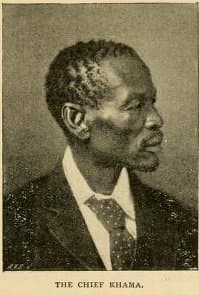
Sekgoma II
Emperor · Modern
38.8Total
Basic Information
Born
1693
1869
Died
1740
1925
Era
Modern
Modern
Nationality
Russia
Botswana
Occupation
Emperor
Emperor
Civilization
Western
Other
Score Comparison
Military (10%)
14.9
17.3
Political (20%)
33.6
30.8
Influence (20%)
47.9
49.4
Legacy (20%)
38.3
40.8
Leadership (15%)
67.0
48.4
Strategy (15%)
54.6
25.9
TOTAL
43.6
38.8
Anna of Russia — Complete Timeline
1730 AD
Accession as Empress of RussiaPolitical Action◆ Major
Anna was invited to become empress by the Supreme Privy Council, which imposed conditions limiting her power. She accepted but soon tore up the conditions, dissolved the council, and established autocratic rule. Her accession marked a return to absolute monarchy after Peter II's death.
SuccessionAutocracySupreme Privy Council
Impact: national
Dissolution of the Supreme Privy CouncilPolitical Action◆ Major
Anna, with support from the nobility and guards, revoked the conditions of her accession and dissolved the Supreme Privy Council. She replaced it with a cabinet of ministers loyal to her, consolidating her autocratic power and ending the experiment with constitutional limits.
Government ReformAutocracyNobility
Impact: nationalconstructive
Dominance of German Favorites (Bironovshchina)Political Action◆ Major
Anna's reign was dominated by her German favorite, Ernst Johann von Biron, who became de facto ruler. Biron and other Baltic Germans filled key government posts, leading to widespread resentment among the Russian nobility. This period, known as Bironovshchina, was marked by corruption and repression.
FavoritismGerman InfluenceCorruption
Impact: nationaldestructive
1732 AD
Construction of the Winter PalaceCultural
Anna commissioned the construction of the first Winter Palace in Saint Petersburg, designed by Francesco Bartolomeo Rastrelli. The palace became the official residence of the Russian monarchs and a symbol of imperial power. It was later expanded and rebuilt by subsequent rulers.
ArchitectureWinter PalaceSaint Petersburg
Impact: nationalconstructive
1735 AD
Russo-Turkish War (1735–1739)War◆ Major
Anna's government waged war against the Ottoman Empire, seeking access to the Black Sea. Russian forces captured the fortress of Azov and invaded the Crimea, but the war ended with the Treaty of Belgrade (1739), which returned most gains to the Ottomans. The war was costly and inconclusive.
Russo-Turkish WarAzovTreaty of Belgrade
Impact: regional
Sekgoma II — Complete Timeline
1910 AD
Accession as Kgosi of the BangwatoOther◆ Major
Sekgoma II became kgosi (paramount chief) of the Bangwato people in the Bechuanaland Protectorate. His accession continued the hereditary line of the Bangwato royal family, placing him as the traditional leader responsible for governance, land allocation, and relations with British colonial authorities.
SuccessionBangwatoTraditional Leadership
Impact: regional
1921 AD
Fathering of Seretse KhamaOther◆ Major
Sekgoma II fathered Seretse Khama, who would later become the first President of Botswana. This birth ensured the continuation of the Bangwato royal lineage and produced a leader who would play a pivotal role in Botswana's independence and post-colonial development.
Royal LineageBotswanaLegacy
Impact: nationalconstructive
1925 AD
Death and Succession CrisisOther◆ Major
Sekgoma II died, leaving his young son Seretse Khama as heir. This triggered a succession dispute as regents vied for power, with Tshekedi Khama eventually assuming the regency. The crisis shaped Bangwato politics and influenced Seretse Khama's later exile and return.
Succession CrisisBangwatoRegency
Impact: regionaldestructive
Expert Analysis
Origins
Anna of Russia (1693–1740) was born Anna Ivanovna, daughter of Tsar Ivan V and niece of Peter the Great. She grew up in Moscow and later in St. Petersburg, receiving a traditional education for a royal woman. In 1710, she married Frederick William, Duke of Courland, but was widowed shortly after. She spent nearly two decades as Duchess of Courland, isolated from Russian politics, which shaped her reliance on Baltic German advisors.
Sekgoma II (1869–1925) was born into the Bangwato royal family in the Bechuanaland Protectorate (modern Botswana). He was the son of Kgosi Khama III, a prominent chief who allied with British colonial authorities. Sekgoma II was educated in mission schools and trained in traditional governance. His early life was marked by the consolidation of Bangwato power under British protection.
Rise to Power
Anna's rise began in 1730 when the Supreme Privy Council, seeking a weak monarch, offered her the Russian throne under conditions limiting her power. She accepted, but upon arrival in Moscow, she gathered support from the nobility and the Imperial Guard. Within weeks, she tore up the conditions and dissolved the Council, establishing autocratic rule. This coup set the tone for her reign: she relied on a small circle of Baltic German favorites, notably Ernst Johann von Biron.
Sekgoma II became kgosi (paramount chief) of the Bangwato in 1923 upon the death of his father, Khama III. His accession was smooth due to British recognition and the established hereditary line. He inherited a stable protectorate, but his reign was brief, lasting only two years until his death in 1925. His rise was not marked by dramatic events but by continuity.
Leadership & Governance
Anna's leadership was characterized by delegation to her German favorites, a period known as Bironovshchina. Ernst Biron became de facto ruler, controlling appointments and policies. Anna's governance was autocratic but inefficient; she focused on court life and hunting. She did oversee some administrative reforms, such as reducing the power of the Senate and creating a new cabinet. However, the dominance of foreigners bred resentment among the Russian nobility. Her military score of 14.9 reflects the costly Russo-Turkish War (1735–1739), which gained Azov but strained resources.
Sekgoma II's leadership was brief and largely traditional. As kgosi, he presided over the Bangwato's internal affairs under British overrule. His governance was consultative, relying on a council of elders. He continued his father's policies of cooperation with the British while maintaining tribal autonomy. His political score of 30.8 reflects limited influence beyond his tribe. He is best known for fathering Seretse Khama, who would become Botswana's first president.
Triumph & Tragedy
Anna's greatest success was securing her autocratic rule by outmaneuvering the Supreme Privy Council. She also commissioned the first Winter Palace, a cultural landmark. Her major failure was the Bironovshchina, which alienated the Russian elite and led to administrative corruption. The Russo-Turkish War achieved limited gains at high cost. Her legacy score of 38.3 reflects mixed achievements.
Sekgoma II's triumph was ensuring the continuation of the Bangwato royal line through his son Seretse Khama. His tragedy was his early death, which triggered a succession crisis. His brother Tshekedi Khama became regent, leading to conflicts that later shaped Botswana's independence. His influence score of 49.4 is boosted by his son's impact.
Character & Destiny
Anna was pragmatic and ruthless. She had no qualms about breaking promises to the Council and persecuting opponents. Her reliance on Biron suggests insecurity and a preference for trusted outsiders over native nobles. This character flaw led to her reign being seen as a dark period in Russian history. Her leadership score of 67.0 indicates decisiveness, but her strategic score of 54.6 shows limited vision.
Sekgoma II was traditional and cautious. He maintained stability during a brief reign. His destiny was to be a transitional figure, overshadowed by his father and son. His strategy score of 25.9 reflects minimal agency in shaping events.
Legacy
Anna's legacy is negative in Russia: the "German yoke" and repression. However, the Winter Palace became iconic. Her reign demonstrated the dangers of foreign favoritism. She scored 38.3 in legacy.
Sekgoma II's legacy is indirect: as father of Seretse Khama, who led Botswana to independence and prosperity. He is remembered as a link in the royal chain. His legacy score of 40.8 is higher due to Seretse's impact.
Conclusion
Anna of Russia had a higher total score (43.6 vs 38.8) due to her political maneuvering and longer reign. However, Sekgoma II's influence through his son arguably had greater long-term impact on a nation's development. Anna's reign was ultimately destructive, while Sekgoma II enabled Botswana's future. Thus, Sekgoma II had greater positive impact despite lower scores.
Rankings
🥇
Anna of RussiaLeader
Mil: 14.9Pol: 33.6Inf: 47.9
43.6
🥈
Sekgoma II
Mil: 17.3Pol: 30.8Inf: 49.4
38.8
+4.8 behind
How This Comparison Works
Algorithm
Each figure is scored on 6 dimensions (0—100 scale) based on structured historical data: Military (10%), Political (20%), Influence (20%), Legacy (20%), Leadership (15%), Strategy (15%). The weighted total produces the final ranking.
Data Sources
Scores are computed from structured sub-indicators in the database. Scale factors adjust for era (Ancient ×0.85, Modern ×1.0) and civilization size (Eastern ×1.05, Other ×0.80) to account for differences in population and military scale.
Maximum 3 Figures
Comparisons are limited to 2—3 figures to ensure readability and statistical meaningfulness.
Error Margins
±5 points per dimension — Sub-scores are derived from historical records with inherent uncertainty. Two figures within 5 points on a dimension should be considered roughly equivalent in that area.
Total Score Accuracy
±3 points overall — The weighted combination of 6 dimensions produces a total score with approximately ±3 points of uncertainty. Differences of less than 3 points are not statistically significant— the figures are effectively tied.
Known Limitations
- Historical records are incomplete and uneven across civilizations
- Figures from oral-tradition societies may be underrepresented
- Occupation labels can misclassify multi-role figures
- Scores measure capability and impact, not moral character
- Quantitative scoring is a comparison tool, not absolute truth
Capability Radar
Military (10%) — Battles & Warfare
Battles
10
8
Win Rate
10
11
Expansion
10
10
Political (20%) — Governance & Reform
Reform
20
20
Diplomacy
30
25
Economy
20
15
Influence (20%) — Cultural & Global Reach
Cultural
15
15
Global
10
10
Legacy (20%) — Historical Impact
Historical
20
25
Longevity
10
20
Leadership (15%) — Power & Stability
Tenure
50
30
Stability
20
10
Strategy (15%) — Tactics & Innovation
Strategy
5
13
Tactics
5
19
Reform
10
19
Similar Comparisons
Comments & Discussion
No comments yet. Be the first to share your thoughts!