Loading...
This comparison has not been analyzed yet.
One-time AI generation (~1 minute). Scores and timeline are already available below.
Anna Hazare vs Serzh Sargsyan
Anna Hazare leads by 10.9 pts · 2 figures compared
…
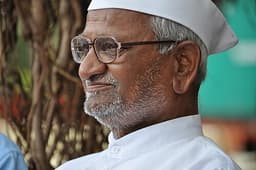
Anna Hazare
Politician · Modern
55.0Total

Serzh Sargsyan
Politician · Modern
44.1Total
Basic Information
Born
1937
1954
Died
—
—
Era
Modern
Modern
Nationality
India
Armenia
Occupation
Politician
Politician
Civilization
Indian
Western
Score Comparison
Military (10%)
40.0
49.1
Political (20%)
48.0
35.1
Influence (20%)
62.0
47.1
Legacy (20%)
50.0
36.7
Leadership (15%)
65.0
58.8
Strategy (15%)
60.0
41.1
TOTAL
55.0
44.1
Anna Hazare — Complete Timeline
1991 AD
Founded the Bhrashtachar Virodhi Janata AndolanPolitical Action
Hazare founded this organization to fight corruption in rural Maharashtra. He used Gandhian methods like hunger strikes and public protests to expose corrupt officials and politicians.
Anti-CorruptionActivismMaharashtra
Impact: regionalconstructive
1992 AD
Refused the Padma Bhushan awardPolitical Action
Hazare returned the Padma Bhushan award in protest against the government's failure to act on corruption. This gesture reinforced his image as a principled activist.
Award ReturnProtestCorruption
Impact: national
2011 AD
Led the India Against Corruption movementPolitical Action◆ Major
Anna Hazare went on a hunger strike at Jantar Mantar in Delhi, demanding the passage of the Jan Lokpal Bill to combat corruption. The movement gained massive public support and forced the government to form a joint drafting committee.
Anti-CorruptionHunger StrikeJan Lokpal
Impact: nationalconstructive
Serzh Sargsyan — Complete Timeline
2007 AD
Appointed Prime Minister of ArmeniaPolitical Action◆ Major
Sargsyan was appointed Prime Minister by President Kocharyan. He had previously served as Minister of Defense and was seen as Kocharyan's chosen successor, consolidating the power of the Karabakh clan in Armenian politics.
Prime MinisterSuccessionKarabakh Clan
Impact: national
2008 AD
Elected President of ArmeniaPolitical Action◆ Major
Sargsyan won the presidential election with 52.8% of the vote, succeeding Robert Kocharyan. The election was marred by allegations of fraud and led to deadly post-election protests, with 10 people killed in clashes between protesters and police.
Presidential ElectionPost-Election ViolenceControversy
Impact: national
2015 AD
Initiated Constitutional Reform to Shift Power to Prime MinisterReform◆ Major
Sargsyan oversaw a constitutional referendum that transformed Armenia from a semi-presidential to a parliamentary republic. The reforms shifted executive power from the president to the prime minister, allowing Sargsyan to remain in power after his presidential term ended.
Constitutional ReformPower ConsolidationParliamentary System
Impact: national
2017 AD
Signed the Armenia-EU Comprehensive and Enhanced Partnership AgreementPolitical Action◆ Major
Sargsyan signed the CEPA with the European Union, deepening political and economic cooperation. The agreement was a compromise after Armenia chose not to sign an Association Agreement due to pressure from Russia, instead joining the Eurasian Economic Union.
European IntegrationForeign PolicyCompromise
Impact: nationalconstructive
2018 AD
Resigned as Prime Minister After Velvet RevolutionPolitical Action◆ Major
Sargsyan resigned as Prime Minister after 11 days of mass protests led by Nikol Pashinyan. He had been elected Prime Minister by parliament after his second presidential term ended, but the protests forced him to step down, marking a peaceful transfer of power.
ResignationVelvet RevolutionProtest
Impact: national
This comparison has not been analyzed yet.
One-time AI generation (~1 minute). Scores and timeline are already available below.
Rankings
🥇
Anna HazareLeader
Mil: 40.0Pol: 48.0Inf: 62.0
55.0
🥈
Serzh Sargsyan
Mil: 49.1Pol: 35.1Inf: 47.1
44.1
+10.9 behind
How This Comparison Works
Algorithm
Each figure is scored on 6 dimensions (0—100 scale) based on structured historical data: Military (10%), Political (20%), Influence (20%), Legacy (20%), Leadership (15%), Strategy (15%). The weighted total produces the final ranking.
Data Sources
Scores are computed from structured sub-indicators in the database. Scale factors adjust for era (Ancient ×0.85, Modern ×1.0) and civilization size (Eastern ×1.05, Other ×0.80) to account for differences in population and military scale.
Maximum 3 Figures
Comparisons are limited to 2—3 figures to ensure readability and statistical meaningfulness.
Error Margins
±5 points per dimension — Sub-scores are derived from historical records with inherent uncertainty. Two figures within 5 points on a dimension should be considered roughly equivalent in that area.
Total Score Accuracy
±3 points overall — The weighted combination of 6 dimensions produces a total score with approximately ±3 points of uncertainty. Differences of less than 3 points are not statistically significant— the figures are effectively tied.
Known Limitations
- Historical records are incomplete and uneven across civilizations
- Figures from oral-tradition societies may be underrepresented
- Occupation labels can misclassify multi-role figures
- Scores measure capability and impact, not moral character
- Quantitative scoring is a comparison tool, not absolute truth
Capability Radar
Military (10%) — Battles & Warfare
Battles
42
30
Win Rate
47
31
Expansion
51
36
Political (20%) — Governance & Reform
Reform
70
20
Diplomacy
40
30
Economy
10
25
Influence (20%) — Cultural & Global Reach
Cultural
50
10
Global
50
10
Legacy (20%) — Historical Impact
Historical
55
15
Longevity
40
5
Leadership (15%) — Power & Stability
Tenure
0
40
Stability
30
15
Strategy (15%) — Tactics & Innovation
Strategy
50
39
Tactics
56
38
Reform
60
42
Similar Comparisons
Comments & Discussion
No comments yet. Be the first to share your thoughts!