Loading...
Ange-Felix Patasse vs Turki al-Faisal
Turki al-Faisal leads by 6.2 pts · 2 figures compared
…
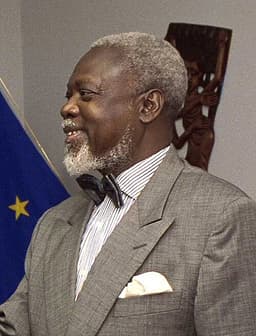
Ange-Felix Patasse
Politician · Modern
47.4Total
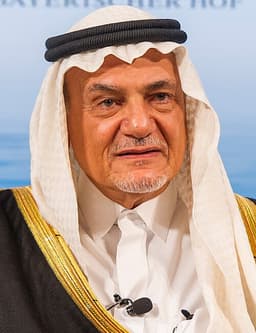
Turki al-Faisal
Politician · Modern
53.6Total
Basic Information
Born
1937
1945
Died
—
—
Era
Modern
Modern
Nationality
Central African Republic
Saudi Arabia
Occupation
Politician
Politician
Civilization
Other
Middle Eastern
Score Comparison
Military (10%)
50.0
50.0
Political (20%)
39.4
61.3
Influence (20%)
49.4
54.1
Legacy (20%)
40.0
41.7
Leadership (15%)
67.0
74.0
Strategy (15%)
40.8
43.1
TOTAL
47.4
53.6
Ange-Felix Patasse — Complete Timeline
1993 AD
Elected President of CARPolitical Action◆ Major
Ange-Félix Patassé won the presidential election with 52.5% of the vote in the second round, becoming the first democratically elected president of the Central African Republic. His victory ended a period of military rule.
Central African RepublicDemocracyElection
Impact: nationalconstructive
1996 AD
Survived Army MutiniesWar
Three army mutinies erupted against Patass
Central African RepublicMutinyFrench Intervention
Impact: nationaldestructive
2003 AD
Overthrown by François BozizéPolitical Action◆ Major
While Patass
Central African RepublicCoupBozizé
Impact: nationaltragic
Turki al-Faisal — Complete Timeline
1979 AD
Director of General IntelligencePolitical Action◆ Major
Turki al-Faisal was appointed Director of Saudi Arabia's General Intelligence Directorate (GID), a position he held for 24 years. He oversaw intelligence operations during the Soviet-Afghan War and the rise of al-Qaeda.
IntelligenceSecurityForeign Policy
Impact: regional
1980 AD
Role in Afghan JihadWar◆ Major
Turki coordinated Saudi support for the Afghan mujahideen fighting the Soviet Union, including funding and arms supplies. This involvement had long-term consequences, including the rise of extremist groups.
Afghan WarCold WarProxy War
Impact: global
2005 AD
Ambassador to the United StatesPolitical Action◆ Major
Turki served as Saudi Ambassador to the United States from 2005 to 2007, focusing on repairing relations damaged by the 9/11 attacks. He advocated for the Arab Peace Initiative and counter-terrorism cooperation.
DiplomacyUS-Saudi RelationsMiddle East Peace
Impact: global
Expert Analysis
Origins
Ange-Félix Patassé was born on January 25, 1937, in Paoua, a small village in what was then French Ubangi-Shari (now Central African Republic). He came from a modest family; his father was a farmer. Patassé studied in France, earning a degree in agricultural engineering. He returned to CAR and entered public service, working as an agricultural technician.
Turki al-Faisal was born on February 15, 1945, in Mecca, Saudi Arabia, into the House of Saud. He is the son of Prince Faisal, who later became King Faisal. Turki studied at the Lawrenceville School in New Jersey and later at Georgetown University, where he earned a degree in history and political science. His early life was steeped in royal privilege and exposure to international affairs.
Rise to Power
Patassé rose politically under President David Dacko, serving as a minister in the 1960s. After Dacko's overthrow, he went into exile but returned to run for president in 1993. He won the second round with 52.5% of the vote, becoming the first democratically elected president of the Central African Republic. His rise was marked by support from northern ethnic groups and a promise of democratic reform.
Turki al-Faisal's rise was tied to his royal lineage. In 1977, at age 32, he was appointed Director of General Intelligence (GID), a position he held for 24 years. His role expanded during the Soviet-Afghan War, where he coordinated Saudi funding and arms for the mujahideen. This made him a key figure in Saudi foreign policy, especially in countering Soviet influence.
Leadership & Governance
Patassé's leadership was characterized by instability. He faced three army mutinies between 1996 and 1997 due to unpaid salaries and poor conditions. French troops intervened to restore order, but Patassé's reliance on foreign support weakened his authority. He also faced accusations of corruption and nepotism, scoring only 67.0 in Leadership on our scale. His governance was marked by a failure to establish lasting democratic institutions.
Turki al-Faisal scored 74.0 in Leadership, reflecting his long tenure and strategic influence. As intelligence chief, he oversaw operations that shaped the Middle East, including support for Afghan fighters. He later served as Ambassador to the United States (2005-2007), working to repair ties after 9/11. His leadership was more institutional and less personal than Patassé's, operating within the Saudi monarchy's framework.
Triumph & Tragedy
Patassé's greatest triumph was winning the 1993 election and becoming the first democratically elected president of CAR. However, his presidency was marred by tragedy: he was overthrown in 2003 by François Bozizé while abroad, ending his rule in exile. He also failed to stabilize the country, leaving a legacy of civil conflict. His Political score of 39.4 reflects his inability to consolidate power.
Turki al-Faisal's triumph was his role in the Afghan jihad, which contributed to the Soviet withdrawal. However, that same involvement had long-term consequences: the rise of extremist groups like al-Qaeda, which later targeted the West. His legacy is thus complicated. He also navigated the aftermath of 9/11 as ambassador, but his Influence score of 54.1 suggests limited global impact.
Character & Destiny
Patassé was seen as a charismatic but ineffective leader. His decision to rely on foreign troops and failure to address economic grievances led to his downfall. Historians often view him as a tragic figure who could not overcome CAR's deep-rooted problems. His total score of 47.4 reflects these limitations.
Turki al-Faisal was a disciplined, strategic operator within the Saudi system. His long tenure suggests caution and loyalty, but his role in the Afghan jihad tied him to decisions that had unintended consequences. His character was shaped by royal privilege and a worldview focused on countering communism and Iran.
Legacy
Patassé's legacy is largely negative: he is remembered as a failed democrat who presided over instability. CAR continued to suffer coups and conflicts after his ouster. His democracy score is low, as his government did not create lasting democratic institutions.
Turki al-Faisal's legacy is more enduring but ambiguous. He helped shape Saudi intelligence and foreign policy for decades, but his involvement in Afghanistan contributed to global jihadist movements. His score of 53.6 total reflects a moderate but controversial impact.
Conclusion
Turki al-Faisal had greater impact than Ange-Félix Patassé. While Patassé achieved a historic election, his governance was weak and his legacy fleeting. Al-Faisal, with a total score of 53.6 to Patassé's 47.4, played a role in events that reshaped the Middle East and global security. His decisions had consequences that outlasted his tenure, whereas Patassé's influence ended with his overthrow. Al-Faisal's strategic position within a major oil state gave him leverage Patassé lacked. Thus, al-Faisal's impact was more significant and longer-lasting.
Rankings
🥇
Turki al-FaisalLeader
Mil: 50.0Pol: 61.3Inf: 54.1
53.6
🥈
Ange-Felix Patasse
Mil: 50.0Pol: 39.4Inf: 49.4
47.4
+6.2 behind
How This Comparison Works
Algorithm
Each figure is scored on 6 dimensions (0—100 scale) based on structured historical data: Military (10%), Political (20%), Influence (20%), Legacy (20%), Leadership (15%), Strategy (15%). The weighted total produces the final ranking.
Data Sources
Scores are computed from structured sub-indicators in the database. Scale factors adjust for era (Ancient ×0.85, Modern ×1.0) and civilization size (Eastern ×1.05, Other ×0.80) to account for differences in population and military scale.
Maximum 3 Figures
Comparisons are limited to 2—3 figures to ensure readability and statistical meaningfulness.
Error Margins
±5 points per dimension — Sub-scores are derived from historical records with inherent uncertainty. Two figures within 5 points on a dimension should be considered roughly equivalent in that area.
Total Score Accuracy
±3 points overall — The weighted combination of 6 dimensions produces a total score with approximately ±3 points of uncertainty. Differences of less than 3 points are not statistically significant— the figures are effectively tied.
Known Limitations
- Historical records are incomplete and uneven across civilizations
- Figures from oral-tradition societies may be underrepresented
- Occupation labels can misclassify multi-role figures
- Scores measure capability and impact, not moral character
- Quantitative scoring is a comparison tool, not absolute truth
Capability Radar
Military (10%) — Battles & Warfare
Battles
22
22
Win Rate
27
26
Expansion
29
27
Political (20%) — Governance & Reform
Reform
30
30
Diplomacy
40
65
Economy
20
35
Influence (20%) — Cultural & Global Reach
Cultural
20
25
Global
15
40
Legacy (20%) — Historical Impact
Historical
25
30
Longevity
15
20
Leadership (15%) — Power & Stability
Tenure
60
40
Stability
10
45
Strategy (15%) — Tactics & Innovation
Strategy
32
30
Tactics
32
34
Reform
39
37
Similar Comparisons
Comments & Discussion
No comments yet. Be the first to share your thoughts!