Loading...
Anerood Jugnauth vs Charles de Guise
Anerood Jugnauth leads by 5.8 pts · 2 figures compared
…
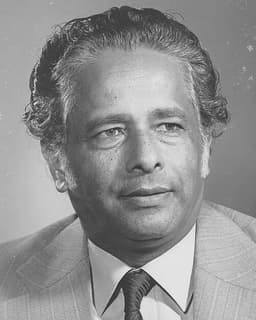
Anerood Jugnauth
Politician · Modern
59.0Total

Charles de Guise
Politician · Modern
53.2Total
Basic Information
Born
1930
1524
Died
—
1574
Era
Modern
Modern
Nationality
Mauritius
France
Occupation
Politician
Politician
Civilization
Other
Western
Score Comparison
Military (10%)
46.1
36.6
Political (20%)
70.3
62.7
Influence (20%)
59.0
58.0
Legacy (20%)
52.0
49.2
Leadership (15%)
78.0
53.2
Strategy (15%)
43.5
53.8
TOTAL
59.0
53.2
Anerood Jugnauth — Complete Timeline
1982 AD
Elected Prime Minister of MauritiusPolitical Action◆ Major
Jugnauth became Prime Minister after his Militant Socialist Movement (MSM) won the 1982 general election, defeating Seewoosagur Ramgoolam. He inherited an economy facing high unemployment and debt.
Electoral VictoryPower Transition
Impact: national
1983 AD
Established the Mauritius Export Processing ZoneReform
Jugnauth's government expanded the Export Processing Zone (EPZ) scheme, attracting foreign investment in textile manufacturing. This policy transformed Mauritius from a sugar-dependent economy to a diversified one, reducing unemployment.
Economic ReformIndustrialization
Impact: nationalconstructive
1987 AD
Re-elected Prime Minister (1987)Political Action◆ Major
Jugnauth won the 1987 general election, securing a second term. His government continued economic liberalization policies, leading to sustained growth and the emergence of Mauritius as a middle-income country.
Re-electionEconomic Growth
Impact: nationalconstructive
2003 AD
Became President of MauritiusPolitical Action
Jugnauth was elected President of Mauritius by the National Assembly, a largely ceremonial role. He served until 2012, providing a figurehead role after his long tenure as Prime Minister.
PresidencyCeremonial Role
Impact: national
2014 AD
Returned as Prime Minister (2014)Political Action◆ Major
Jugnauth returned as Prime Minister after his MSM-led alliance won the 2014 general election. At age 84, he became one of the world's oldest serving leaders, focusing on infrastructure projects.
Political ComebackInfrastructure
Impact: national
2017 AD
Resigned as Prime MinisterPolitical Action◆ Major
Jugnauth resigned as Prime Minister in January 2017, handing power to his son, Pravind Jugnauth. The succession was criticized as dynastic but was legal under the constitution.
ResignationDynastic Succession
Impact: national
Charles de Guise — Complete Timeline
1547 AD
Appointment as Cardinal of LorrainePolitical Action◆ Major
Charles de Guise was appointed Cardinal of Lorraine, becoming one of the most powerful churchmen in France. This position gave him immense influence over religious and political affairs.
CardinalChurchGuise Faction
Impact: national
1560 AD
Regency during the Minority of Charles IXPolitical Action◆ Major
Charles de Guise served as a key advisor to Queen Regent Catherine de' Medici during the early reign of Charles IX. He helped shape policy during the early French Wars of Religion, advocating for Catholic interests.
RegencyWars of ReligionGuise Faction
Impact: national
1561 AD
Role in the Colloquy of PoissyCultural
Charles de Guise was a leading Catholic representative at the Colloquy of Poissy, a theological debate between Catholics and Huguenots. The colloquy failed to achieve reconciliation, deepening the religious divide.
DebateWars of ReligionTheology
Impact: national
1562 AD
Opposition to the Edict of JanuaryPolitical Action◆ Major
Charles de Guise strongly opposed the Edict of January, which granted limited toleration to Huguenots. His opposition contributed to the outbreak of the French Wars of Religion later that year.
EdictWars of ReligionCatholic Opposition
Impact: nationaldestructive
Expert Analysis
Origins
Anerood Jugnauth was born on March 29, 1930, in Palma, British Mauritius, into a Hindu farming family. He studied law in the UK and returned to practice as a barrister. His early political involvement began in the independence movement, joining the Labour Party before founding the Militant Socialist Movement (MSM) in 1983.
Charles de Guise was born in 1524 in Joinville, France, into the powerful Guise family. As the second son, he was destined for the church, becoming Archbishop of Reims at age 14 and Cardinal of Lorraine by 1547. His education was supervised by his uncle, Cardinal Jean de Lorraine, and he became a leading figure in the Catholic Church in France.
Rise to Power
Jugnauth rose to prominence as a key figure in the coalition that won the 1982 general election, defeating the long-serving Seewoosagur Ramgoolam. He became Prime Minister in 1982, but a split in the coalition led him to form the MSM in 1983, winning the snap election that year. His rise was marked by economic reform and political maneuvering.
Charles de Guise's power derived from his family's influence and his ecclesiastical position. He became a chief advisor to King Henry II and later to Queen Regent Catherine de' Medici during the minority of Charles IX. His role in the Colloquy of Poissy (1561) and his opposition to the Edict of January (1562) solidified his leadership of the Catholic hardline faction.
Leadership & Governance
Jugnauth's leadership focused on economic transformation. He expanded the Export Processing Zone (EPZ), attracting foreign investment in textiles and manufacturing, which reduced unemployment and spurred growth. His governance was pragmatic, often forming coalitions and shifting alliances to maintain power. He served multiple terms (1982-1995, 2000-2003, 2014-2017) and later as President (2003-2012). His style was hands-on in economic policy but delegating in other areas.
Charles de Guise exercised power through the court and church. As Cardinal, he controlled ecclesiastical appointments and influenced royal policy. He was a key figure in the repression of Huguenots, advocating for strict Catholicism. His governance was authoritarian and clerical, using the Inquisition and censorship to suppress dissent. He scored 53.2 in Leadership compared to Jugnauth's 78.0.
Triumph & Tragedy
Jugnauth's greatest triumph was transforming Mauritius from a low-income sugar-based economy to a middle-income diversified one. The EPZ policy led to rapid industrialization and poverty reduction. His greatest failure was the dynastic succession of his son Pravind Jugnauth in 2017, which drew accusations of nepotism and weakened democratic institutions.
Charles de Guise's triumph was maintaining Catholic dominance in France during the early Wars of Religion. He successfully opposed concessions to Huguenots at the Colloquy of Poissy. His tragedy was the failure of the Guise faction to secure the throne; his family's overreach led to the assassination of his brother Francis, Duke of Guise, in 1563, and the eventual decline of Guise power.
Character & Destiny
Jugnauth was pragmatic, adaptable, and resilient. He survived political defeats and returned to power multiple times. His character was marked by a focus on economic development and a willingness to compromise. His destiny was to be the architect of modern Mauritius, but also to end his career amid controversy over dynastic politics.
Charles de Guise was zealous, ambitious, and inflexible. His unwavering Catholic orthodoxy shaped the violent course of the French Wars of Religion. His destiny was to be a central figure in a conflict that tore France apart, but his intransigence contributed to the prolongation of war. Historians assess him as a capable but divisive leader, with a Political score of 62.7 against Jugnauth's 70.3.
Legacy
Jugnauth's legacy is the economic miracle of Mauritius. The EPZ model was studied by other developing nations. He is remembered as the "Father of the Mauritian Economic Miracle." His political dynasty continues, with his son as Prime Minister. His overall score of 59.0 reflects his significant but localized impact.
Charles de Guise's legacy is tied to the Catholic League and the Wars of Religion. He helped entrench religious division in France. His family's power declined after his death in 1574. He is remembered as a symbol of clerical power and intolerance. His score of 53.2 indicates a lesser impact, confined to a specific period of French history.
Conclusion
Anerood Jugnauth had greater impact due to his transformative economic policies that lifted millions out of poverty and created a stable democracy. Charles de Guise, while influential in a narrow context, contributed to destructive conflict. Jugnauth's Political score of 70.3 and Leadership of 78.0 far exceed de Guise's 62.7 and 53.2, supporting the conclusion that Jugnauth's positive, enduring legacy outweighs de Guise's divisive one.
Rankings
🥇
Anerood JugnauthLeader
Mil: 46.1Pol: 70.3Inf: 59.0
59.0
🥈
Charles de Guise
Mil: 36.6Pol: 62.7Inf: 58.0
53.2
+5.8 behind
How This Comparison Works
Algorithm
Each figure is scored on 6 dimensions (0—100 scale) based on structured historical data: Military (10%), Political (20%), Influence (20%), Legacy (20%), Leadership (15%), Strategy (15%). The weighted total produces the final ranking.
Data Sources
Scores are computed from structured sub-indicators in the database. Scale factors adjust for era (Ancient ×0.85, Modern ×1.0) and civilization size (Eastern ×1.05, Other ×0.80) to account for differences in population and military scale.
Maximum 3 Figures
Comparisons are limited to 2—3 figures to ensure readability and statistical meaningfulness.
Error Margins
±5 points per dimension — Sub-scores are derived from historical records with inherent uncertainty. Two figures within 5 points on a dimension should be considered roughly equivalent in that area.
Total Score Accuracy
±3 points overall — The weighted combination of 6 dimensions produces a total score with approximately ±3 points of uncertainty. Differences of less than 3 points are not statistically significant— the figures are effectively tied.
Known Limitations
- Historical records are incomplete and uneven across civilizations
- Figures from oral-tradition societies may be underrepresented
- Occupation labels can misclassify multi-role figures
- Scores measure capability and impact, not moral character
- Quantitative scoring is a comparison tool, not absolute truth
Capability Radar
Military (10%) — Battles & Warfare
Battles
24
5
Win Rate
23
5
Expansion
27
5
Political (20%) — Governance & Reform
Reform
70
55
Diplomacy
75
65
Economy
80
50
Influence (20%) — Cultural & Global Reach
Cultural
40
45
Global
45
35
Legacy (20%) — Historical Impact
Historical
50
55
Longevity
60
40
Leadership (15%) — Power & Stability
Tenure
85
60
Stability
75
40
Strategy (15%) — Tactics & Innovation
Strategy
31
15
Tactics
32
10
Reform
37
10
Similar Comparisons
Comments & Discussion
No comments yet. Be the first to share your thoughts!