Loading...
This comparison has not been analyzed yet.
One-time AI generation (~1 minute). Scores and timeline are already available below.
Andronikos II Palaiologos vs Henry II
Henry II leads by 12.0 pts · 2 figures compared
…
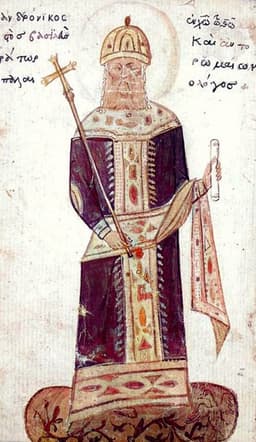
Andronikos II Palaiologos
Emperor · Medieval
42.7Total
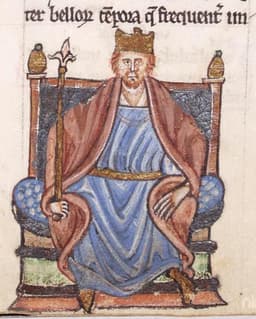
Henry II
Emperor · Medieval
54.7Total
Basic Information
Born
1259
973
Died
1332
1024
Era
Medieval
Medieval
Nationality
Byzantine Empire
Holy Roman Empire
Occupation
Emperor
Emperor
Civilization
Western
Western
Score Comparison
Military (10%)
21.2
30.0
Political (20%)
26.4
68.0
Influence (20%)
51.8
60.0
Legacy (20%)
42.5
50.0
Leadership (15%)
62.2
53.2
Strategy (15%)
36.8
60.0
TOTAL
42.7
54.7
Andronikos II Palaiologos — Complete Timeline
1282 AD
Coronation as co-emperor and beginning of the Palaiologan dynastyPolitical Action◆ Major
Andronikos II was crowned co-emperor alongside his father Michael VIII, and became sole ruler after Michael's death later that year. His reign began the long Palaiologan dynasty, but the empire was already weakened by financial and military decline.
CoronationDynastic SuccessionPalaiologoi
Impact: national
1283 AD
Rejection of the Union of the ChurchesPolitical Action◆ Major
Andronikos II repudiated the Union of the Churches agreed to by his father at the Second Council of Lyon. He restored Orthodox independence from the Papacy, which pleased the clergy and populace but further isolated Byzantium from the West.
Church PolicyOrthodoxyPapal Relations
Impact: nationalconstructive
1285 AD
Disbandment of the Byzantine navyReform◆ Major
Andronikos II disbanded the Byzantine navy to cut costs, relying instead on Genoese and Venetian mercenaries. This decision left the empire vulnerable to naval attacks and piracy, and contributed to the loss of control over the Aegean islands and trade routes.
Naval PolicyMilitary DeclineMercenaries
Impact: regionaldestructive
1300 AD
Loss of Anatolian territories to the Ottoman TurksWar◆ Major
During Andronikos II's reign, the Ottoman Turks captured numerous Byzantine cities in Anatolia, including Bursa in 1326. The empire's inability to defend its Asian provinces led to the permanent loss of most of Anatolia, reducing Byzantium to a small state around Constantinople.
Ottoman ConquestTerritorial LossAnatolia
Impact: regionaltragic
1321 AD
Civil war with Andronikos III PalaiologosWar◆ Major
Andronikos II faced a civil war against his grandson Andronikos III, who sought to seize the throne. The conflict lasted until 1328, when Andronikos II was forced to abdicate. The civil war drained the empire's resources and allowed the Ottoman Turks to expand in Anatolia.
Civil WarDynastic ConflictOttoman Expansion
Impact: nationaldestructive
Henry II — Complete Timeline
1002 AD
Election as King of GermanyPolitical Action◆ Major
Following the death of Otto III, Henry II was elected King of Germany in 1002 after a contested succession. He secured the throne against rival claimants, including Ekkehard of Meissen, consolidating Ottonian rule.
SuccessionOttonian Dynasty
Impact: regional
1007 AD
Foundation of the Diocese of BambergCultural◆ Major
Henry II founded the Diocese of Bamberg in 1007, establishing a new bishopric in Franconia. He endowed it with extensive lands and privileges, making it a center of imperial church policy and missionary activity.
Church FoundationImperial Church System
Impact: regionalconstructive
1014 AD
Coronation as Holy Roman EmperorPolitical Action◆ Major
Pope Benedict VIII crowned Henry II Holy Roman Emperor in Rome on February 14, 1014. This coronation reaffirmed the alliance between the Empire and the Papacy and legitimized Henry's imperial authority.
CoronationImperial Authority
Impact: regionalconstructive
1021 AD
Third Italian CampaignWar
Henry II led a military campaign to southern Italy in 1021-1022 to assert imperial authority over the Byzantine catapanate and Lombard principalities. He captured the fortress of Troia but failed to permanently secure Byzantine territories.
Italian CampaignByzantine Conflict
Impact: regional
This comparison has not been analyzed yet.
One-time AI generation (~1 minute). Scores and timeline are already available below.
Rankings
🥇
Henry IILeader
Mil: 30.0Pol: 68.0Inf: 60.0
54.7
🥈
Andronikos II Palaiologos
Mil: 21.2Pol: 26.4Inf: 51.8
42.7
+12.0 behind
How This Comparison Works
Algorithm
Each figure is scored on 6 dimensions (0—100 scale) based on structured historical data: Military (10%), Political (20%), Influence (20%), Legacy (20%), Leadership (15%), Strategy (15%). The weighted total produces the final ranking.
Data Sources
Scores are computed from structured sub-indicators in the database. Scale factors adjust for era (Ancient ×0.85, Modern ×1.0) and civilization size (Eastern ×1.05, Other ×0.80) to account for differences in population and military scale.
Maximum 3 Figures
Comparisons are limited to 2—3 figures to ensure readability and statistical meaningfulness.
Error Margins
±5 points per dimension — Sub-scores are derived from historical records with inherent uncertainty. Two figures within 5 points on a dimension should be considered roughly equivalent in that area.
Total Score Accuracy
±3 points overall — The weighted combination of 6 dimensions produces a total score with approximately ±3 points of uncertainty. Differences of less than 3 points are not statistically significant— the figures are effectively tied.
Known Limitations
- Historical records are incomplete and uneven across civilizations
- Figures from oral-tradition societies may be underrepresented
- Occupation labels can misclassify multi-role figures
- Scores measure capability and impact, not moral character
- Quantitative scoring is a comparison tool, not absolute truth
Capability Radar
Military (10%) — Battles & Warfare
Battles
15
45
Win Rate
10
50
Expansion
5
35
Political (20%) — Governance & Reform
Reform
20
55
Diplomacy
25
60
Economy
15
50
Influence (20%) — Cultural & Global Reach
Cultural
30
50
Global
20
40
Legacy (20%) — Historical Impact
Historical
35
55
Longevity
20
45
Leadership (15%) — Power & Stability
Tenure
70
65
Stability
10
55
Strategy (15%) — Tactics & Innovation
Strategy
15
45
Tactics
10
40
Reform
5
30
Similar Comparisons
Comments & Discussion
No comments yet. Be the first to share your thoughts!