Loading...
Henry II vs Julius Caesar
Julius Caesar leads by 28.1 pts · 2 figures compared
…
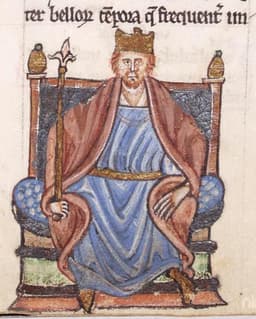
Henry II
Emperor · Medieval
54.7Total

Julius Caesar
General · Ancient
82.8Total
Basic Information
Born
973
-100
Died
1024
-44
Era
Medieval
Ancient
Nationality
Holy Roman Empire
Roman Republic
Occupation
Emperor
General
Civilization
Western
Western
Score Comparison
Military (10%)
30.0
88.0
Political (20%)
68.0
78.0
Influence (20%)
60.0
85.0
Legacy (20%)
50.0
82.0
Leadership (15%)
53.2
80.0
Strategy (15%)
60.0
85.0
TOTAL
54.7
82.8
Henry II — Complete Timeline
1002 AD
Election as King of GermanyPolitical Action◆ Major
Following the death of Otto III, Henry II was elected King of Germany in 1002 after a contested succession. He secured the throne against rival claimants, including Ekkehard of Meissen, consolidating Ottonian rule.
SuccessionOttonian Dynasty
Impact: regional
1007 AD
Foundation of the Diocese of BambergCultural◆ Major
Henry II founded the Diocese of Bamberg in 1007, establishing a new bishopric in Franconia. He endowed it with extensive lands and privileges, making it a center of imperial church policy and missionary activity.
Church FoundationImperial Church System
Impact: regionalconstructive
1014 AD
Coronation as Holy Roman EmperorPolitical Action◆ Major
Pope Benedict VIII crowned Henry II Holy Roman Emperor in Rome on February 14, 1014. This coronation reaffirmed the alliance between the Empire and the Papacy and legitimized Henry's imperial authority.
CoronationImperial Authority
Impact: regionalconstructive
1021 AD
Third Italian CampaignWar
Henry II led a military campaign to southern Italy in 1021-1022 to assert imperial authority over the Byzantine catapanate and Lombard principalities. He captured the fortress of Troia but failed to permanently secure Byzantine territories.
Italian CampaignByzantine Conflict
Impact: regional
Julius Caesar — Complete Timeline
58 BC
Gallic WarsWar◆ Major
Caesar, as proconsul of Gaul, launched a series of campaigns that conquered all of Gaul (modern France, Belgium, and parts of Switzerland). He fought numerous battles, including against the Helvetii, the Belgae, and the Gallic chieftain Vercingetorix. The wars brought immense wealth and a loyal army to Caesar.
Gallic WarsConquestRoman Expansion
Impact: regional
49 BC
Crossing the RubiconPolitical Action◆ Major
Caesar led Legio XIII across the Rubicon River into Italy, defying the Roman Senate's order to disband his army. This act triggered a civil war against Pompey and the Optimates, ultimately leading to Caesar's dictatorship and the end of the Roman Republic.
Roman Civil WarEnd of RepublicPower Struggle
Impact: global
48 BC
Battle of PharsalusWar◆ Major
Caesar's outnumbered army defeated the larger forces of Pompey the Great at Pharsalus in Greece. Caesar's tactical use of a reserve line to counter Pompey's cavalry charge proved decisive. Pompey fled to Egypt, where he was assassinated, leaving Caesar as the undisputed master of the Roman world.
Roman Civil WarBattleDecisive Victory
Impact: regional
44 BC
Appointment as Dictator for LifePolitical Action◆ Major
The Roman Senate appointed Caesar dictator perpetuo (dictator for life), granting him unprecedented personal power. This move concentrated military, legislative, and judicial authority in one person, effectively ending the Roman Republic's traditional system of checks and balances and alarming many senators.
DictatorshipEnd of RepublicPower Consolidation
Impact: regionaldestructive
Assassination on the Ides of MarchPolitical Action◆ Major
A group of Roman senators, led by Marcus Junius Brutus and Gaius Cassius Longinus, stabbed Caesar to death at a meeting of the Senate in the Theatre of Pompey. The assassination was intended to restore the Republic, but instead triggered another civil war that led to the rise of the Roman Empire.
AssassinationRoman PoliticsEnd of Republic
Impact: globaldestructive
Expert Analysis
henry-ii-vs-julius-caesar
# The General and the Saint
On the Ides of March, 44 BCE, a dictator lay bleeding at the foot of Pompey’s theater, stabbed twenty-three times by men he had called friends. The Roman Republic, already gasping, would never recover. A thousand years later, in 1146, a very different ruler was declared a saint: Henry II, Holy Roman Emperor, whose piety earned him a place in heaven even as his earthly empire faded. What separates a conqueror from a canonized emperor? The answer lies not merely in time, but in the profound differences of ambition, circumstance, and character.
Origins
Julius Caesar was born into the chaos of a dying republic. His family, the Julii, claimed descent from Venus, but their political fortunes had long been in decline. The Rome of his youth was a city of relentless ambition, where senators bribed, murdered, and manipulated for power. Caesar learned early that survival meant mastering the game. His uncle Marius had been a populist reformer; his father-in-law Cinna was a radical. Blood and marriage tied him to the revolutionaries, and when Sulla’s proscriptions swept Rome, young Caesar was marked for death. He fled, disguised, and learned that the world rewards the bold.
Henry II was born into a different world entirely—a Holy Roman Empire still stitching itself together from the fragments of Charlemagne’s legacy. His father, Henry the Wrangler, had been a rebel; his mother, Gisela of Burgundy, was a pious woman who instilled in him a deep reverence for the Church. The Germany of 973 was a patchwork of duchies, bishoprics, and petty lords, all jostling under the shadow of the Ottonian dynasty. Henry was not the obvious heir—his cousin Otto III was emperor—but when Otto died young in 1002, the throne was up for grabs. Henry had to fight for it, not with legions, but with alliances, oaths, and the blessing of bishops.
Rise to Power
Caesar’s ascent was a masterclass in calculated risk. He borrowed fortunes to fund games and feasts, winning the love of the Roman mob. He forged the First Triumvirate with Pompey and Crassus, a backroom deal that let him secure the governorship of Gaul. Then came the conquests: eight years of war that turned Gaul from a barbarian frontier into a Roman province. Caesar wrote his own propaganda—the *Commentaries*—and sent it back to Rome, making himself a legend. When the Senate ordered him to disband his army, he crossed the Rubicon in 49 BCE, an act of treason that launched a civil war. He gambled everything, and won.
Henry’s rise was slower, more careful. Elected King of Germany in 1002 after a contested succession, he spent years securing loyalty from rebellious dukes. He did not conquer; he negotiated. He did not march on Rome; he waited for the Pope to crown him in 1014. His power came not from legions but from the Church’s embrace. Where Caesar seized, Henry asked. Where Caesar burned bridges, Henry built cathedrals.
Leadership & Governance
Caesar ruled like a storm. As dictator, he reformed the calendar, granted citizenship to provincials, and launched public works that employed the poor. He centralized power, packed the Senate with his supporters, and minted coins with his own image. His military genius was unmatched—at Alesia, he besieged a Gallic army while simultaneously besieging the army that came to relieve it. He led from the front, sharing rations and dangers, earning a loyalty that no law could command. But his governance was a dictatorship dressed in republican robes, and the senators who stabbed him were defending a system he had already destroyed.
Henry ruled like a monk-king. He strengthened the Church because the Church was the Empire’s backbone. In 1007, he founded the Diocese of Bamberg, endowing it with lands that made it a fortress of learning and loyalty. He campaigned in Italy three times, but his wars were limited—the Third Italian Campaign in 1021-1022 was more a show of force than a conquest. His military score of 43.4 reflects a man who preferred prayer to battle. His political score of 74.4 shows a ruler who understood that in a world of weak central power, the Church was the only institution that could bind the empire together.
Triumph & Tragedy
Caesar’s greatest triumph was Gaul—the conquest of a million people, the annexation of a land that would become France. His tragedy was that he could not stop. He refused to restore the Republic, refused to share power, refused to listen to warnings. On the Ides of March, he saw Brutus among the assassins and cried, “You too, my child?” The Republic died with him, but so did the man who had tried to save it by destroying it.
Henry’s triumph was his coronation in 1014, when Pope Benedict VIII placed the imperial crown on his head, reaffirming the alliance of throne and altar. His tragedy was that his dynasty died with him. He had no children, and after his death in 1024, the Ottonian line ended. Yet his canonization in 1146 turned this failure into a spiritual victory. The emperor who could not father an heir became a saint who fathered a legacy of piety.
Character & Destiny
Caesar was driven by an insatiable hunger for glory. He wept at the statue of Alexander the Great because he had achieved nothing at an age when Alexander had conquered the world. He was ruthless, charming, and brilliant—a man who could forgive his enemies and murder his rivals. His personality shaped every decision: the crossing of the Rubicon, the affair with Cleopatra, the refusal of a crown. He believed in his own star, and it led him to a Senate floor drenched in blood.
Henry was driven by duty. He saw himself as God’s steward, not a conqueror. His personality was cautious, devout, and institutional. Where Caesar gambled, Henry calculated. Where Caesar sought immortality in fame, Henry sought it in salvation. The difference was not just temperament but era: Caesar lived in a world of pagan ambition, Henry in a world of Christian obligation.
Legacy
Caesar’s legacy is the Roman Empire itself. His name became a title—Kaiser, Tsar, Caesar—worn by emperors for two millennia. His reforms outlasted the Republic he destroyed. He is remembered as a genius, a tyrant, a martyr, a warning. His influence score of 85.0 and legacy score of 82.0 reflect a man who changed the course of Western history.
Henry’s legacy is quieter but no less profound. He is the only Holy Roman Emperor to be canonized. His Diocese of Bamberg became a center of medieval learning. His model of church-state cooperation shaped the Holy Roman Empire for centuries. His scores—military 43.4, political 74.4, influence 73.1—tell the story of a builder, not a destroyer.
Conclusion
Two men, one thousand years apart, both called themselves rulers of Rome. Caesar conquered the world and lost himself. Henry served the Church and found sainthood. In the end, the difference between them is not talent or ambition—both had plenty. It is the answer to a single question: What did they want? Caesar wanted glory, and he got it, along with a dagger. Henry wanted salvation, and he got it, along with a crown in heaven. The general and the saint: one changed the world, the other changed how the world saw power. Both remind us that history belongs not to the strongest, but to those who know what they truly seek.
Rankings
🥇
Julius CaesarLeader
Mil: 88.0Pol: 78.0Inf: 85.0
82.8
🥈
Henry II
Mil: 30.0Pol: 68.0Inf: 60.0
54.7
+28.1 behind
How This Comparison Works
Algorithm
Each figure is scored on 6 dimensions (0—100 scale) based on structured historical data: Military (10%), Political (20%), Influence (20%), Legacy (20%), Leadership (15%), Strategy (15%). The weighted total produces the final ranking.
Data Sources
Scores are computed from structured sub-indicators in the database. Scale factors adjust for era (Ancient ×0.85, Modern ×1.0) and civilization size (Eastern ×1.05, Other ×0.80) to account for differences in population and military scale.
Maximum 3 Figures
Comparisons are limited to 2—3 figures to ensure readability and statistical meaningfulness.
Error Margins
±5 points per dimension — Sub-scores are derived from historical records with inherent uncertainty. Two figures within 5 points on a dimension should be considered roughly equivalent in that area.
Total Score Accuracy
±3 points overall — The weighted combination of 6 dimensions produces a total score with approximately ±3 points of uncertainty. Differences of less than 3 points are not statistically significant— the figures are effectively tied.
Known Limitations
- Historical records are incomplete and uneven across civilizations
- Figures from oral-tradition societies may be underrepresented
- Occupation labels can misclassify multi-role figures
- Scores measure capability and impact, not moral character
- Quantitative scoring is a comparison tool, not absolute truth
Capability Radar
Military (10%) — Battles & Warfare
Battles
45
95
Win Rate
50
92
Expansion
35
97
Political (20%) — Governance & Reform
Reform
55
90
Diplomacy
60
85
Economy
50
82
Influence (20%) — Cultural & Global Reach
Cultural
50
88
Global
40
94
Legacy (20%) — Historical Impact
Historical
55
95
Longevity
45
96
Leadership (15%) — Power & Stability
Tenure
65
75
Stability
55
60
Strategy (15%) — Tactics & Innovation
Strategy
45
94
Tactics
40
96
Reform
30
88
Similar Comparisons
Comments & Discussion
No comments yet. Be the first to share your thoughts!