Loading...
Ahmose I vs Anastasius I
Ahmose I leads by 6.4 pts · 2 figures compared
…
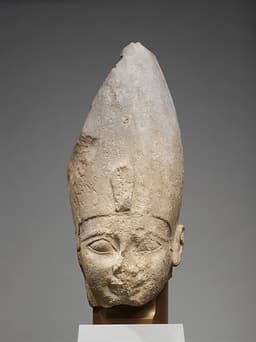
Ahmose I
Emperor · Ancient
62.2Total

Anastasius I
Emperor · Ancient
55.8Total
Basic Information
Born
-1550
431
Died
-1525
518
Era
Ancient
Ancient
Nationality
Egypt
Byzantine Empire
Occupation
Emperor
Emperor
Civilization
Middle Eastern
Western
Score Comparison
Military (10%)
76.0
47.5
Political (20%)
78.0
62.7
Influence (20%)
56.7
55.7
Legacy (20%)
40.0
45.8
Leadership (15%)
78.0
79.8
Strategy (15%)
70.0
43.3
TOTAL
62.2
55.8
Ahmose I — Complete Timeline
1550 BC
Expulsion of the HyksosWar
Ahmose I, a Theban king, captured the Hyksos capital of Avaris after a siege, expelling the Hyksos from Egypt. This victory ended the Second Intermediate Period and marked the beginning of the New Kingdom, Egypt's most powerful era.
HyksosExpulsionNew Kingdom
Impact: regionalconstructive
Reunification of EgyptPolitical Action◆ Major
After expelling the Hyksos, Ahmose I reunified Egypt under Theban rule, ending the division of the Second Intermediate Period. He reestablished central authority and initiated a period of stability, prosperity, and imperial expansion.
UnificationThebesStability
Impact: nationalconstructive
1549 BC
Siege of SharuhenWar◆ Major
Ahmose I pursued the defeated Hyksos into southern Canaan and besieged the fortress of Sharuhen. After a three-year siege, the city fell, eliminating the Hyksos threat and extending Egyptian influence into the Levant.
SiegeCanaanMilitary
Impact: regional
Anastasius I — Complete Timeline
498 AD
Suppressed the Isaurian RevoltWar◆ Major
Anastasius defeated the Isaurian rebels who had opposed his accession. The war ended with the capture and execution of the rebel leaders, and the Isaurians were forcibly resettled, ending their threat to imperial authority.
RebellionCivil WarByzantine Empire
Impact: national
Abolished the chrysargyron taxReform◆ Major
Emperor Anastasius I abolished the chrysargyron, a highly unpopular tax on trade and commerce that was collected every four years. This reform, along with others, improved the financial stability of the empire and left a substantial surplus in the treasury upon his death.
Tax ReformEconomic PolicyByzantine Empire
Impact: nationalprogressive
Reformed the coinage systemReform◆ Major
Anastasius introduced a new system of bronze coinage, including the follis and its fractions. This reform stabilized the currency and facilitated trade, becoming a standard for Byzantine coinage for centuries.
Currency ReformEconomic PolicyByzantine Empire
Impact: regionalconstructive
507 AD
Built the Anastasian WallOther
Anastasius ordered the construction of a long defensive wall, the Anastasian Wall, stretching from the Sea of Marmara to the Black Sea. The wall was intended to protect Constantinople from barbarian incursions, but it proved difficult to maintain and was eventually abandoned.
FortificationDefenseByzantine Empire
Expert Analysis
Origins
Ahmose I was born around 1560 BCE into the Theban royal family of the Seventeenth Dynasty. His father, Seqenenre Tao, died in battle against the Hyksos, and his brother Kamose also fell fighting. Ahmose inherited a fragmented Egypt under Hyksos domination, with the northern Delta controlled by the foreign rulers. He was likely educated in military and administrative traditions, but his early life was shaped by the ongoing war for liberation.
Anastasius I was born around 430 CE in Dyrrhachium (modern Durrës, Albania), into a humble Illyrian family. He rose through the ranks as a civil servant in the Byzantine bureaucracy, serving as a silentiary (a court usher) before being elected emperor in 491 CE. His background was administrative rather than military, which influenced his later focus on financial and legal reforms.
Rise to Power
Ahmose I ascended the throne around 1550 BCE after his brother Kamose's death. He immediately continued the campaign against the Hyksos, capitalizing on the momentum from earlier Theban victories. His key turning point was the capture of Avaris, the Hyksos capital, after a prolonged siege. This victory expelled the Hyksos from Egypt and ended the Fifteenth Dynasty. Ahmose then pursued them into Canaan, besieging Sharuhen for three years, which secured Egypt's borders. His military success, with a military score of 76.0, was the foundation of his power.
Anastasius I was chosen as emperor by Empress Ariadne after the death of Zeno, partly because of his reputation for honesty and fiscal competence. He faced immediate opposition from the Isaurian faction loyal to Zeno. The Isaurian Revolt (492-497 CE) was suppressed after a long war, with Anastasius using diplomacy and military force. He defeated the rebels at the Battle of Cotyaeum and later executed their leaders, scoring 62.7 in political acumen. His rise was less martial than Ahmose's, relying on bureaucratic skills and political maneuvering.
Leadership & Governance
Ahmose I's leadership focused on military conquest and reunification. He reestablished central authority, restored Egyptian control over Nubia, and reopened trade routes. He also initiated building projects, including a new capital at Memphis, and reinstated traditional religious practices. His governance was autocratic, typical of pharaonic rule, with an emphasis on territorial expansion and consolidation. He scored 78.0 in political and 78.0 in leadership, reflecting his ability to command loyalty and rebuild the state.
Anastasius I was a reformist emperor who prioritized financial stability. He abolished the chrysargyron tax in 498 CE, a burdensome levy on trade that had caused widespread hardship. He reformed the coinage system, introducing the follis and other denominations, which stabilized the currency and facilitated commerce. He also built the Anastasian Wall to defend Constantinople. His leadership score of 79.8 is high, but his military score of 47.5 reflects his avoidance of major wars. He was a cautious administrator, not a conqueror.
Triumph & Tragedy
Ahmose I's greatest triumph was the expulsion of the Hyksos and the reunification of Egypt, founding the New Kingdom. This achievement had lasting impact, as Egypt entered a period of unprecedented wealth and power. His tragedy may be the limited record of his later reign; he died relatively young, and some of his building projects were completed by successors. His legacy score of 40.0 is moderate because his immediate impact was overshadowed by later pharaohs like Thutmose III.
Anastasius I's triumph was leaving a full treasury and a stable economy. His reforms, especially the abolition of the chrysargyron and coinage changes, were popular and effective. His tragedy was the ongoing religious strife between Monophysites and Chalcedonians, which he failed to resolve, leading to the Acacian Schism. He also faced the costly Isaurian and Persian wars. His legacy score of 45.8 reflects his financial reforms, which lasted for centuries, but his military weakness left the empire vulnerable.
Character & Destiny
Ahmose I was a warrior pharaoh, determined and ruthless in pursuing his goals. His character is reflected in his relentless siege of Sharuhen and his consolidation of power. His destiny was to restore Egypt's greatness, but his early death prevented him from fully enjoying the fruits of his victories. Historical assessments view him as the founder of the New Kingdom, but his specific deeds are less known than those of his successors.
Anastasius I was prudent and fiscally conservative, earning the nickname "Anastasius the Financial Manager." He was also known for his piety and interest in theological matters, which led to religious controversies. His destiny was to stabilize the empire after decades of turmoil, but his inability to enforce religious unity created long-term problems. He is remembered as a capable administrator but not a great military leader.
Legacy
Ahmose I's legacy is foundational: he established the Eighteenth Dynasty and set the stage for Egypt's imperial age. The New Kingdom would produce iconic pharaohs like Hatshepsut and Ramesses II, but without Ahmose's expulsion of the Hyksos, that era might not have occurred. His military and political scores (76.0 and 78.0) contributed to a total of 62.2, higher than Anastasius's 55.8.
Anastasius I's legacy lies in his financial reforms. The abolition of the chrysargyron was a major relief for merchants, and his coinage system remained standard for centuries. The Anastasian Wall was a defensive achievement, though it was eventually breached. His influence score of 55.7 and legacy score of 45.8 reflect his impact on Byzantine economy and governance, but his military score of 47.5 and strategy of 43.3 limit his overall ranking.
Conclusion
Ahmose I had greater historical impact. His military campaigns reshaped the geopolitical landscape of the ancient Near East, ending Hyksos rule and launching Egypt's most powerful period. Anastasius I's reforms were important for Byzantine stability, but they were incremental and did not transform the empire's trajectory as dramatically. Ahmose's total score of 62.2 versus Anastasius's 55.8 reflects this difference. While both were effective leaders, Ahmose's actions had more far-reaching consequences, making him the more significant figure in world history.
Rankings
🥇
Ahmose ILeader
Mil: 76.0Pol: 78.0Inf: 56.7
62.2
🥈
Anastasius I
Mil: 47.5Pol: 62.7Inf: 55.7
55.8
+6.4 behind
How This Comparison Works
Algorithm
Each figure is scored on 6 dimensions (0—100 scale) based on structured historical data: Military (10%), Political (20%), Influence (20%), Legacy (20%), Leadership (15%), Strategy (15%). The weighted total produces the final ranking.
Data Sources
Scores are computed from structured sub-indicators in the database. Scale factors adjust for era (Ancient ×0.85, Modern ×1.0) and civilization size (Eastern ×1.05, Other ×0.80) to account for differences in population and military scale.
Maximum 3 Figures
Comparisons are limited to 2—3 figures to ensure readability and statistical meaningfulness.
Error Margins
±5 points per dimension — Sub-scores are derived from historical records with inherent uncertainty. Two figures within 5 points on a dimension should be considered roughly equivalent in that area.
Total Score Accuracy
±3 points overall — The weighted combination of 6 dimensions produces a total score with approximately ±3 points of uncertainty. Differences of less than 3 points are not statistically significant— the figures are effectively tied.
Known Limitations
- Historical records are incomplete and uneven across civilizations
- Figures from oral-tradition societies may be underrepresented
- Occupation labels can misclassify multi-role figures
- Scores measure capability and impact, not moral character
- Quantitative scoring is a comparison tool, not absolute truth
Capability Radar
Military (10%) — Battles & Warfare
Battles
75
20
Win Rate
80
25
Expansion
75
15
Political (20%) — Governance & Reform
Reform
85
85
Diplomacy
75
75
Economy
70
90
Influence (20%) — Cultural & Global Reach
Cultural
70
50
Global
75
45
Legacy (20%) — Historical Impact
Historical
85
55
Longevity
80
40
Leadership (15%) — Power & Stability
Tenure
70
70
Stability
75
80
Strategy (15%) — Tactics & Innovation
Strategy
85
35
Tactics
70
30
Reform
80
40
Similar Comparisons
Comments & Discussion
No comments yet. Be the first to share your thoughts!