Loading...
Anami Korechika vs Shimazu Yoshihiro
Shimazu Yoshihiro leads by 12.2 pts · 2 figures compared
…
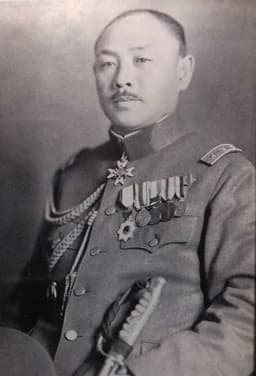
Anami Korechika
General · Modern
42.5Total

Shimazu Yoshihiro
General · Modern
54.7Total
Basic Information
Born
1887
1535
Died
1945
1619
Era
Modern
Modern
Nationality
Japan
Japan
Occupation
General
General
Civilization
Eastern
Eastern
Score Comparison
Military (10%)
25.9
63.3
Political (20%)
30.8
42.2
Influence (20%)
49.4
61.0
Legacy (20%)
43.3
50.0
Leadership (15%)
51.9
62.0
Strategy (15%)
43.7
50.0
TOTAL
42.5
54.7
Anami Korechika — Complete Timeline
1945 AD
Appointed War MinisterPolitical Action◆ Major
Anami Korechika was appointed Minister of War in the cabinet of Prime Minister Kantaro Suzuki in April 1945. He was a key figure in the Japanese government during the final months of World War II, advocating for continued resistance against the Allies.
World War IIJapanese GovernmentMilitary Leadership
Impact: national
Opposed Surrender DecisionPolitical Action◆ Major
In August 1945, Anami opposed the Potsdam Declaration and advocated for a final decisive battle on the Japanese home islands. He argued against unconditional surrender, contributing to the deadlock in the Supreme War Council.
World War IISurrender DebateMilitary Faction
Impact: nationaldestructive
Committed SeppukuOther◆ Major
On August 15, 1945, after Emperor Hirohito announced Japan's surrender, Anami Korechika committed seppuku (ritual suicide) at his residence. He left a death poem and expressed regret for his role in the war, choosing death over surrender.
World War IIRitual SuicideEnd of War
Impact: nationaltragic
Shimazu Yoshihiro — Complete Timeline
1578 AD
Battle of MimigawaWar◆ Major
Shimazu Yoshihiro led the Shimazu clan to victory against the Otomo clan at the Battle of Mimigawa. Using a pincer movement, the Shimazu forces destroyed the Otomo army, expanding their territory in Kyushu.
Sengoku PeriodBattleKyushu
Impact: regionalconstructive
1587 AD
Siege of Udo CastleWar
Shimazu Yoshihiro besieged Udo Castle in Higo Province during Toyotomi Hideyoshi's Kyushu campaign. The castle fell after a prolonged siege, but the Shimazu clan ultimately submitted to Hideyoshi.
Sengoku PeriodSiegeKyushu Campaign
Impact: regional
1592 AD
Invasion of KoreaWar◆ Major
Shimazu Yoshihiro participated in Toyotomi Hideyoshi's invasion of Korea. He led forces in several battles, including the capture of Gyeongju, and gained a reputation for fierce fighting.
Imjin WarInvasionKorea
Impact: regionaldestructive
1600 AD
Battle of SekigaharaWar
Shimazu Yoshihiro fought for the Western Army at Sekigahara. His forces engaged Tokugawa Ieyasu's troops but were eventually forced to retreat. Yoshihiro survived the battle and returned to Satsuma.
Sengoku PeriodBattleWestern Army
Impact: nationaldestructive
Expert Analysis
Origins
Anami Korechika was born in 1887 in Oita Prefecture, Japan, into a military family. He graduated from the Imperial Japanese Army Academy in 1908 and later from the Army War College. His early career was marked by service in the Siberian Intervention and as a military attaché in Europe. Shimazu Yoshihiro, born in 1535 in Satsuma Province, was the second son of Shimazu Takahisa, head of the powerful Shimazu clan. He was trained in martial arts and military strategy from a young age, participating in clan campaigns to unify Kyushu under Shimazu control.
Rise to Power
Anami rose through the ranks of the Imperial Japanese Army, serving in various staff and command positions. He became War Minister in April 1945 under Prime Minister Kantaro Suzuki, at a time when Japan faced imminent defeat. His appointment was a compromise between factions favoring peace and those advocating continued war. Shimazu Yoshihiro gained prominence through his military prowess in the unification of Kyushu. He led the Shimazu army to victory at the Battle of Mimigawa in 1578, where his pincer maneuver destroyed the Otomo forces. He later participated in Toyotomi Hideyoshi's Kyushu campaign, but after the Shimazu clan submitted to Hideyoshi, Yoshihiro became a key general in Hideyoshi's invasions of Korea (1592-1598).
Leadership & Governance
Anami's leadership was defined by his role in the Suzuki cabinet during Japan's final months of war. He opposed the Potsdam Declaration and advocated for a decisive home-island battle, but ultimately deferred to the Emperor's decision to surrender. His governance style was bureaucratic and constrained by the military hierarchy. In contrast, Shimazu Yoshihiro was a field commander who led from the front. He governed the Satsuma domain with a focus on military strength and clan autonomy. At the Battle of Sekigahara in 1600, he fought for the Western Army but retreated after seeing the battle lost, preserving his clan's power. Anami's leadership scored 51.9, while Shimazu's scored 62.0, reflecting Shimazu's greater autonomy and battlefield success.
Triumph & Tragedy
Anami's greatest triumph was his role in maintaining military discipline during Japan's surrender, preventing a coup by hardliners. His tragedy was his inability to prevent the war's catastrophic end and his subsequent seppuku, which he committed on August 15, 1945, after the Emperor's surrender broadcast. Shimazu's triumphs include the victory at Mimigawa and his survival after Sekigahara, allowing the Shimazu clan to remain a major power in Kyushu. His tragedy was the failed invasion of Korea, which drained resources and led to heavy casualties. Shimazu's military score of 63.3 far exceeds Anami's 25.9, underscoring his combat effectiveness.
Character & Destiny
Anami was a man of duty and hierarchy. He followed orders even when he disagreed, as shown by his support for the surrender despite his personal desire to fight. His seppuku was a final act of responsibility. Shimazu Yoshihiro, known as "the Demon of Satsuma," was pragmatic and fierce. He chose retreat at Sekigahara to preserve his clan, a decision that ensured its survival. Historians assess Anami as a tragic figure caught in impossible circumstances, while Shimazu is seen as a skilled commander who prioritized clan interests over feudal loyalty.
Legacy
Anami's legacy is tied to the end of World War II and the moral complexities of military honor. He is remembered as a symbol of the samurai spirit in modern Japan, though his influence is limited to historical studies. Shimazu Yoshihiro's legacy is more enduring: the Shimazu clan continued to rule Satsuma until the Meiji Restoration, and Yoshihiro is celebrated in Japanese popular culture as a fierce warrior. His influence score of 61.0 reflects this lasting recognition, compared to Anami's 49.4.
Conclusion
Shimazu Yoshihiro had greater impact on Japanese history. His military achievements, scoring 63.3, and his role in preserving the Shimazu clan's power shaped the political landscape of early modern Japan. Anami Korechika, while significant in the final days of World War II, scored only 42.5 overall, with limited lasting influence. Shimazu's legacy as a warrior and clan leader continues to resonate, whereas Anami's is confined to a specific historical moment. Thus, Shimazu Yoshihiro emerges as the more consequential figure.
Rankings
🥇
Shimazu YoshihiroLeader
Mil: 63.3Pol: 42.2Inf: 61.0
54.7
🥈
Anami Korechika
Mil: 25.9Pol: 30.8Inf: 49.4
42.5
+12.2 behind
How This Comparison Works
Algorithm
Each figure is scored on 6 dimensions (0—100 scale) based on structured historical data: Military (10%), Political (20%), Influence (20%), Legacy (20%), Leadership (15%), Strategy (15%). The weighted total produces the final ranking.
Data Sources
Scores are computed from structured sub-indicators in the database. Scale factors adjust for era (Ancient ×0.85, Modern ×1.0) and civilization size (Eastern ×1.05, Other ×0.80) to account for differences in population and military scale.
Maximum 3 Figures
Comparisons are limited to 2—3 figures to ensure readability and statistical meaningfulness.
Error Margins
±5 points per dimension — Sub-scores are derived from historical records with inherent uncertainty. Two figures within 5 points on a dimension should be considered roughly equivalent in that area.
Total Score Accuracy
±3 points overall — The weighted combination of 6 dimensions produces a total score with approximately ±3 points of uncertainty. Differences of less than 3 points are not statistically significant— the figures are effectively tied.
Known Limitations
- Historical records are incomplete and uneven across civilizations
- Figures from oral-tradition societies may be underrepresented
- Occupation labels can misclassify multi-role figures
- Scores measure capability and impact, not moral character
- Quantitative scoring is a comparison tool, not absolute truth
Capability Radar
Military (10%) — Battles & Warfare
Battles
15
65
Win Rate
10
70
Expansion
5
55
Political (20%) — Governance & Reform
Reform
15
20
Diplomacy
20
40
Economy
10
25
Influence (20%) — Cultural & Global Reach
Cultural
15
45
Global
10
30
Legacy (20%) — Historical Impact
Historical
30
50
Longevity
20
40
Leadership (15%) — Power & Stability
Tenure
40
50
Stability
5
35
Strategy (15%) — Tactics & Innovation
Strategy
25
60
Tactics
20
75
Reform
10
30
Similar Comparisons
Comments & Discussion
No comments yet. Be the first to share your thoughts!